

Share the article
Listen, I’ve had my fair share of “pinch me” moments and seen enough breathtaking places to become jaded after traveling to almost every European country.
Belarus, I will still come for you, but it may take a few years.
From hanging monasteries in the mountains of Greece, atop free-standing rock pillars, to medieval castles on the shores of bubble-gum pink lakes in France, the Old Continent has no shortage of wonders discover.
Yet there are places that not only impress, but also change your entire brain chemistry. Fairytale castles let you drift away from reality for a few hours, but these unusual oddities? They will hijack your wanderlust forever.
Being here 4 of the weirdest in Europe and most surreal (but also coolest) places I’ve visited over the years:
Transnistria
Ever heard of the country that doesn’t exist? At least not on any map.


Moldova is that obscure speck sandwiched between Romania and Ukraine; even hardcore travelers hardly notice it. But look to the eastern edge, beyond the dotted line that hugs Ukraine, and you’ll find Transnistria. Moldova’s rogue escape comic, still drunk on Soviet nostalgia and glued to Russia.
No joke. In many ways, visiting Transnistria feels like about 30 years back in timeto an era of Lenin statues, Ladas and hammer-and-sickle emblems.
I mean, if the red marshrutkas who seem to be on their very last legs but are still ferrying babushkas from the Sunday farmer’s market back to their communist apartment building on the edge of town are any indication, Transnistria cries out for the USSR more than the Russian motherland ever has.


The coolest part? As a Westerner, you don’t have to apply for one of those hard-to-get, bureaucratic Russian visas to enter:
There is indeed one heavily guarded border between Moldova and Transnistria, but all foreign tourists are welcome. Yes, even Americans.
The ‘country’ also has its own currency, a (Russian-backed) army, and they issue their own passports, although Transnistrians may have difficulty traveling abroad without a Moldova-issued document. Again, it is not the case that Transnistria has a seat in the UN.
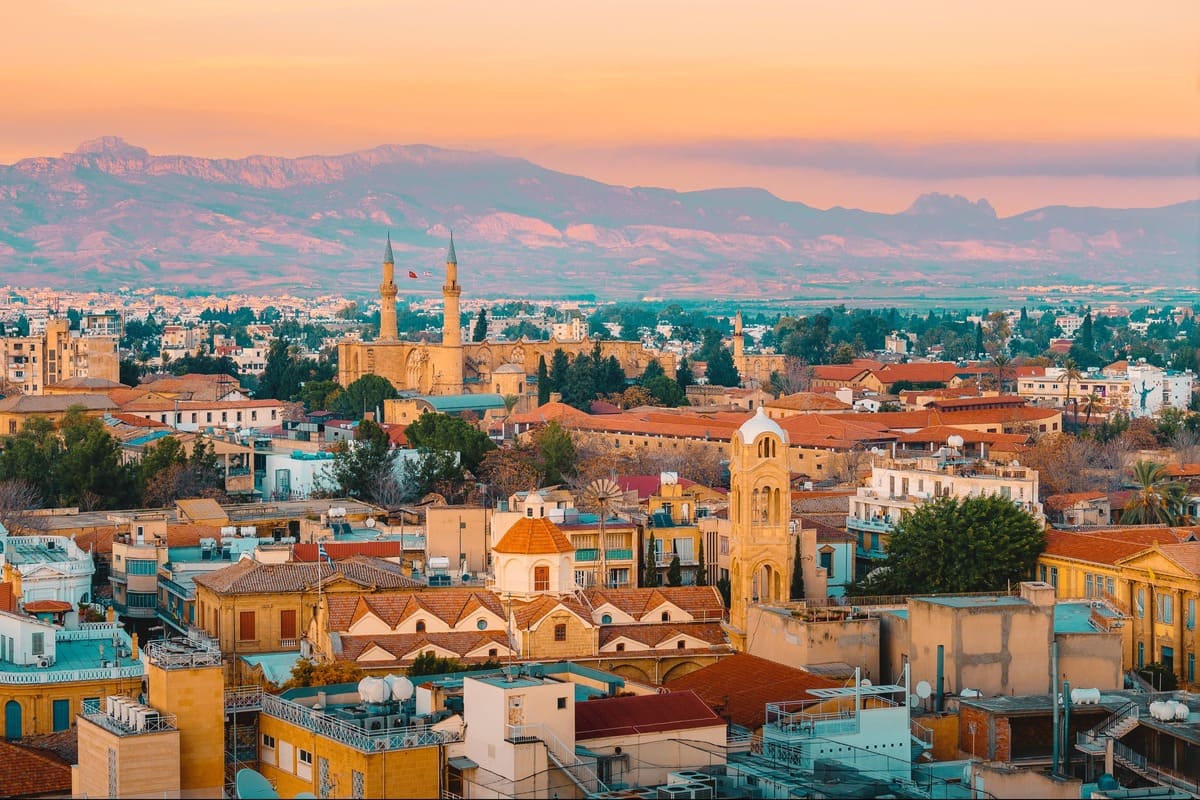
Nicosia, Cyprus
Speaking of breakaway states, did you know that Nicosia – the capital of Cyprus on that popular Mediterranean island – lies between two countries? You would really like it to be recognized as one whole.


The Turkish Republic of Northern Cyprus is the remaining scar from a 1974 Turkish invasion that turned the map of Cyprus upside down. Turkish forces captured the northern third, and it has been their territory ever since, despite continued calls for reunification.
Since then, a barricaded Green Line has split Nicosia in two, backed by a UN buffer zone full of peacekeepers and watchtowers on both sides.
I was only born in 1997, so I’ve never seen Wall-era Berlin, but Nicosia feels like the next best thing: streets with shops and cafes that end in border checkpoints, terraces along barbed wire walls and blindfolded back streets.


Greek side? Euro prizes, blue and white striped flags waving atop Orthodox churches, and tavernas slinging souvlaki and moussaka. Pure Greek pride.
Turkish side? Minarets blare the call to prayer from dusk to dawn, bazaars selling almost medieval trinkets caravanseraisand kebabs for 200 liras in old market squares.
Crossing from the Greek to the Turkish side of the city is allowed, but You must have your passport with you. Oh, and if you want to be admitted to the Greek part, you need to make sure you’ve landed at a Cypriot-controlled airport (Larnaca or Paphos Airport) first.
Before booking your flight to Cyprus, make sure you check the current security levels on the website Traveler dashboard– the island has recently been directly affected by the war between the US and Iran.
Baarle-Hertog, Belgium
…or is it the Netherlands?
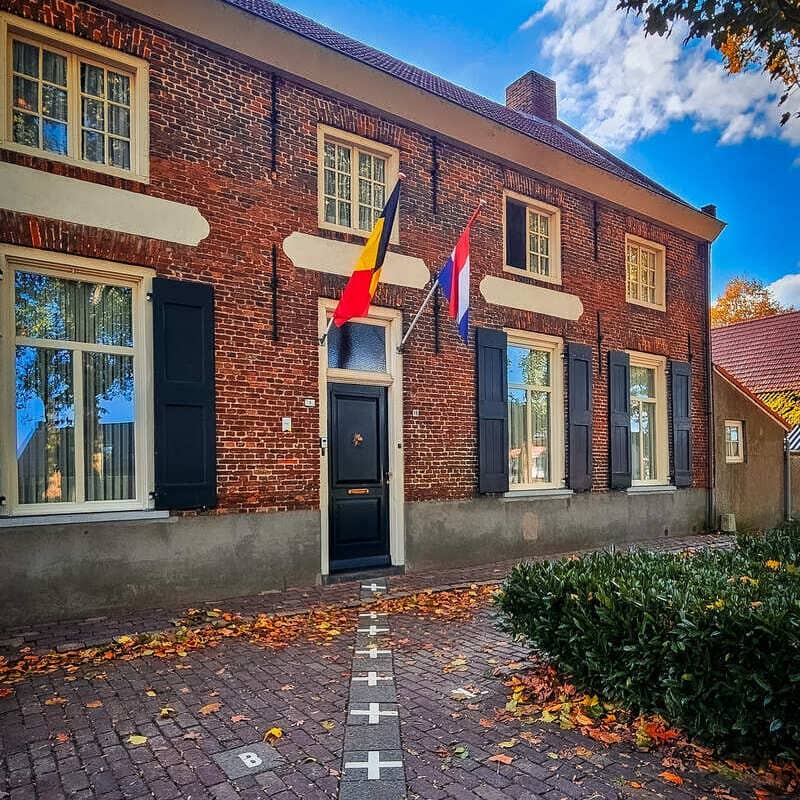
Perhaps the craziest place you’ll ever set foot in – believe me, I was still thinking about it even after I left – Baarle-Hertog doesn’t need geopolitical crises or a bloody war history to be absolutely unhinged.
Although it’s located in one of the most peaceful, inconspicuous corners of Western Europe, it’s possibly the continent’s weirdest border error. If you think splitting Nicosia in two is wild, wait until you see this:
Baarle-Hertog is a completely Belgian city surrounded by the Dutch city of Baarle-Nassau, except that it has little bits of the Netherlands in it, and within those little Dutch dots you have even smaller Belgian enclaves, some of which contain microscopic Dutch counter-enclaves.
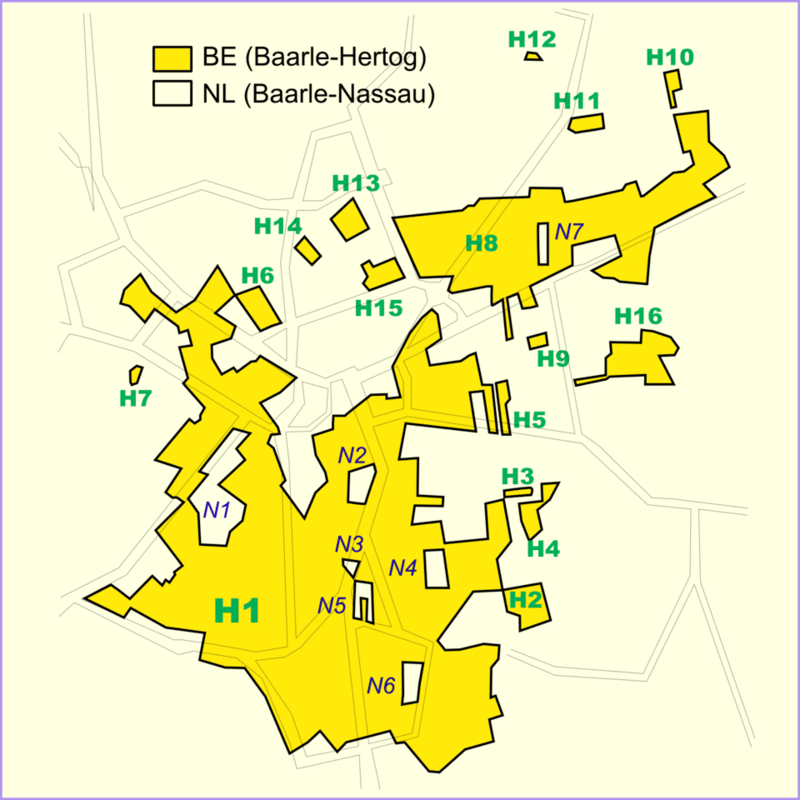
A country within a country within a country within a country.
How does this work, you ask? Some ‘borders’ literally run through cafes, shops, streets and in the middle of detached houses. You could go to sleep in your bedroom on the Belgian side of the house, and then shuffle to the kitchen for breakfast the next morning in the Netherlands.
Like so much in Europe, the whole cartographic mess dates back to the Middle Ages, when local lords and dukes traded, sold or inherited arbitrary plots of land.
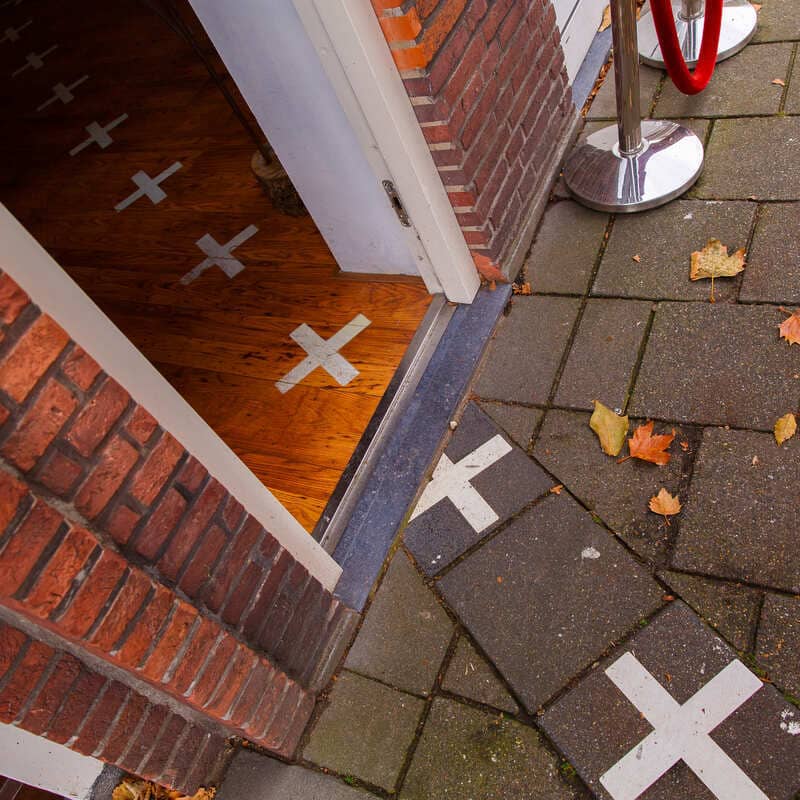
Some plots ended up under the Duke of Brabant (later part of Belgium), others under the Lord of Breda (in today’s Netherlands).
As nation states eventually consolidated, these patchworks hardened into international borders and, for whatever reason, no one has ever bothered to untangle them. Make sure it makes sense because I couldn’t.
Baarle-Hertog is actually an archipelago of 22 ‘islands’ within the Netherlands, and within these are at least 7 ‘main’ Dutch islands. It’s a good thing we have the Schengen area now because I can’t imagine the absolute nightmare of going through a series of passport checks during your morning shop.
Ceuta, Spain


You haven’t even seen the biggest geographic anomaly yet. What if I told you that Spain has an entire city, with over 83,000 inhabitants, right on the coast of Africa?
Ceuta literally shares a land border with Moroccoan area heavily fortified by barbed wire fences, day-and-night patrols and buffer zones, and despite being firmly planted on African soil, is as much a part of Spain as Madrid or Barcelona.
Ceuta has been Spanish since 1668, even though it is cut off from the mainland by the Strait of Gibraltar.
After traveling through Morocco for over a month before entering Ceuta, I will never forget walking straight from Africa into ‘Europe’, and immediately seeing Spanish flags, tapas bars and Christian chapels everywhere.


Ceuta looks like any Spanish city:
It has that typical Spanish main squaredominated by a yellow-washed Shrine of Saint Mary of Africa, a coastal fortress surrounded by a turquoise moat, and palm-shaded squares where abuelos gather to play dominoes.
But the Sahara’s heat hits hard and the Maghreb atmosphere is everywhere, from crumbling medieval Arab bath ruins to hole-in-the-wall tagine places slinging steaming harira. A piece of Spain in Africa, a touch of Africa in Spain: a happy marriage that will keep you happy until modern times.
That was number four, but we’re not done yet.
The Absolute The craziest European destination beyond
The bonus European anomaly:
Athos, Greece
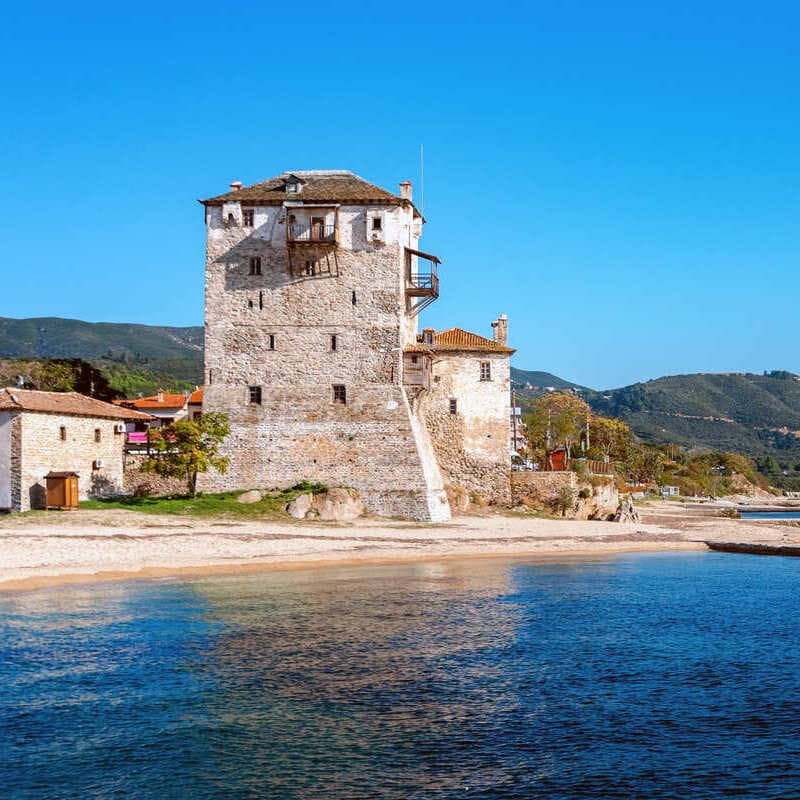
I’m sure you’ve heard of the Vatican, an autonomous city-state in the heart of Rome, headquarters of the Catholic Church, but what about its Orthodox counterpart Athos in Greece?
Not just a square, but a whole peninsulaAthos is a monastic area whose autonomy and right to self-government are enshrined in the Greek Constitution, despite its rather… so… unorthodox practices, at least for these modern, liberal times.
You see, Athos is nothing less than a beautiful, mystical land with ancient, fortress-like Byzantine monasteries stretching over lush coastal hills, remote villages living on home-made bread, wine and faith alone, and hermit caves where pious souls live oblivious to worldly affairs.


There is only one warning.
Well, two.
- Women are not allowed anywhere near Athos
- Men who come to visit must first obtain a ‘visa’
The ban on women is enshrined in Greek law, in order to protect the monastic character of Athos and its religious communities. There’s no way to get around it.
As a woman, the closest you can get to the territory is Ouranoupoli, a ‘border town’ at the entrance to the peninsula.
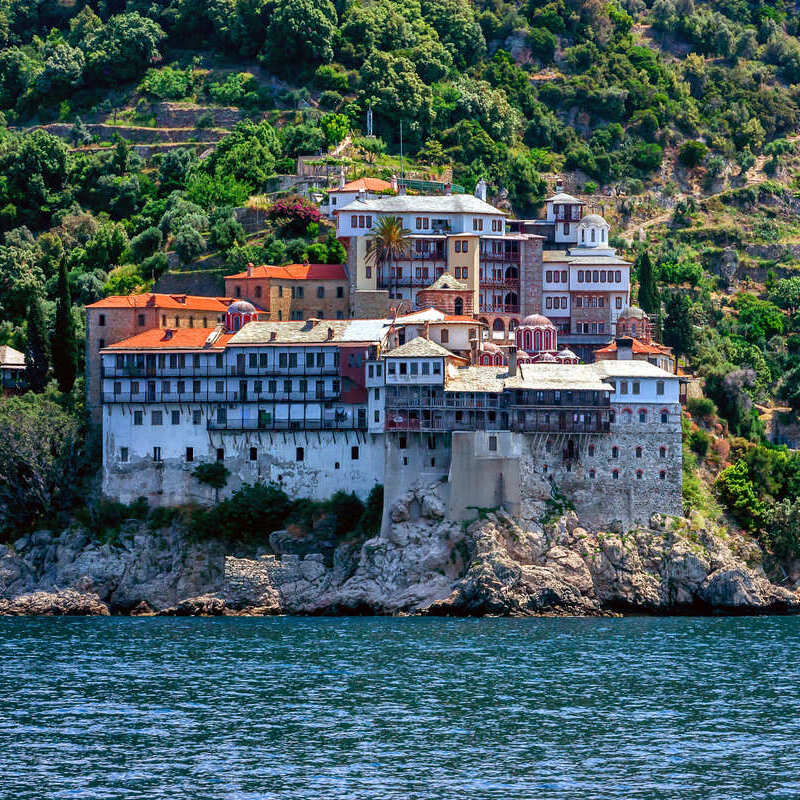
As for the man who wants to come in, the ‘visa’ you want to get is a Diamantitirion.
It is usually issued at the pilgrimage office in Ouranapoli and is usually valid for four days. Applications must be submitted months in advance as there is a limit on the number of visitors allowed per day on the peninsula and the visa costs €25-35.
The shocking part? No, Athos is not a country and has no international recognition outside of Greece. However, Greece officially recognizes it as an autonomous monastic area, giving it a special status.