

Share the article
When most people talk about booking a trip to Mexico, they immediately jump to the enormous resorts in Cabo or the crowded, impressionable beaches of Tulum.
Don’t get me wrong: drinking a margarita by a giant resort pool is great, but that’s just the beginning of what this country actually has to offer.
If you’re willing to get off the highways, forgo the luxury chain hotels and actually put in some work to get somewhere, Mexico will absolutely amaze you.
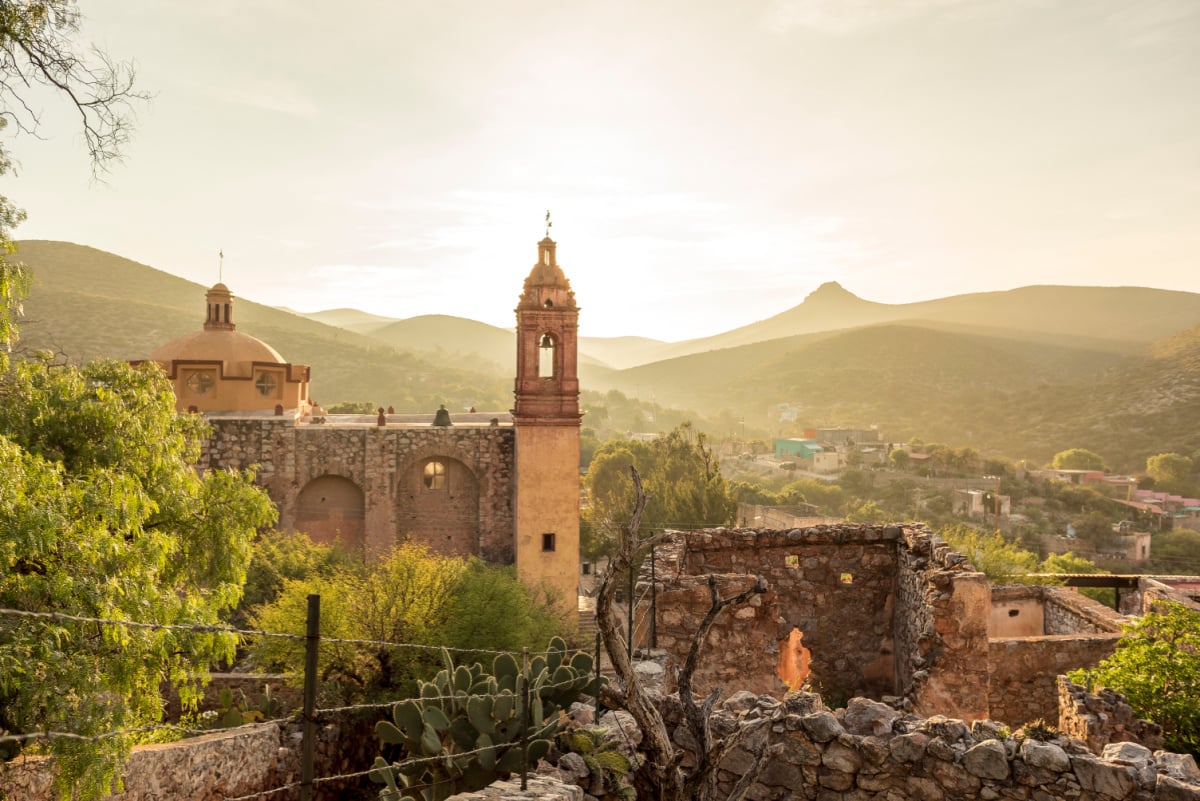
The country is full of ancient ruins hidden in the jungle, desert ghost towns, and crazy geological anomalies that most tourists never even hear about. I’ve been to Mexico dozens of times and still feel like I’m barely scratching the surface!
If you’re looking for a super unique trip that I can almost guarantee none of your friends have ever taken, here are 5 off-the-grid destinations in Mexico that are 100% worth the effort to get to.
1. Lagunas de Chacahua, Oaxaca
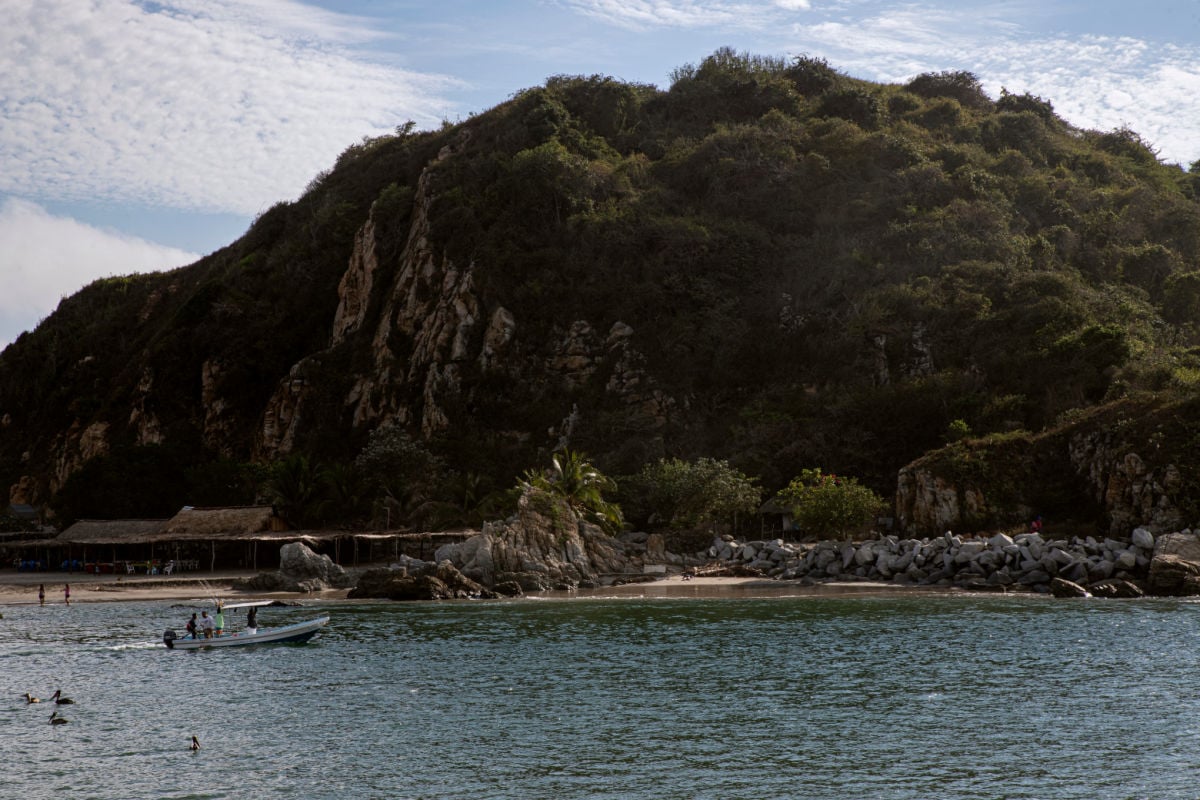
If you want to completely disconnect from the world, this is the place. Located about 60 kilometers west of Puerto Escondido, Chacahua is a huge national park full of dense mangrove lagoons and miles of empty ocean beaches.
- The atmosphere: There is essentially no cell service, no ATMs and no luxury hotels. You sleep in simple beach cabanas or rent a hammock right on the sand. The entire city runs at a super slow, local pace, and it is an important hub for Mexico’s Afro-descendant community.
- The big draw: During the dry winter months (November to April) you can take a boat out into the lagoons at new moon night and see amazing bioluminescence. The water literally glows with phosphorescent plankton.
- How do I get there: It’s a journey. You’ll need to take a shared van (colectivo) from Puerto Escondido to a highway intersection, take a local taxi to the boat launch, and then take a water taxi through the mangroves to finally reach the village.
2. Calakmul Biosphere Reserve, Campeche
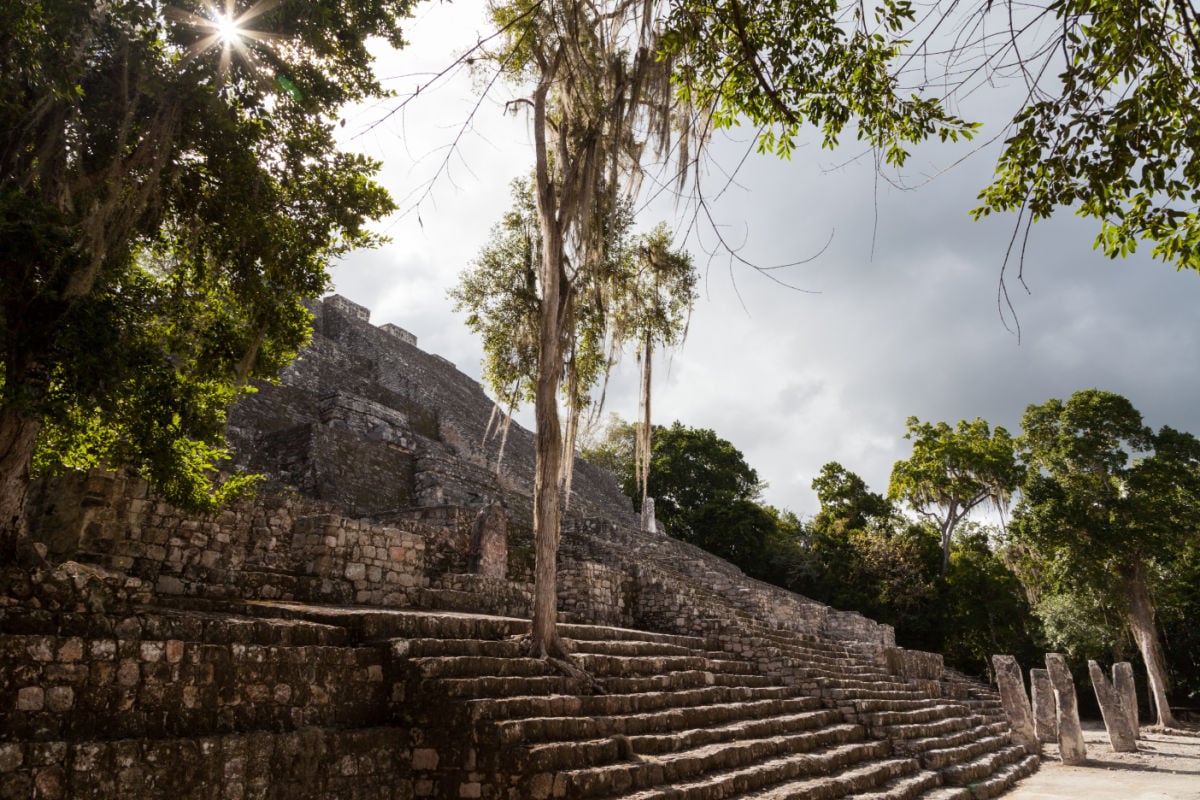
Forget competing with thousands of tourists for a quick photo at Chichén Itzá. Calakmul is located deep in the southern jungle, near the border of Guatemala. It was one of the most powerful ancient Mayan cities in history and is completely swallowed up by the jungle canopy.
- The atmosphere: You are completely isolated here. The acoustic environment is completely dominated by the roar of howler monkeys swinging through the trees above you.
- The big draw: Unlike the large manicured tourist attractions, you are still allowed to physically climb the ancient pyramids here. When you climb the steep limestone stairs of Structure II (which stands 44 meters high), you get an incredible 360-degree view of the pure, unspoiled tropical jungle stretching to the horizon.
- How do I get there: You definitely need a rental car. It’s a grueling 90-minute drive along a narrow, single-lane jungle road to get from the main biosphere gate to the actual ruins. There is no gas or food inside, so you have to bring all your own stuff.
3. Real de Catorce, San Luis Potosí
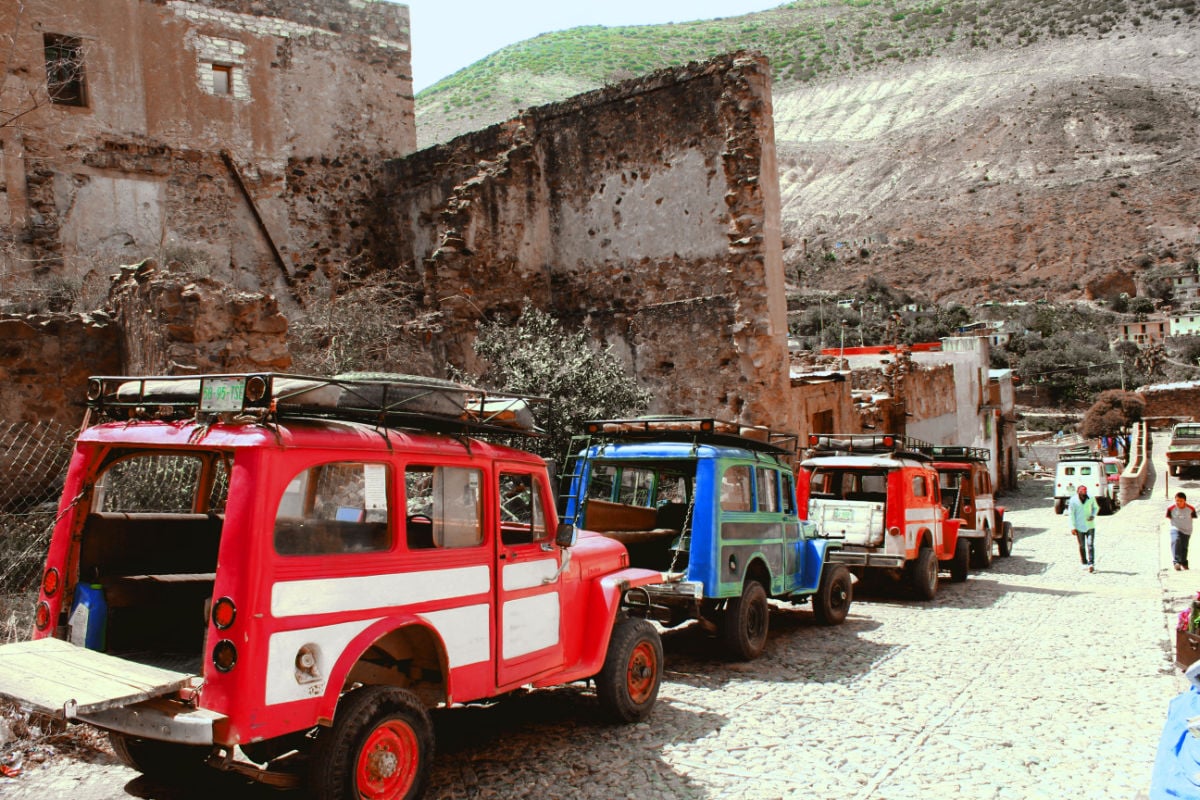
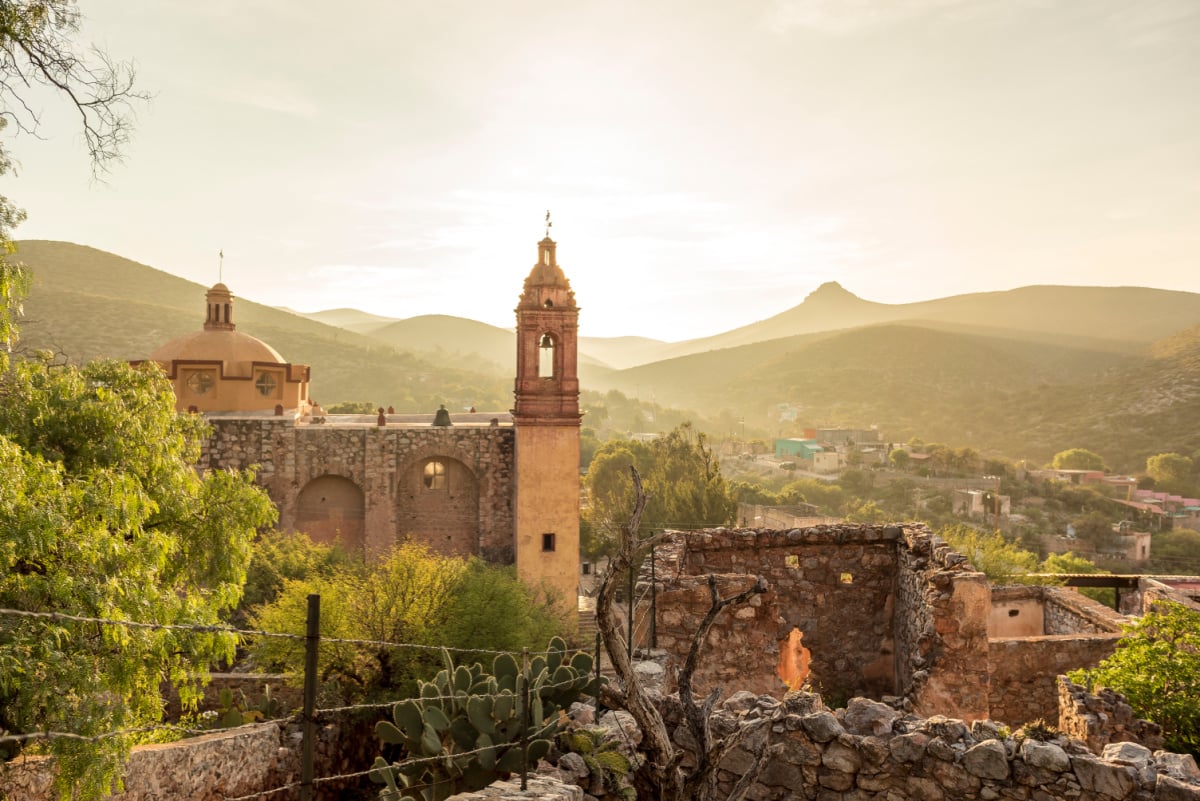
This is a place where time has completely stood still. Real de Catorce is an old silver mine ghost town high in the rugged desert mountains of central Mexico.
- The atmosphere: It is incredibly atmospheric. The steep, cobbled streets are lined with dilapidated colonial facades and old mud walls. It’s incredibly quiet, punctuated mainly by the sound of horses and mules, which are still used to negotiate the rugged outdoor trails.
- The big draw: The city is located right in the middle of the Wirikuta, a high desert area that the indigenous Wixárika (Huichol) people consider the absolute center of the universe. It is a huge pilgrimage site and the local craft workshops produce incredible, vibrantly colored traditional bead and thread paintings.
- How do I get there: The entry point is wild. The only way to enter the city is to drive through the city Tunel de Ogarrioa 2.2 kilometer long single lane mining tunnel bored straight through the solid rock of the mountain.
4. Sierra Gorda Biosphere Reserve, Querétaro
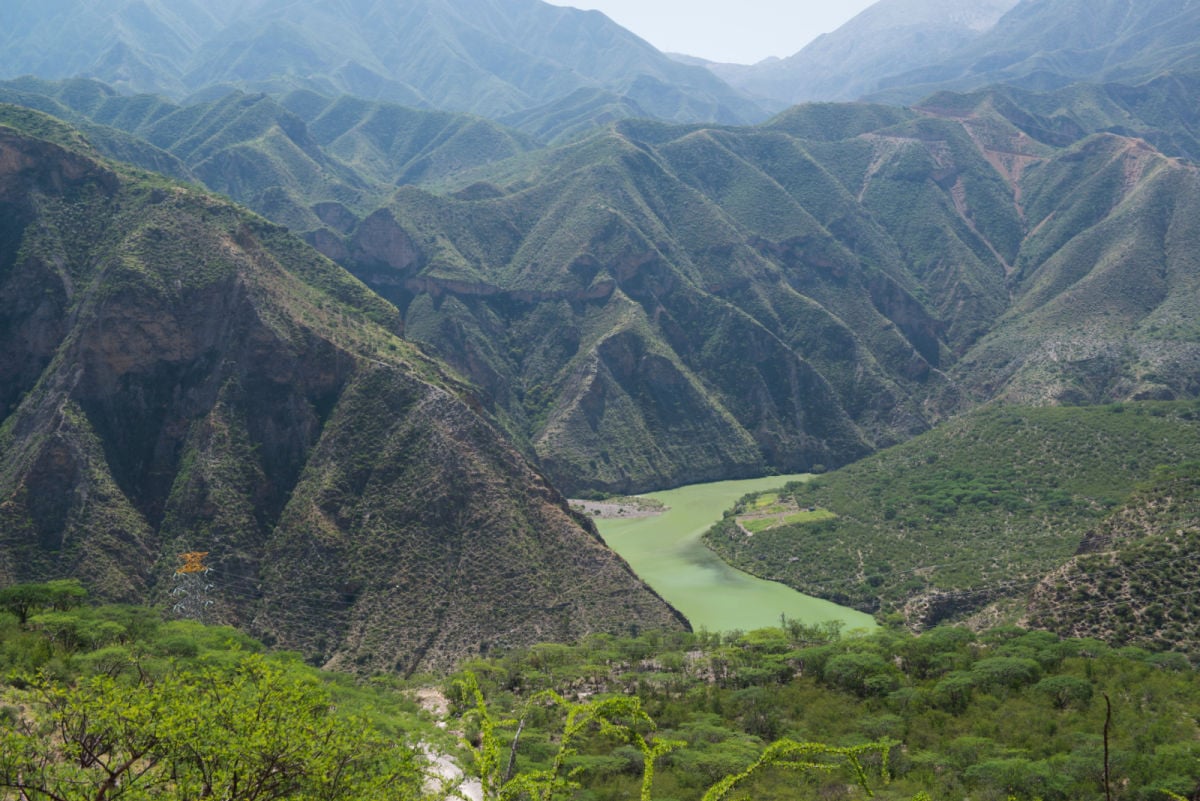
The Sierra Gorda is an absolute geological beast. The landscape is completely fractured, meaning you transition violently from dry, cactus-strewn deserts straight up to hyper-humid, misty cloud forests hanging above deep river gorges.
- The atmosphere: This region requires slow travel. You’ll navigate aggressive switchbacks into the mountains, stopping at small, family-run guesthouses and eating incredible local food Enchiladas Queretanas smothered in red chili sauce.
- The big draw: The area is known for five 18th-century Franciscan missions built by Junípero Serra. The facades of these churches are breathtaking, mixing European religious figures with native floral motifs and native flora and fauna in a style called ‘Mestizo Baroque’.
- When to go: You should find this in the dry season (November to April). If you go during the summer rainy season, the intense heat, humidity, and swollen rivers will completely wash out the trails and canyons.
5. Cuatro Ciénegas, Coahuila
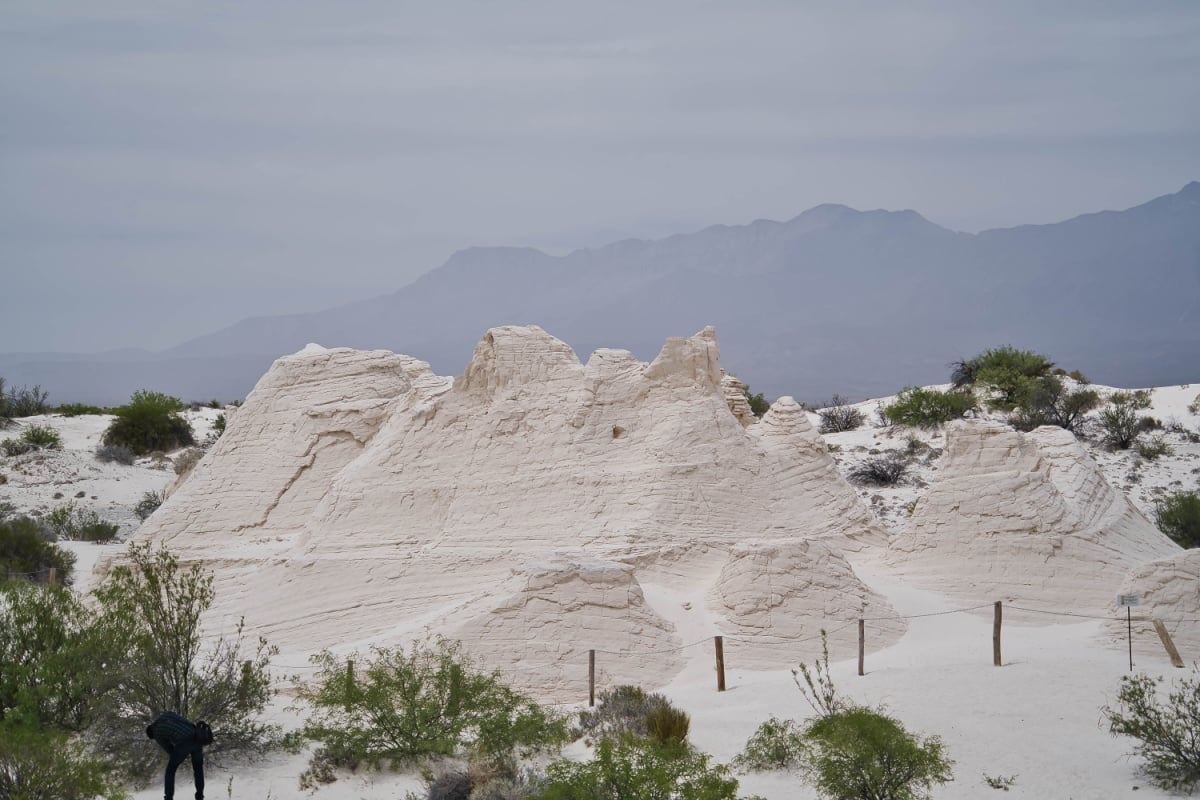
Located in the harsh northern desert, Cuatro Ciénegas looks like an error in the matrix. The valley floor is actually bleached white and perforated with hundreds of vibrant, turquoise pools (pozas) water.
- The atmosphere: This is an evolutionary hotspot. The underground water system here has been completely isolated from the oceans for millions of years.
- The big draw: These pools contain life stromatolites. They are rare, reef-like structures formed by cyanobacteria – the very microscopic organisms that invented photosynthesis and created the planet’s oxygen billions of years ago. You can’t swim in the fragile pools, but you can watch ancient life from wooden observation decks.
- The landscape: Directly next to the blue swimming pools are the Dunas de Yeso (Gipsduinen). They are vast, blinding white sand dunes that look exactly like snow covering the hot desert floor.
Take this quiz now to find your perfect off-path Mexico match!