For years we are Journey I followed the buzz around the new high -tech border systems of the European Union. It has been a confusing journey of delays and speculation, but the first major change is finally here and it starts next month.
The long -awaited Entry/Exit System (EES) starts, but not with the large, simultaneous launch that many expected. Instead, we see a spread rollout of the country per country that will change how Americans enter Europe.
But before we discuss the new changes, you may be surprised to learn that Various countries have all these measures.

Countries already require fingerprints
Although the new system in Europe reaches the headlines, the biometric collection is not a new concept worldwide. If you have traveled internationally, you may have taken all your fingerprints and photo. Americans must currently provide this information when entering these 10 countries:
- Argentina: Expect a fingerprint scan and photo on both input and exit.
- China: Foreign visitors (usually 14-70 years old) offer fingerprints and a facial photo.
- India: Travelers who use an e-visa have recorded their biometric data upon arrival.
- Japan: A long -term practice in which most foreigners offer two index fingers and a photo.
- South Korea: Visitors 17 and older offer fingerprints and a photo, making future use of automated ports possible.
- Singapore: First visitors register their iris, facial and fingerprint data to speed up future entries.
- Kenya: Upon arrival, immigration records both fingerprints and a facial photo.
- South Africa: Ports of entry collect fingerprints and a photo as part of a continuous security role.
- Russia: Mandatory biometric screening for foreign travelers is in force on access points.
- Kuwait: Biometric fingerprints are required and can be completed upon arrival at the airport.


The big change that will come to Europe next month
This is where the most important shift for American travelers takes place. The EU’s new Entry/Exit System (EES) has finally been launched, and that is Officially replacing passport stamps.
Here is a simple breakdown of what happens:
What is De Ees?
Instead of a borderkeeper who stamps your passport, use a self-service kiosk to scan it. With your first input to a country using the system you must provide biometric data: specific, Four fingerprints and a facial photo. This information is then stored safely for three years, making your next journeys faster.


Ees vs. Etias: What is the difference?
This is a crucial point of confusion. Ees and Etias are two completely different things.
- De Ees (De Kiosk): This is the physical You do it at the border to have your fingerprints/photo taken.
- The Etias (the website): This is the Online travel authorization (20 euros) You must request for You travel. The ETIAS is now planned to start in the last quarter of 2026.
Croatia and Spain lead the way from 12 October
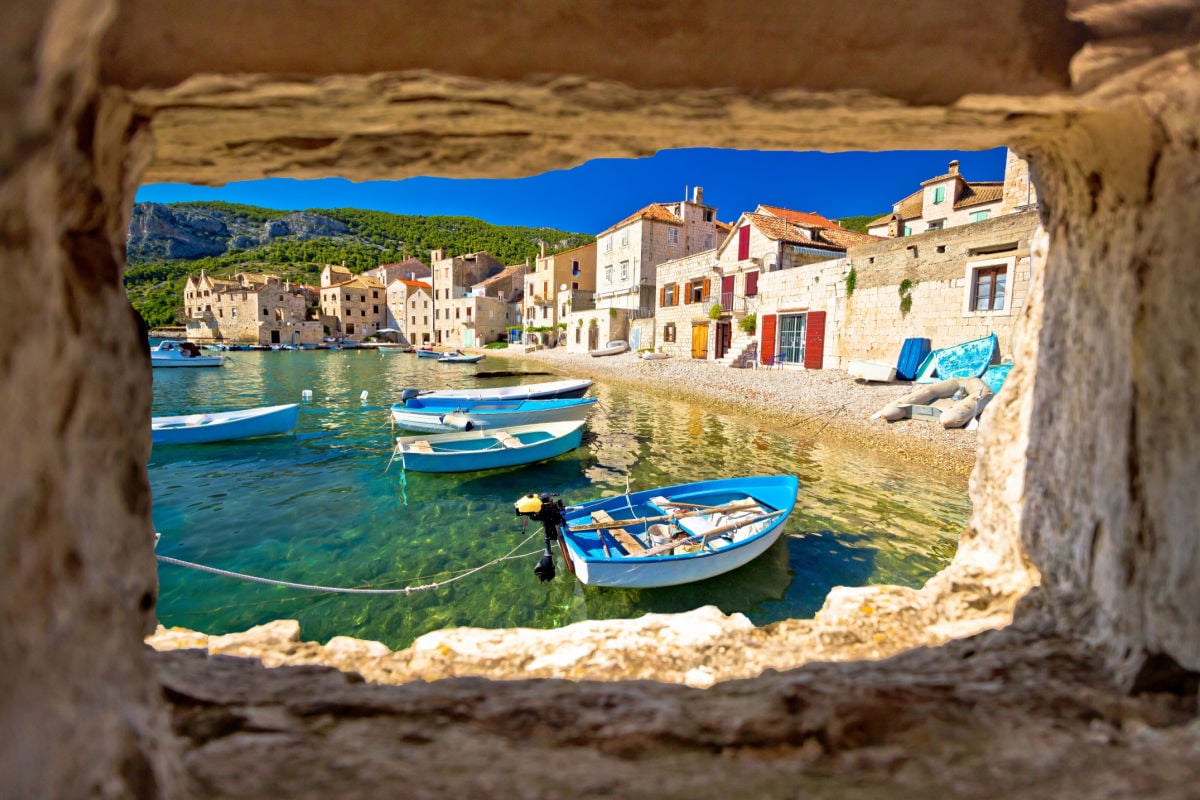
Croatia becomes the First European country To officially activate its EES system, which was quickly followed by Spain. At the beginning of October 12, 2025, if you fly to airports such as Zagreb (Zag) or Dubrovnik (DBV) or Madrid (MAD), you will be forwarded to the new EES kiosks to complete this process.
What about the rest of Europe?
In the coming months, travelers will be confronted with a patchwork of systems. The other 28 countries in the Schengen zone are now expected to have their coordinated launch in the first half of 2026. So although you use a kiosk in Croatia next month, you probably still get a classic passport stamp if you fly directly to France, Italy or Spain.
Here are the other countries that would implement De Ees in 2026:
Austria, Belgium, Bulgaria, the Czech Republic, Denmark, Estonia, Finland, France, Germany, Greece, Hungary, Iceland, Italy, Latvia, Liechtenstein, Lithuania, Luxembourg, Malta, the Netherlands, Netherlands, Slova, Switland.
To see if your next trip is on the list, type your country in the tool below to see! And as always, for the most up -to -date input requirements, use our checker for travel input required here.
Subscribe to our latest messages
Enter your e -mail address to subscribe to the latest Breeknieuws from Path, directly to your inbox.