

The history of printing is the history of human striving for creativity, innovation and expression of the unspeakable. From the earliest woodcuts to the more sophisticated techniques of etching, principping has not only been able to evolve art, but also ideas to spread and access to art to become more democratized, to reach new social classes, regions and cultures. It is an evolution of art that has been dancing together with technical innovation and popular cultural trends for centuries.
So if you are in possession of Print for your wallObserve them while we dive deeper into the rich history of printing, how it ended up on your walls and how it bridge the gap between exclusivity and accessibility.
The origin of printing: woodcuts
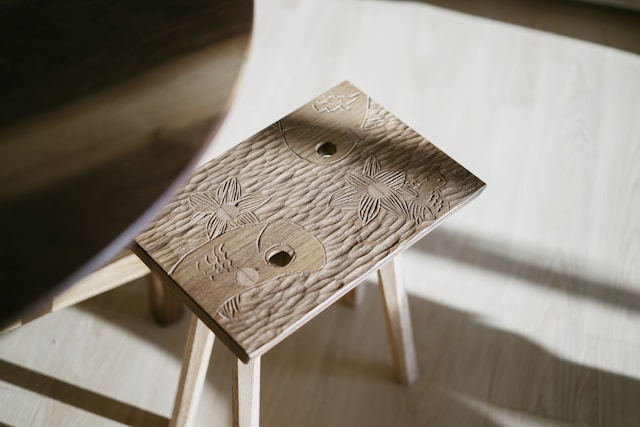
The story of your favorite print starts like a woodcut. This was one of the first methods for transferring images on paper and dust. The earliest example of this practice dates from the 9th century in East Asia, where people cut an image on a wooden block and then applied ink to the raised areas and pressed the block on paper or dust. It was true that new images, ideas, literature, art and knowledge spread. Suddenly the woodcut found its way to Europe in the 15th century, where it was used to illustrate religious texts, to decorate devotional books and spread visual motifs to households who may have never been able to pay a painting.
Thanks to the practice of carvings, the gap between the holy and the everyday was bridged, making imagery a shared cultural experience.
Refine technology
However, the demand for finer details and greater nuance soon grew, and it was high time that new techniques were invented to offer more precision.
Engraving
By the 15th century, artists started working with engraving. In this case images were filled directly in metal plates, usually copper, filled the grooves with ink and then pressed the plate on paper. In contrast to wood, these metals were much more complicated lines and enabled artists to display more complex scenes, textures and even shadow!
It was a medium that was so popular that it became even more fame during the Renaissance, when art and knowledge flourished hand in hand. Through engraving, works of classical antiquity, religious scenes and scientific illustrations can spread wide in Europe, which forms intellectual and cultural exchange.
Etch
But it was not nearly over for making prints. Another big leap came with etchings in the 16th century. It is a technique that depends on acid instead of the direct carving for making images. Artists cover a metal plate with protective soil, pull through designs and then let acid bite into the exposed lines. The result was a softer, more flowing quality than engraving, one that records a sense of spontaneity and immediateness.
Etsen was preferred by many artists because of his extraordinary expressive possibilities. Some masters of ETS were at the time Rembrandt and Francisco Goya. They pushed the medium further than merely reproduction in the empire of high art. Tonal wealth, dramatic contrast – the history of printing was changed forever.
Beyond Art: how printing culture and training forms
One of the most important things that printing did was democratize art and make it more accessible than ever. It was no longer limited to rich customers and religious institutions. Images were suddenly easily reproduced and distributed over a far, much wider audience. So the visual culture came in the houses of traders, craftsmen and modest households.
And it didn’t end with art. Printing later played a crucial role in expanding literacy and education. As soon as the technique of printing in the Middle Ages has evolved, the printing press quickly emerged, which further democratized reading and education under every social class. Illustrated books and prints can now be shared to support learning and improve the narrative of a story. History, myths and religion became more imaginative and more powerful.
Modern Masters: Printing in the 20th century
In the modern era, artists such as Picasso, Matisse, Warhol and much more have re -defined the possibilities of the medium, because she dived into tireless experiments with scale, color and repetition. The result was that the role of their work strengthened as a laboratory for innovation, where traditional craftsmanship met the radical vision of the artists.
And to this day there is never an appreciation for the historical techniques. Many contemporary print makers still revive woodcuts, engravings and etchings and celebrate the tactile, practical processes in an ever -digital world. At the same time, digital artists are not fighting the trend, but combine these age -old methods with digital technologies, creating hybrid works that are created that tradition honoring modernity.
So in the end the legacy of printing is not really a story about eternal reproduction, but more proof of the permanent interplay of art, technology and society.
Woodcuts, engraving, etching, printing
Call it what you want. It is an art form that is both art and communication. It enabled artists to share their visions with the public that to share far beyond the walls of courts and churches, creating culture by beauty and accessibility.
Every phase of the evolution of printing reminds us that innovation in art is often in finding new ways to balance precision with expression and individuality. The legacy of the process remains a living proof of the idea that art, once multiplied, does not lose its strength but strengthens the reach, enriches history and our present.