

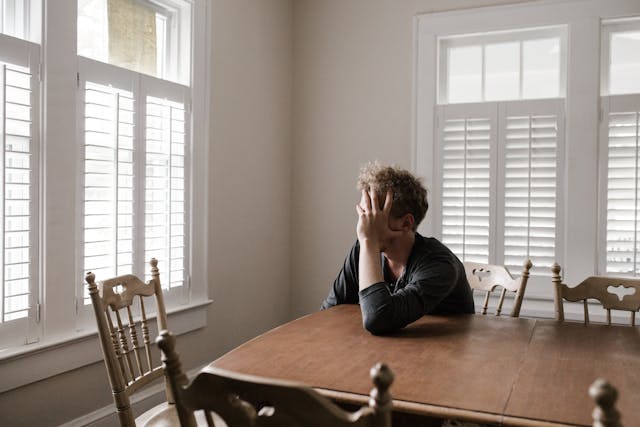
Loneliness affects many men silently and gradually. A friendship fades, work increases, or family life becomes tense. These small shifts add up. Over time, the gap between how a man feels and how he looks begins to widen. He continues to function, but the isolation settles beneath the surface.
Anger often becomes the outlet for this pressure. It’s easy to treat anger as a behavioral problem, but for many men it reflects emotional overload. Underlying the irritation or short fuse are feelings of exhaustion, disconnection or the feeling of having to carry too much alone.
Cultural expectations reinforce this pattern. Men often learn to stay strong, not to burden others and to keep emotional problems to themselves. Because there are fewer safe spaces to express emotions, tension builds. Mindfulness offers a practical way to recognize what is happening internally before it erupts.
The forms of loneliness
Loneliness rarely resembles being physically alone. Many men feel lonely when they are in a relationship, raising children or working with others. It often appears in three ways.
Social abstinence
Friendships disappear as life gets busier. What used to be regular conversations turns into short messages or quick updates. Men can be surrounded by people but have no one to confide in.
Emotional isolation
A man can share schedules and responsibilities without ever talking about how he feels. The fear of appearing weak keeps many emotions hidden. Even in close relationships, men can feel unseen.
Relationship tension
When communication fails, emotional distance grows. Withdrawal becomes a coping strategy, but withdrawal increases loneliness. Over time, a cycle arises that is difficult to break.
When loneliness turns to anger
Anger often involves something softer: sadness, shame, overwhelm, or the belief that no one truly recognizes a man’s efforts.
A man in his forties snaps at small frustrations. Underneath it lies the weight of a break that he has not dealt with. He hasn’t shared the pain because he worries about judgment.
A young father becomes reactive during conflict because he feels thin and invisible. Because he has not expressed this openly, the pressure leaks away as irritation.
Mindfulness helps men identify these emotions before they escalate.
Why mindfulness works
Mindfulness is not about emptying the mind. It’s about awareness. It creates a pause between emotion and reaction. That pause gives space to respond deliberately.
- Awareness of early signals – Anger usually manifests itself physically first. Tense shoulders, shallow breathing, and a clenched jaw often emerge before words are spoken. Mindfulness helps to notice these signals early.
- Slowing down the rise – A short break can prevent unnecessary conflicts. By asking: “What am I really feeling right now?” often softens the intensity.
- Realign with values – Most men value honesty, steadfastness and reliability. Mindfulness helps behavior reflect these values rather than stress-induced responses.
For structured mindfulness training, visit Mindfulness space.
A simple exercise: the reset in 3 breaths
- Notice where the tension is.
- Take three slow breaths and lengthen the exhalation slightly.
- Choose an answer that reflects the person you want to be.
Practicing this daily will build resilience before stressful moments arise.
How mindfulness works in real situations
In relationships
A man feels frustration increasing during a conversation about household responsibilities. Instead of responding, he finds his breathing tightening. He pauses, breathes slowly, and realizes he feels overwhelmed rather than angry. He expresses this clearly and the tone of the conversation changes.
At work
A man who is criticized in a meeting feels defensive. His chest tightens and his thoughts begin to spiral. He takes a few slow breaths and stays there long enough to hear the feedback. The shift helps him stay grounded instead of closing down.
Why loneliness is common in men
Upbringing, social norms and workplace expectations all contribute to men’s loneliness.
Messages about toughness and independence encourage men to hide their emotions. Friendships often rely on activities rather than conversations, and these activities diminish as life gets busier. Workplaces reward emotional resilience, making it difficult to admit stress. In relationships, men can withdraw rather than risk conflict.
These patterns are learned and not inherent.
Which helps men reconnect
Rebuild minor connection points. Send a message to a friend. Join a group or hobby. Small, consistent contact rebuilds social bonds more effectively than large gestures.
- Healthy emotional spaces – Therapy, men’s groups or talking to a trusted friend provide space to express emotions safely.
- Question old beliefs – Thoughts like “I have to deal with this alone” or “I shouldn’t feel this way” limit emotional health. Mindfulness helps challenge these patterns.
- Look under anger – Asking: “What does this anger protect?” leads to better self-insight and calmer reactions.
When to seek support
Mindfulness is useful, but some situations require extra support. Consider counseling if:
- Anger affects relationships or work
- You constantly feel disconnected or hopeless
- You use resources to cope
- You’ve tried strategies without progress
- You feel unsure how to improve things
For advice or coaching, please contact Paul Jozsef Counseling and coaching.
Come on
Men dealing with loneliness or anger often carry too much alone. Mindfulness creates space to respond with intention rather than reacting to an impulse. With regular practice, connection grows, anger softens, and emotional stability improves.
You don’t need a perfect plan. You just have to start.
Author biography
Paul Jozsef is a therapist and mindfulness teacher who works with men concerned with emotional health, relationships and personal growth. Based in Montreal, he integrates mindfulness-based approaches with practical tools for sustainable change private practice And Mindfulness space.


