


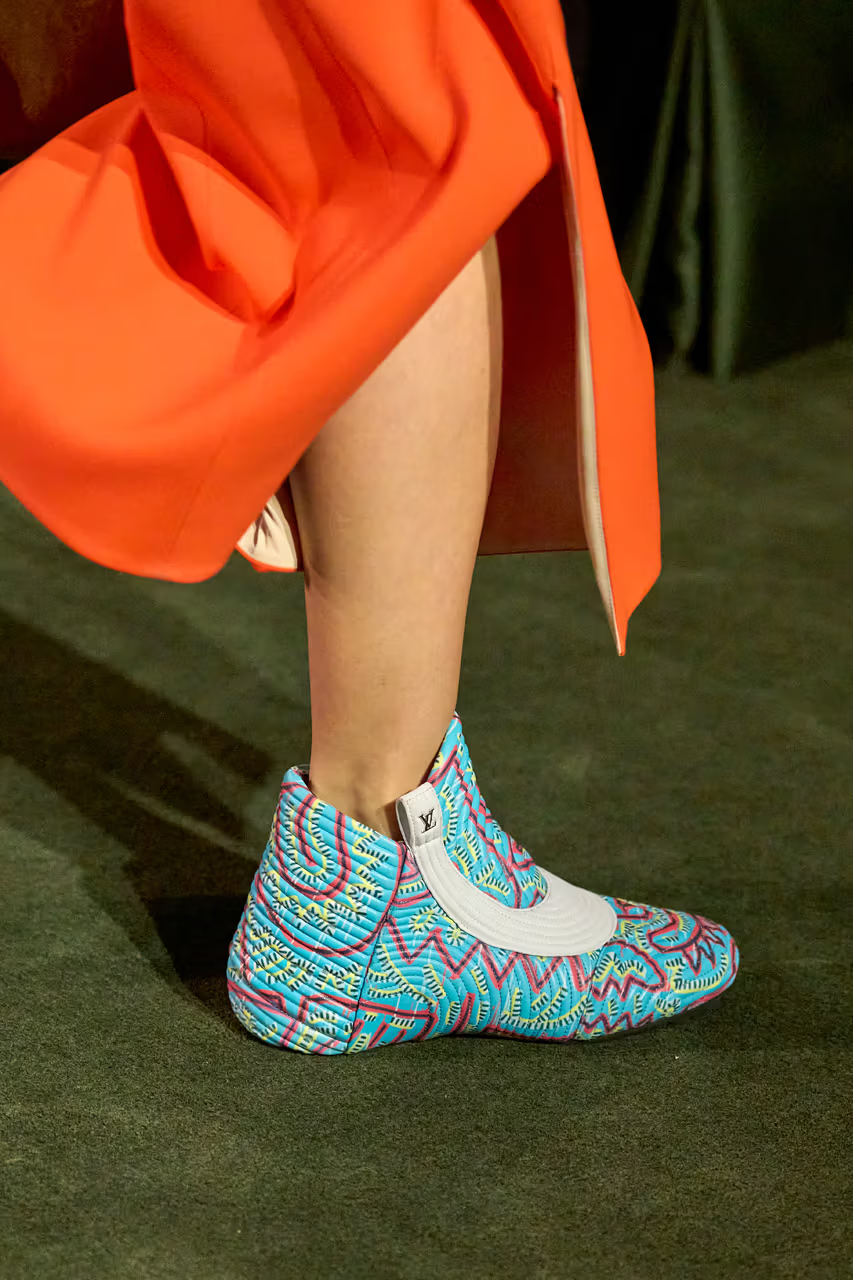
The Louis Vuitton Cruise 2027 show took over the Frick Collection in New York City, and while the surreal accessories and technicolor clothing provided a strong visual foundation, it was the footwear that stopped the conversation. Nicolas Ghesquière introduced a new laceless, high-top hybrid that sits at a technical intersection most designers didn’t think to touch: the structured upper of a basketball shoe placed on the flat, grounded sole of a martial arts slide. The result is a slip-on that looks athletic and ceremonial, grounded and futuristic at the same time. It’s the kind of silhouette that could only emerge from a collection explicitly built around the tension between French savoir-faire and American cultural energy, a shoe that belongs as much in a Paris atelier as on a downtown New York sidewalk.
The shoe comes in a range of colorways that reinforce the contradictions. Metallic finishes in silver, gold, lavender and blue give it a futuristic quality that isn’t diminished by the flat sole, the laceless construction reading as deliberate sophistication rather than nonchalance. Solid black and white leather options bring the silhouette back towards a classic, luxurious look, demonstrating that the design works across all registers rather than being tied to a single aesthetic line. Across all colorways, the absence of laces is the defining detail. It removes the sneaker’s most functional element and replaces it with nothing, which is the kind of design move that sets a fashion shoe apart from athletic shoes, even if the two share the same structural DNA.
Louis Vuitton Cruise 2027 Shoes: The Keith Haring connection
The footwear does not exist in itself. Ghesquière’s Cruise 2027 collection draws heavily on the artwork and legacy of Keith Herring. The integration is based on something more specific than the general admiration for pop art. The collection was inspired by the discovery of a Louis Vuitton leather suitcase from the 1930s, which Haring had reworked as a canvas for his signature line-drawn images. That archival object becomes the connecting tissue between the House’s heritage and Haring’s street art energy in New York, a physical object that contained both worlds at the same time before someone came up with the idea of combining them on a catwalk.
Haring’s bold, kinetic imagery is reflected in both the clothing and footwear in the collection, delivering a graphic rawness that counterbalances the luxurious materials and precise construction for which Ghesquière is known. The hybrid basketball-martial arts shoe has the same productive contradiction in its shape. Sport and ceremony, New York and Paris, practicality and spectacle, the silhouette does what the collection as a whole does, simply through the language of shoes.
Shop editor’s picks
A show about more than just clothes
Ghesquière explicitly described Cruise 2027 as a cultural bridge between Paris and New York, and The Frick Collection was a deliberate choice of location for that kind of statement. One of New York’s most storied private art collections, housed in a Fifth Avenue mansion that operates somewhere between museum and time capsule, gave the exhibition an institutional weight that reinforced the collection’s commitment to American cultural history.
Pop art, pop culture and pop luxury were the three reference points Ghesquière mentioned, and the footwear reflects all three at the same time. The basketball sole is pop culture. The flat martial arts foundation is slightly older and more ceremonial. The metallic finishes and laceless construction both push into luxury territory. When Louis Vuitton Cruise 2027 officially drops, the shoes will almost certainly be among the most talked about pieces: a hybrid silhouette that arrived with a clear design argument and the cultural context to make it stick. Louis Vuitton
Featured image: Louis Vuitton