

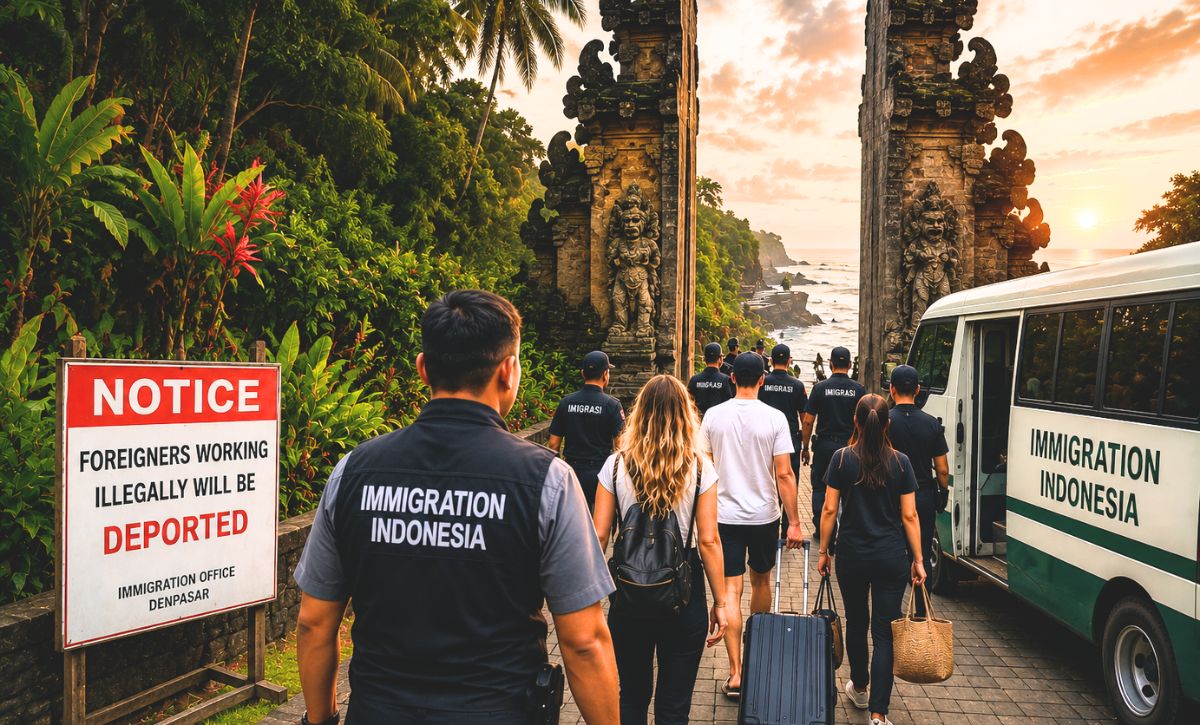
Bali’s long-standing reputation as an unrequited base for influencers and digital nomads is over. A special immigration unit launched in April 2026 has arrested dozens of foreigners for working on tourist visas, and authorities say patrols are not slowing down.
What the Dharma Dewata Task Force does
The “Dharma Dewata” Immigration Patrol Task Force was inaugurated on April 15 at Renon Field in Denpasar, with approximately 100 officers spread across the island. According to Bali Regional Immigration Office, In the first three weeks of operations, 62 foreigners were detained for violations, including illegal work, overstay and forged documents. Patrols and social media monitoring are concentrated in the island’s nomadic and creative hubs: Canggu, Ubud, Seminyak, Kerobokan and Uluwatu.
Director-General of Immigration Hendarsam Marantoko was blunt about the message, saying authorities do “Present, monitored and ready to take enforcement action.”
Why ‘free’ posts and exchange stays now count as work
The crackdown targets a gray area that Bali tolerated for years. Officials have clarified that sponsored content, brand collaborations, portfolio shoots and even unpaid promotional work in exchange for a free villa stay or meal are all considered commercial activities under Indonesian immigration law. Whether money changes hands is no longer the test; if a company gets promoted and the traveler gets a benefit, it needs the right work visa.
The penalties are high: immediate visa revocation, fines, deportation and entry bans, ranging from several years to a lifelong blacklist in serious cases.
What it means for travelers and makers

For regular visitors to Bali’s temples, beaches and rice terraces, the daily experience is unchanged: the rules specifically address the overlap between tourism and paid or promotional activities. Remote workers and creators who wish to operate legally are reminded of the E33G Visa for remote workers instead of a standard tourist permit or visa on arrival.
The enforcement is part of a broader national push, with Indonesia’s Directorate General of Immigration recording thousands of enforcement actions involving foreigners in the first months of 2026. It also ties in with Bali’s pivot to a “quality tourism” model that favors visitors who contribute to the formal economy. The practical message for content creators is simple: get the right visa before posting anything promoting a local business, or risk a ban that could cut off access to the island forever.