
What is gel polish curing and why is it important?
If you’ve ever removed a gel manicure and found a sticky, wrinkled layer underneath, you’ve already come face to face with a gel polish hardening problem. Curing is the chemical process that converts liquid gel into a hard, durable finish. It’s not just about light exposure. It is a precise response that depends on the right wavelength, the right intensity and the right formulation all working together. When any of these elements don’t match, the results can range from a dull finish to serious nail reactions.
Understanding what actually happens during curing can help explain why so many common gel problems can be traced back to this one step.
The chemistry behind the hardening of gel polish
Gel polish contains special compounds called photoinitiators. These are molecules that absorb light energy and cause a chain reaction called polymerization. During polymerization, the liquid monomers and oligomers in the gel connect to form a solid polymer network. Think of it like a net being woven in real time: the light energy pulls all the loose threads together into a strong, interlocking structure.
Different gel formulations use different photoinitiators. Some respond best to UVA wavelengths around 365 nm. Others work with the broader spectrum of LED lamps, which typically emit around 395–405 nm. This is where cure compatibility becomes critical. A gel designed for one wavelength will not respond as effectively to another, even if the lamp looks identical from the outside.
So the lamp and the gel actually speak different languages. If they are not a match, the conversation will be terminated.
Problems with gel lamps: what goes wrong and why
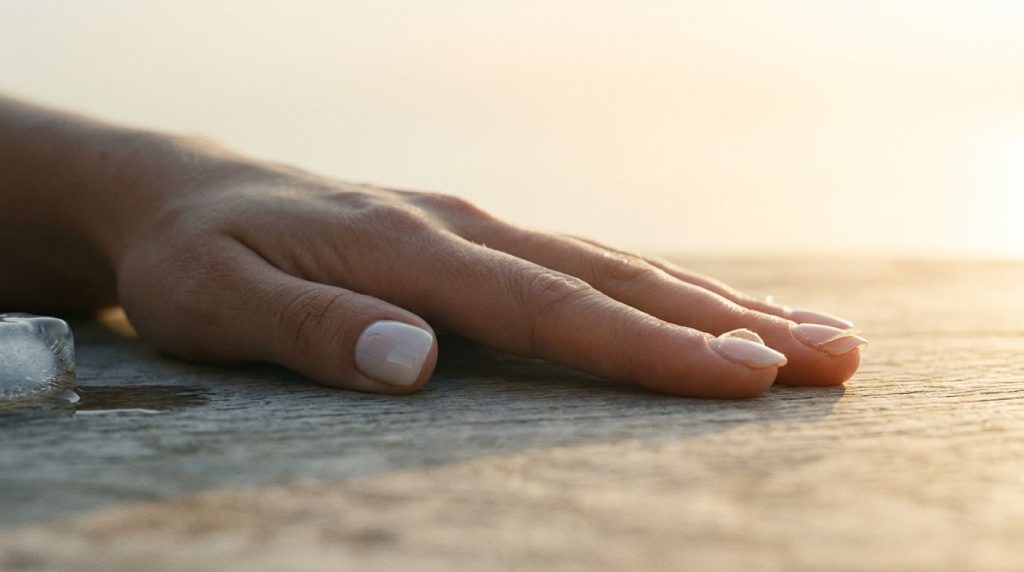
Problems with gel lamps are much more common than most people realize. The most visible sign of trouble is wrinkles, where the surface of the gel hardens too quickly while the underlying layers remain soft. This happens when a lamp emits too much surface energy relative to the depth-penetrating ability of the formulation. The top layer becomes firmer, trapping the uncured gel underneath and the whole thing collapses under pressure.
Microbubbles are another telltale sign. These tiny air pockets form when gas escapes during incomplete curing. Because the gel is not fully polymerized, it cannot maintain its structure and bubbles rise to the surface or become trapped in the layer. The result looks smooth at first, but may feel rough or cloudy once the lamp goes off.
Stickiness after curing is also a classic symptom of gel lamp problems. Some gel systems intentionally contain a thin inhibition layer on the surface, which is normal and intentional. But widespread stickiness over the entire nail usually indicates that the photoinitiators have not been fully activated, often because the lamp wattage is too low or the lamps have deteriorated over time.
Degradation of lamps is invisible. A UV lamp can still look perfectly functional even though its output has dropped significantly, especially if you have not replaced the lamps regularly. This is one of the most overlooked causes of nail polish problems at home.
Why cure compatibility is non-negotiable
Not all gel polishes are equal and not all lamps are interchangeable. Cure compatibility refers to the match between a gel’s photoinitiator chemistry and the specific wavelengths a lamp emits. Reputable gel brands test their products with specific lamp types and publish those recommendations for good reason.
Using a cheap lamp with a professional gel, or mixing brands without checking compatibility, is one of the most common causes of nail polish problems at home. The gel may appear hardened on the surface, but remain partially liquid underneath. Over time, this inadequately cured layer can cause discoloration, discoloration, and in some cases sensitization reactions on the nail, which become more severe with repeated exposure.
Builder gels and thick gel formulations pose an additional challenge. Their density means that light must penetrate deeper to activate the photoinitiators throughout the entire layer. A lamp that works perfectly for a thin gel polish may simply not have the power to cure a thick sculpting gel in the same time frame.
Common nail polish problems associated with poor curing
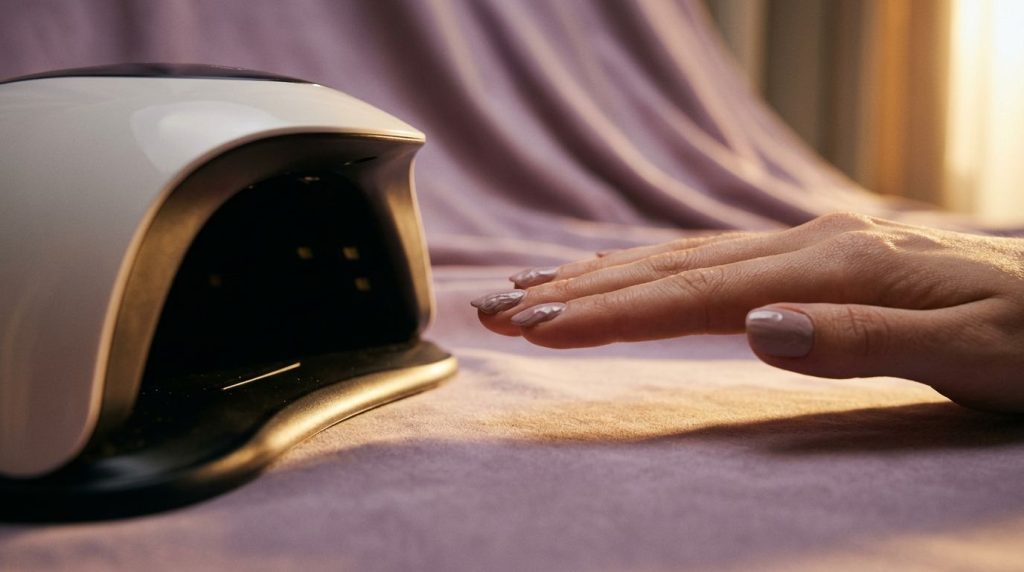
In addition to wrinkles and microbubbles, poor gel polish curing shows up in a surprising number of ways. Premature chipping is one thing. When the polymer network is incomplete, the gel lacks the structural integrity to adhere properly to the nail surface or to adjacent layers. Even a small bump can cause the entire manicure to break.
Color shift is another, less obvious sign. Some pigments, especially whites and pastels, may appear yellowed or slightly faded after curing if light exposure is uneven. White gel polish is particularly vulnerable because its high titanium dioxide content affects the way light penetrates the layer, meaning curing depth and lamp choice are even more important than with darker shades.
Gel lifting at the edges is also often attributed to preparation, while the real culprit is curing. If the edges of each layer are not completely hardened, they will remain somewhat flexible and will begin to separate from the nail plate over time. Heat from the lamp can even cause the gel to contract slightly as it cures, causing it to separate from a freshly prepped nail if the formulation and lamp are not properly matched.
What influences the curing of gel polish in practice?
Several factors influence how well a remedy is achieved. The lamp power and the number of LED chips both influence the intensity. The distance between the nail and the lamp is also important: nails placed at the edges of the curing area often receive less light than those directly under the lamps. Therefore, a slight rotation of your hand during curing can produce a more even result.
Layer thickness plays a major role. Thicker coats prevent light from penetrating deeper into the gel, so multiple thin coats will almost always cure more reliably than one thick application. This is especially relevant for gel colors with a high pigment load, where the pigment itself can absorb or scatter light before it reaches the photoinitiators.
Ambient temperature is another variable. Cold environments can slow the polymerization reaction, while excessive heat from a too-hot lamp can cause surface curing to outpace deep curing, which brings us back to wrinkles. Even the age of the formulation matters. Gel polish that has been stored in direct sunlight or has passed its expiration date may have partially activated photoinitiators, reducing its ability to fully cure even under the best lamp.
Match your lamp with your gel polish
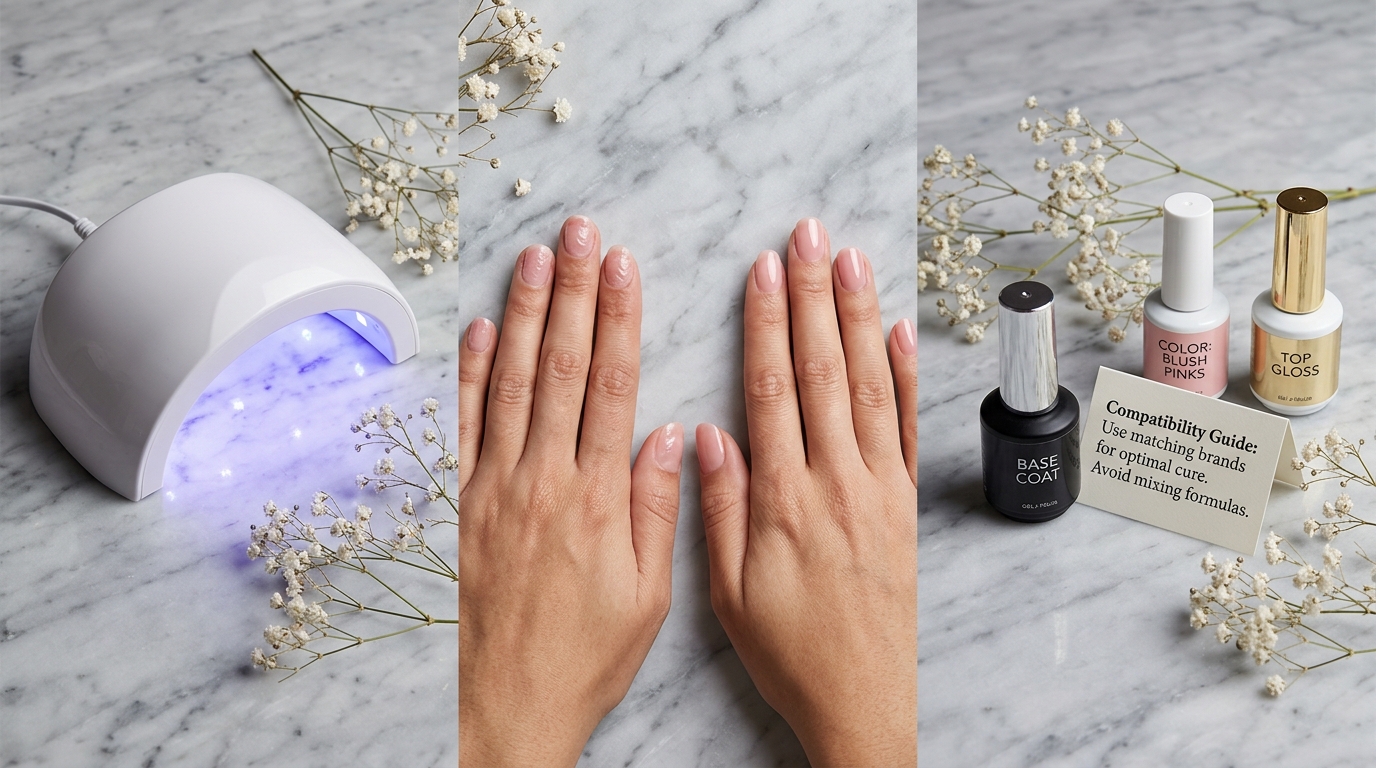
The simplest rule is to use the lamp that your gel brand recommends. If you want to use a different lamp, check whether the manufacturer has tested and approved that combination. Many brands publish compatibility guides, and some list approved third-party lights on their websites. Nail industry sources such as NAILS Magazine regularly highlight lamp and formulation developments worth following.
For home users, investing in a quality lamp from a reputable brand is truly one of the most impactful decisions you can make for your gel manicure results. A cheap bulb that underperforms will cause more problems than almost any other variable in the process.
Curing gel polish is not a hasty step. Every wrinkle, every bubble, every raised edge is the gel’s way of telling you that the chemistry wasn’t quite right.
The interaction between the chemistry of the photoinitiator, the wavelength, the layer thickness and the lamp power is truly complex. Getting it right consistently takes more than guesswork, and understanding the science behind each variable is what separates reliable results from frustrating ones. Knowing how professionals read a formulation’s requirements and match it to the right equipment makes a real difference to what you can achieve.
If you want to delve deeper into how to cure gel polish, MyNailEra covers the science clearly and completely. Era, your personal nail coach, can review your results and help you figure out exactly where you’re going wrong.