


You remove your nail polish after weeks of wear, and there they are. Chalky white spots staring back at you where your toenails used to look perfectly healthy. It’s one of those little moments of beauty that leaves you cold.
The good news? It’s not damage as you probably imagine. Those ghostly white toenails are telling you something specific, and once you understand what’s really going on beneath the surface, the whole thing becomes much less alarming. The cause is rooted in basic nail biology and has a name most people have never heard.
This is one of the most searched for nail problems on the internet right now, and honestly, it deserves a good explanation. Because the cause is surprising, the science is fascinating and the recovery is easier than you would ever expect. Your toenails won’t let you down. They just ask for a little more care and understanding.
💡Key takeaway
Chalky white spots on the toenails after nail polish removal are often associated with keratin granulations, a temporary surface disturbance that can occur when the nail polish adheres to the nail plate. Dehydration makes the problem worse, but consistent hydration and a good base coat can restore the nail’s appearance and prevent it from happening again.

The real reason your toenails look like this
Most people immediately assume the worst. Fungal infection. Permanent damage. A sign that something has gone seriously wrong in the body. But for the vast majority of people, the perpetrator is something much more ordinary: keratin granulations.
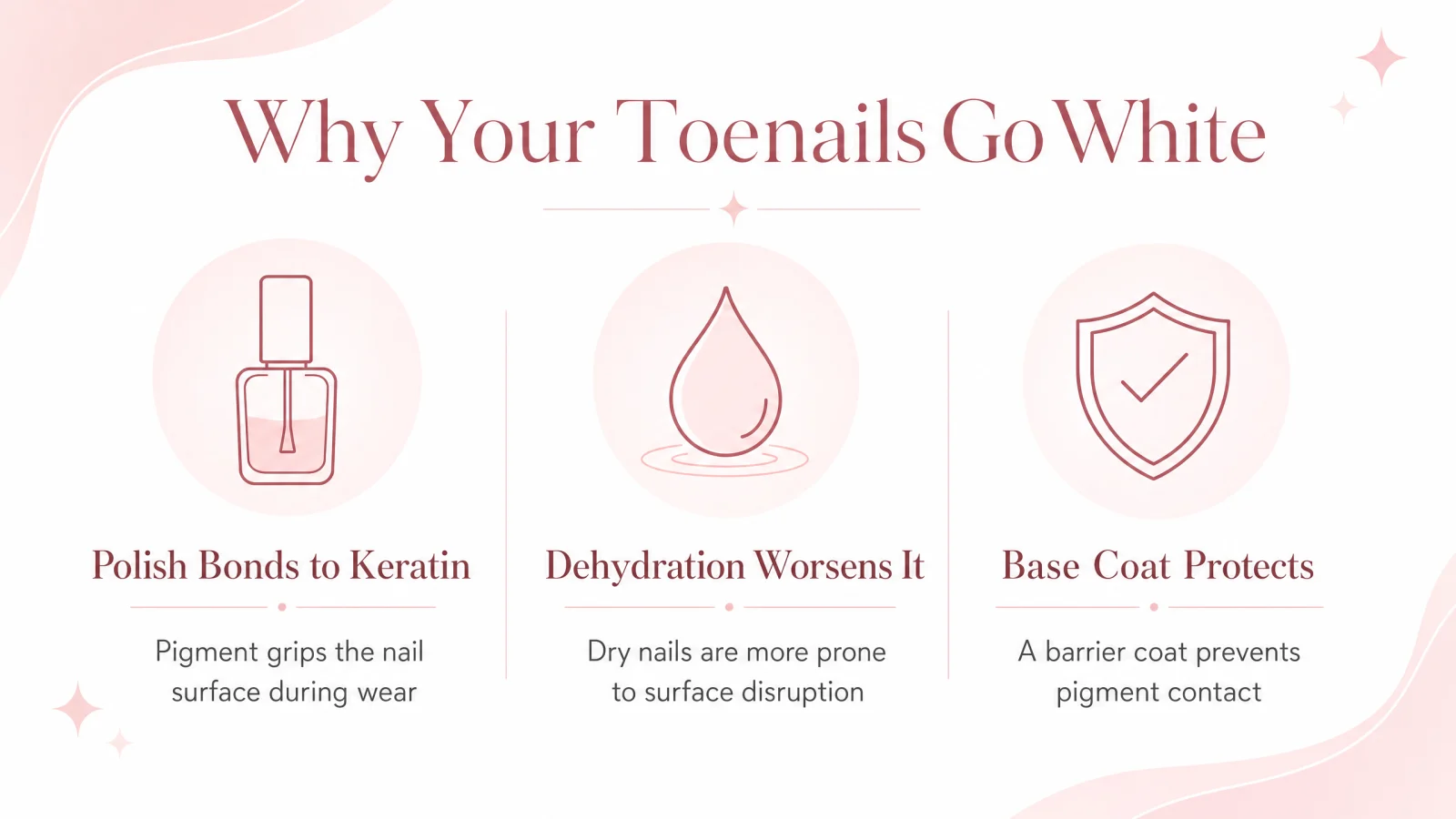
Keratin granulations form when nail polish (especially pigmented or glitter formulas) adheres to the top layer of your nail plate and pulls it away during removal. What’s left is a roughened, porous surface that scatters light differently, creating that unmistakable chalky white appearance.
It is essentially a surface-level disruption, not a structural disruption. Your nail is not eaten away. It is not permanently weakened. The top few layers of keratin are simply disrupted.
Why toenails are more fragile than fingernails
Toenails lead a more difficult life. They spend hours in shoes, are exposed to the effects of heat and sweat in the summer, and grow significantly slower than fingernails. That slower growth means nail polish tends to stay on longer, giving it more opportunity to bond deeply to the nail surface.
Longer wearing times equal stronger adhesion equals more disruption upon removal. It’s a simple equation with a very visible result.
Dark polishes and glitter formulas are more likely to contribute to keratin granulations because they contain more pigment and larger particles that can adhere more firmly to the nail plate surface. If you’ve ever wondered why your toenails look worse after a red or deep burgundy polish than after a pure pink polish, this is exactly why.
Dehydration is the silent partner in all of this
This is the part that surprises most people. Dried out toenails are much more sensitive to keratin granulations than well-hydrated granules. When the nail plate is deprived of moisture, it becomes more brittle and porous and is more likely to break at the surface during nail polish removal.
Think of it as a dry sponge versus a damp one. The dry sponge tears and crumbles. The moist bows.
Nail polish itself acts as a seal over the nail plate, which sounds protective but actually prevents any natural moisture exchange. Spending weeks under an opaque nail polish, especially without a good base coat, can leave the nail surprisingly dried out by the time you finally remove it. The white, chalky appearance you see is partly the disturbed keratin and partly the visual effect of a severely dehydrated nail surface.
The base coat question everyone asks
A high-quality base coat creates a barrier between the pigment and your nail plate. Without one, you’re essentially allowing that pigment to adhere directly to your keratin. It’s the most underrated step in any pedicure routine, and skipping it is one of the most common reasons people end up doing it. white spots on toenails after removing the nail polish.
If you want to know more about what protective layers actually do for your nails, the science behind how a good top coat works makes for a really fascinating read.
While it could actually be something else
It’s worth knowing that not all white spots are keratin granulations. True nail fungus (onychomycosis) can also cause a white or yellowish discoloration, but often looks different. Fungal infections usually cause thickening, crumbling edges and a slightly yellowish tinge instead of the uniform chalky white of granulations.
There is also a condition called true leukonychiacausing white spots or bands that form in the nail plate itself. These are completely different in origin and appearance. If you’ve ever been curious about those smaller white spots that seemingly appear out of nowhere, the real causes of white spots on nails are worth investigating separately.
The most important distinction is context. If the white spots appear immediately after removing the nail polish and the nail surface feels rough or slightly powdery, keratin granulations could be a likely explanation – but if you’re unsure, it’s worth seeking professional advice. If the discoloration was already present before you removed the nail polish, or if the nail looks thick or distorted, it’s worth seeking professional advice.
What recovery actually looks like
The good news is that keratin granulations are temporary. The nail plate grows out and the affected surface eventually moves with it, replaced by fresh, undamaged keratin underneath.
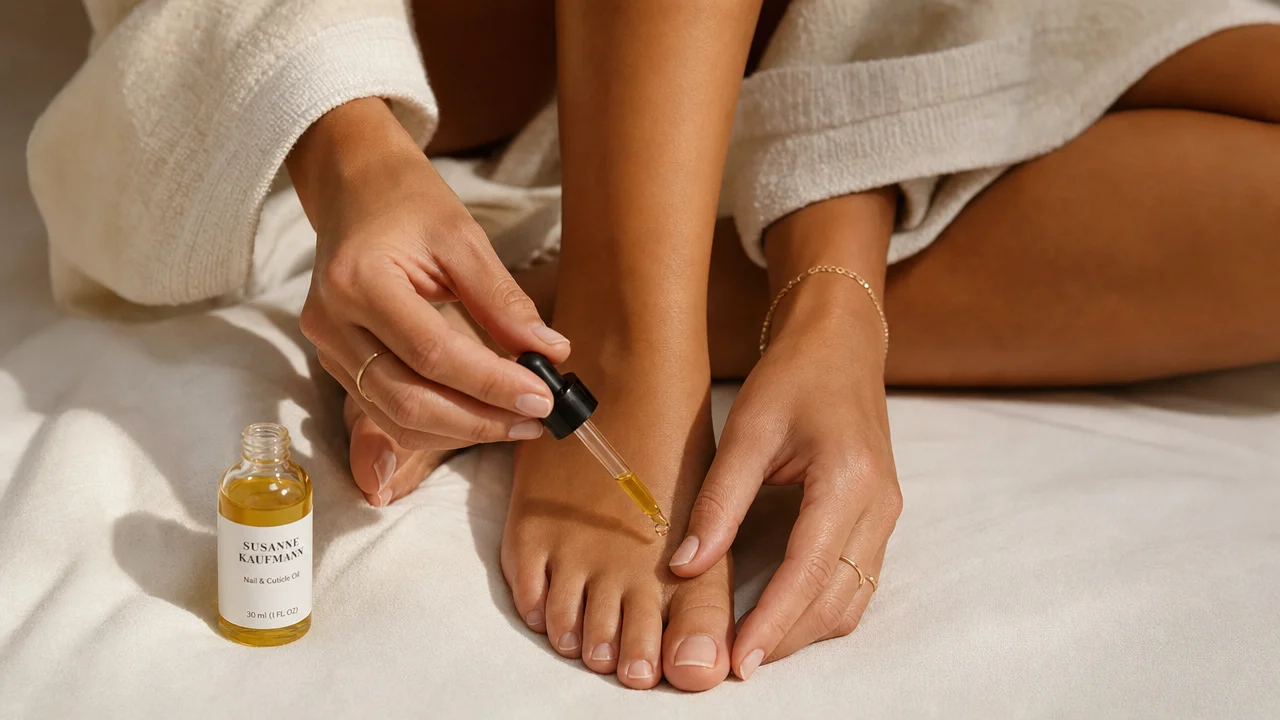
Hydration is the hero of the recovery story. Good quality nail and skin oils, nail-specific serums, and even simple petroleum jelly applied consistently can help improve the appearance of the nail surface over time. The nail plate absorbs moisture surprisingly well if given the chance.
Preparation is extremely important. A good base coat, gentle removal techniques and avoiding excessively long wear times will change the whole picture for your nails in the future. If you’re currently obsessed with the white nail looks that are taking over this summer, sheer and milky formulas are actually much kinder to the nail surface than heavily pigmented, opaque shades.
The conversation comes full circle nail health and nail aesthetics is shifting. More people are realizing that the two things are not in conflict. You can have beautiful, colorful nails and really healthy nails at the same time. Those white spots are not a flaw. They are a signal. Your toenails require a little more care, a little more moisture and a little more thoughtful approach to how you apply and remove color.
What this means for you
- Chalky white toenails after nail polish removal are almost always keratin granulations, a disturbance of the surface rather than serious damage.
- Dark, pigmented and glitter polishes adhere more aggressively to the nail plate and are the most common cause of the problem.
- Dehydration makes everything worse: Nails that are already dry are much more vulnerable to surface disruption during removal.
- A good base coat is the simplest preventive step and acts as a barrier between pigment and your nail plate.
- Recovery is possible. With consistent hydration and proper care, the nail surface will look noticeably dramatically better for many people within a few weeks.
Your toenails deserve better than guesswork
Meet Era on MyNailEra and get the nail knowledge your toenails have been waiting for.


The bottom line
Keratin granulations are one of the most common and misunderstood nail problems out there. They look alarming, but are often temporary and in many cases preventable with proper preparation and removal techniques. Your toenails are not damaged beyond repair. They just ask for a little more attention than they get.
The future of nail care is moving towards understanding your nails, and not just decorating them. And that shift is long overdue.
Ready to actually do something about it? Download MyNailEra and meet Era, your personal nail coach. Era gives you personalized feedback on the health of your nails, guided tutorials from award-winning nail artists, and a truly supportive space to learn at your own pace. Your toenails have been patient enough.