

Share the article
While Spain protests your arrival and Italy demands a bounty just to sit on the sand, a breathtaking Mediterranean paradise actively begs tourists to visit.
No ‘go home’ graffiti, no $15 drinks and no EU fingerprint lines for Americans.
If you’re exhausted by the horror stories coming out of Europe’s most popular seaside resorts, welcome to the coastal gem where you’ve been sleeping.
Have Americans been sleeping on Fethiye this whole time?
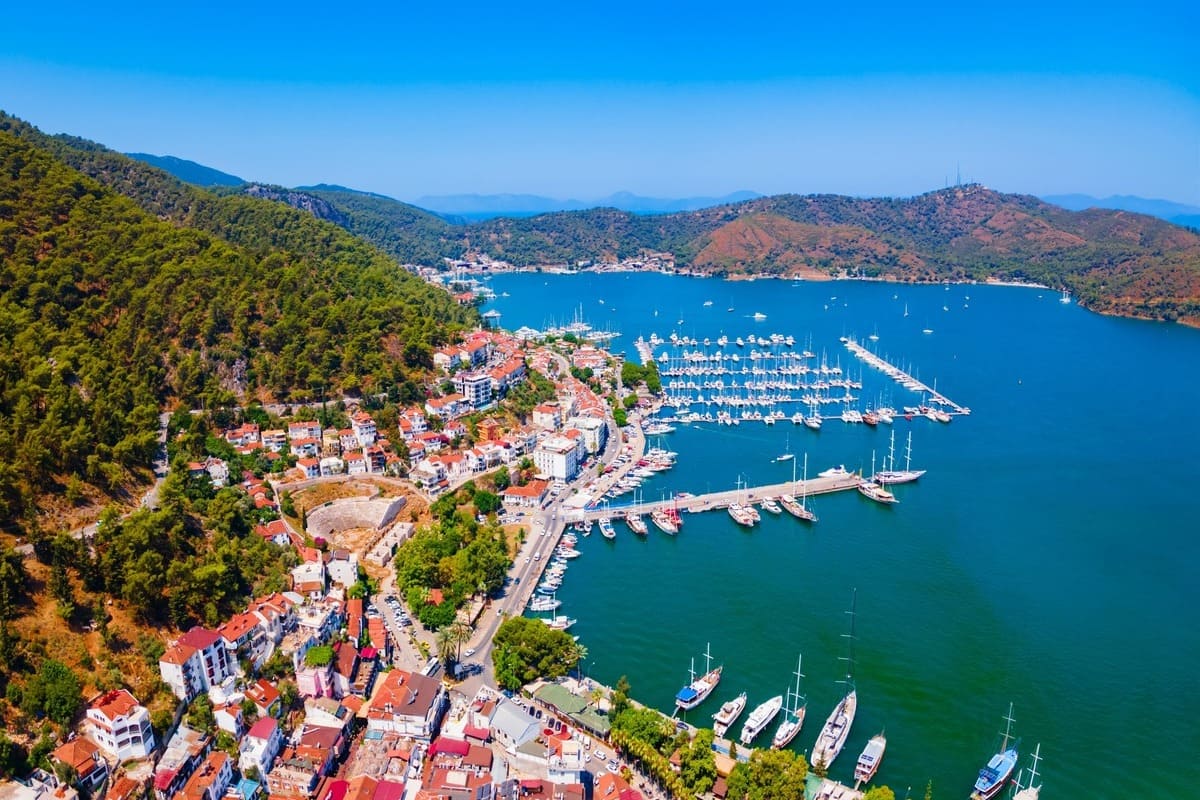
Only this month, the gem on the coast Fethiye in Turkey appeared on London’s transport network, with ads highlighting the coastal landscape, beaches, postcard-ready marina and a plethora of outdoor activities.
This is hardly newsworthy, and you’re probably wondering why we’re paying attention to it at all, but when it comes to Mediterranean getaways, the fact is that one is still running promote yourselfand in effect encouraging foreigners to come is nothing short of mind-boggling.
The campaign in London is of course mainly aimed at the British, but who says the rest of the world is not welcome? Osman Çıralı, chairman of the Fethiye Chamber of Commerce and Industry, was himself quoted the main goal is to attract more tourists to the region.
In the case of the Americans Turkey is a short direct flight away when they land in Istanbuland from there they can easily transfer to all destinations on the Turkish coast, including Fethiye.
Fethiye’s most complete destination?
I’ve been all over Turkey myself in my time, from the towering minarets of Istanbul to the club-lined beaches of Antalya and everything in between, and Fethiye is perhaps the most complete destination.
It combines centuries-old history, a lively port city feel and some of the most beautiful beaches in Anatolia. all within a short drive or boat ride.
It’s been a few years since I’ve visited myself – to be more precise, I haven’t been back since 2021 – so take this with a grain of salt, but Fethiye is perhaps one of the most affordable destinations in the entire Mediterranean.
I compared my expenses at the time to today’s current prices, because with the ever-changing value of the Turkish lira you never know, and my theory still seems to hold up quite well.
Fethiye remains cheaper overall than Bodrum and Antalya, two of the most popular beach hotspots in Turkey, most of the Greek islands, Croatia, Italy and Spain.
How affordable will Fethiye, Turkey be in 2026?
Here’s what to expect in terms of prices in 2026, with averages from a number of sources such as Numbeo, Budget your tripand first-hand accounts from travelers who have recently been to Reddit:
- Coffee: $1.50 – $2.50 (I may have spent about $0.70 at the time)
- Turkish breakfast in a taverna in the center: $18 (slightly higher than the $8-$10 I used to pay)
- Kebab or pide from a takeaway restaurant: $5–$10 (doesn’t seem to have changed much)
- Tasty seafood dinner: $20-$35 (similar to most European beach cities, although it has certainly increased since 2021)
- Local beer: $3 – $5
- Cocktails in beach bars: $8–$12
- Taxi within the city: $3–$8 (sounds accurate)
- Boat trip (full day): $25 – $50
- Hotel (3 stars): $40 – $80 per night
- Hotel (4-5 stars): $80 – $180 per night
Overall, I’d say backpackers will need between $40 and $60 per day, while comfortable travelers should set aside between $70 and $120. If you like luxury, €350+ per day sounds more realistic.
Again, Fethiye is not the cheapest Medical center there, but it’s certainly cheap…uh side compared to the Santorinis and Mallorcas of the world. Even for Turkey it’s a pretty good summer dealwhere local prices are about 20% lower than, for example, glitzy Bodrum.
How safe is Fethiye?
And yes, I know, besides the fact that its history and culture are closely intertwined with that of Europe, Turkey is in or near the Middle East, depending on who you ask, and there’s a lot of concern about the Middle East right now, whatever.
The reality on the ground is very different from what a one-dimensional AI response, or the fear-mongering mainstream media, will tell you: Turkey may have problematic neighbors, but it is very safe.
Yes, the scam culture isn’t great, and we wouldn’t get into a taxi without checking if they have their taximeter on, but violent crimes against tourists are extremely uncommon, especially in a mid-sized, resort-oriented destination like Fethiye.
If we were to judge by the way some of these ‘travel experts’ paint it, Turkey would be in the red category of the Traveler Safety Index, one of the best sources to gauge the safety situation on the ground because it is based on reports from real travelers.
The reality is very, very different. To be precise it scores 63/100, which is not a great achievement, but much higher than what you would think if you read all the doomsday stories. Moreover, most complaints relate to… drum roll… scams.
Something you can easily avoid by being proactive, and practice your negotiation skills a little:
No fingerprints on Turkey this summer


Be cheaper not Fethiye’s only asset this season:
Unlike most of Europe, Turkey is not asking Americans to agree to fingerprinting or taking biometrics upon arrival, nor is the country facing serious border delays and travel disruptions as a result of these measures.
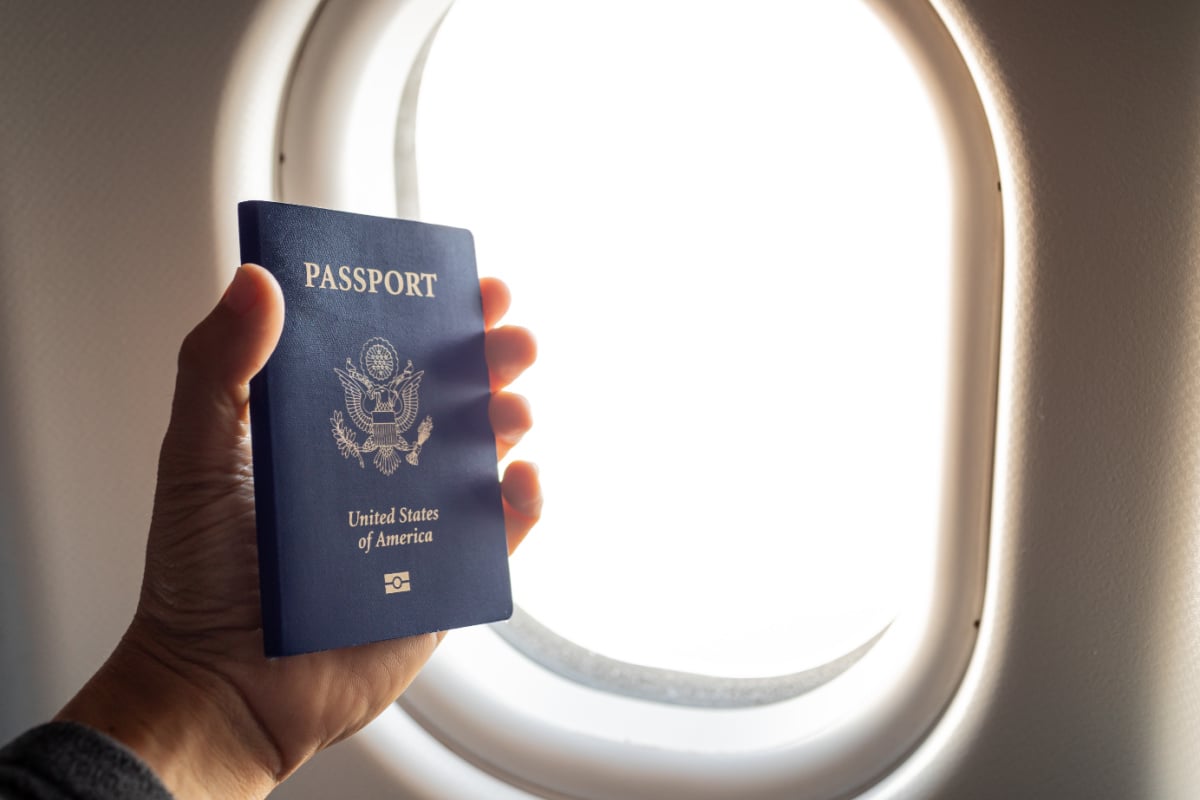
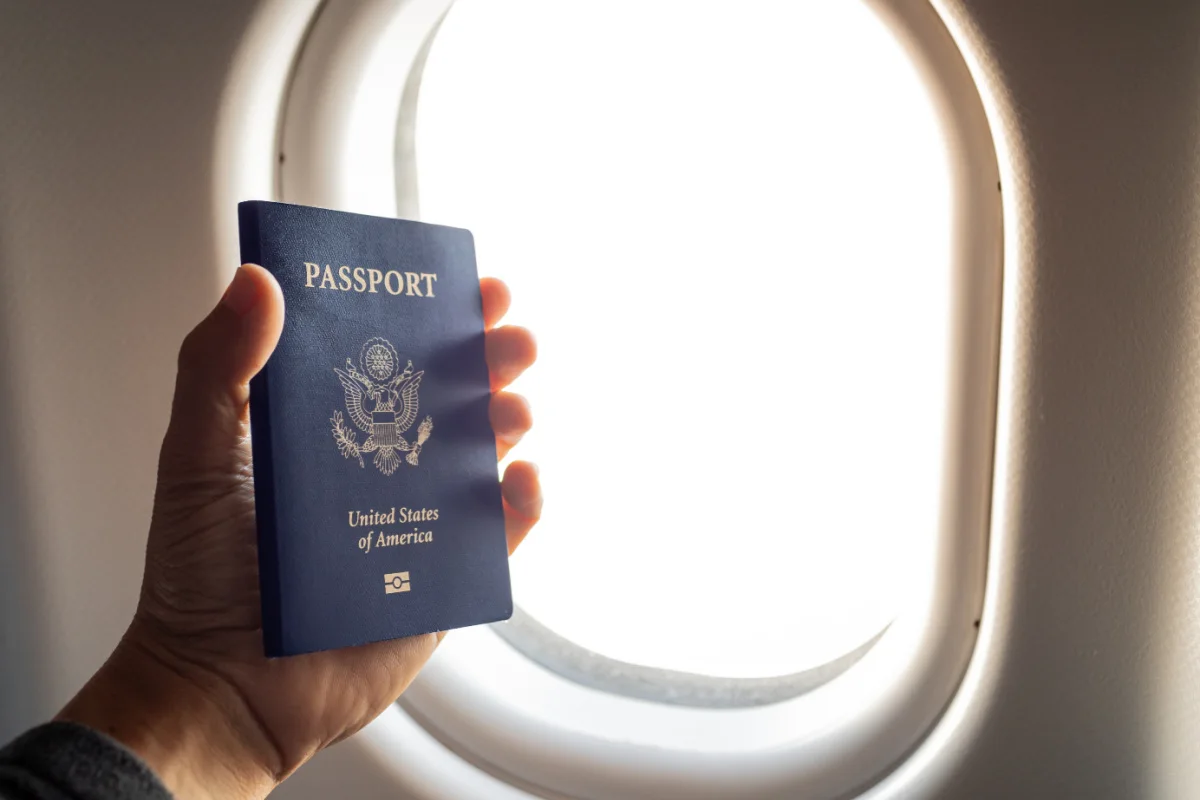
Turkey is not a member of the European Union nor of the Schengen zone; so, Americans are not subject to Europe’s final additional checks upon landing. On the other hand, Turkey has been easing red tape for American tourists in recent years, scrapping their long-standing e-Visa and simply asking you to bring a passport that is valid for six months beyond your intended travel dates.
If you’re flying abroad this summer, especially to Europe, make sure you check well in advance what documentation your destination requires via the Entry Requirement Checker.
Why even To go To Fethiye, Turkey

What is there to actually see in Fethiye, you ask?
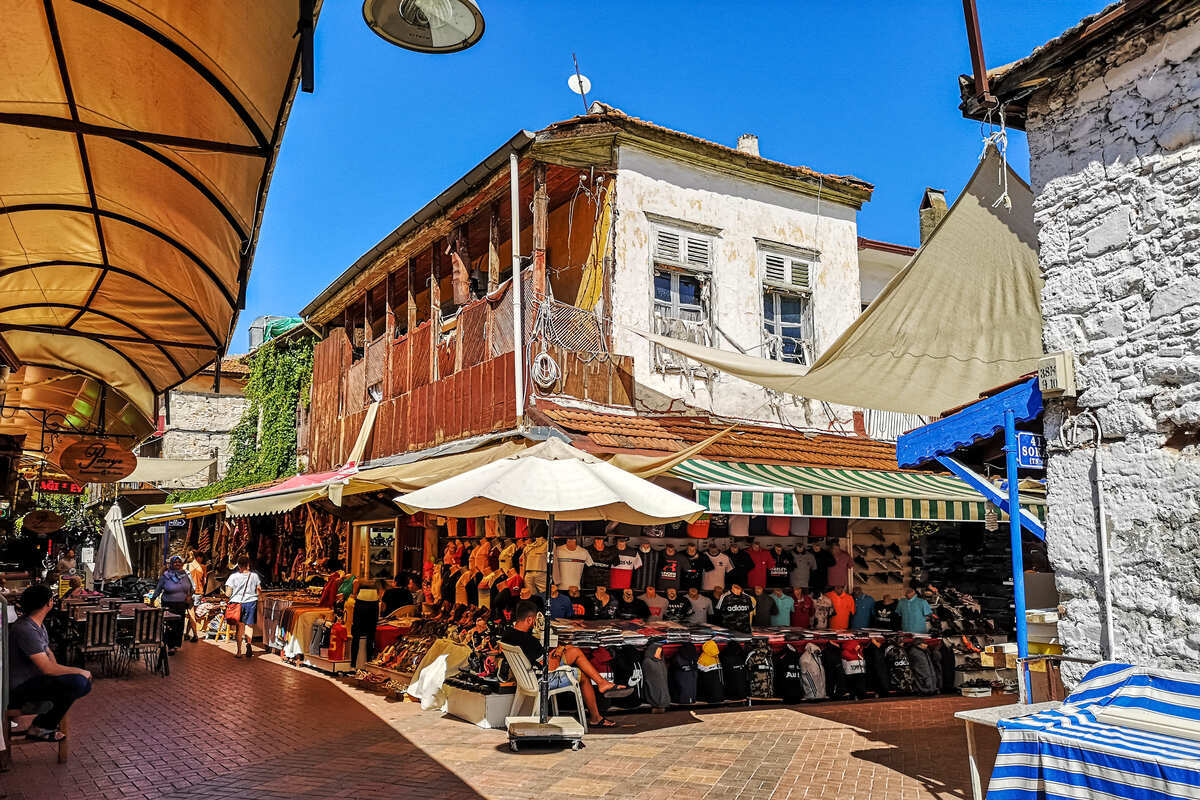
Let’s just say that Paspatur, the local ‘old town’, is one of the cutest you’ll see in Turkey, with its narrow Ottoman-era streets, local restaurants serving fresh seafood and grilled meats daily, and the cozy Turkish tea gardens practically draped in handmade carpets.
However, it gets quite warm during the day, so I’d say it’s best to explore in the evening.
If you don’t mind the chaos of the port city and the strong stench of fish drying in the sun, then a visit to the Fish Market is a must: just pick a catch from one of the fishmongers and have a nearby restaurant cook it exactly the way you like it.
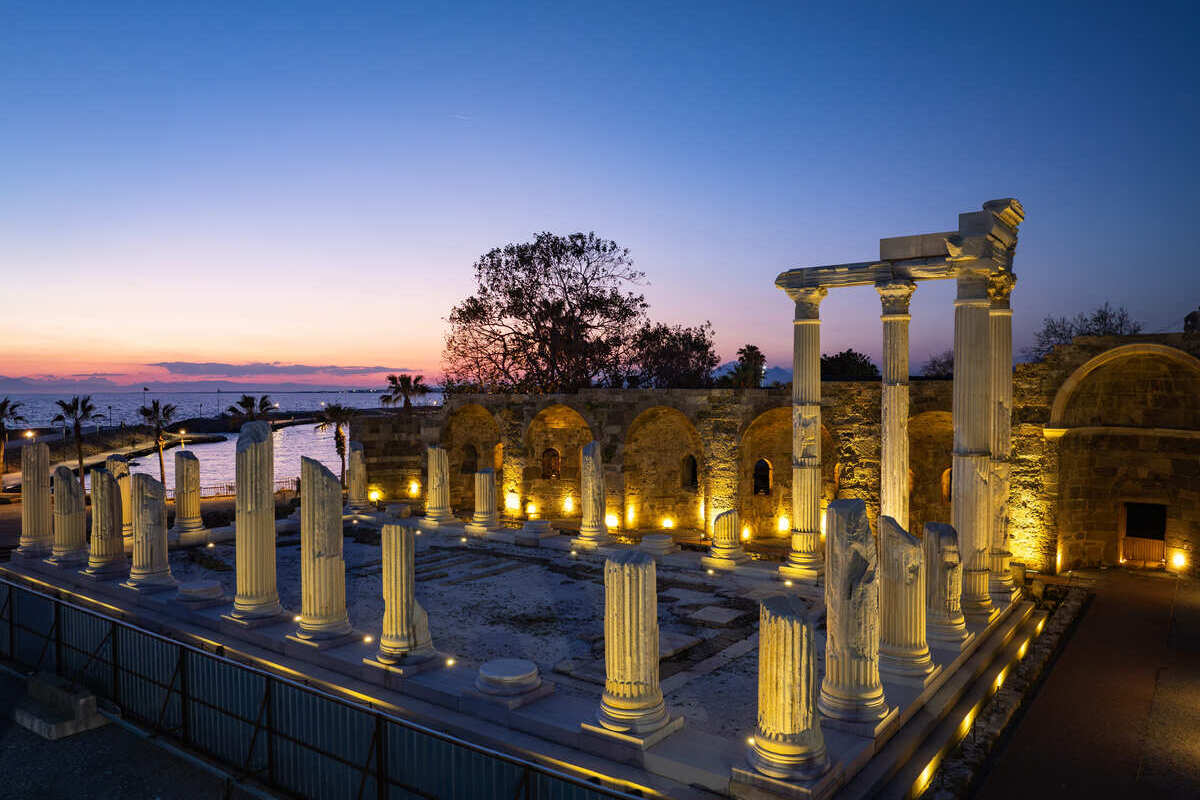
And if you know the first thing about me after all these years of writing for Travel Off Path, it’s that I’m a big culture buff myself, and Amyntas might just take the cake for the most impressive ancient site I’ve seen in Turkey yet.
It’s a series of 2,400-year-old Lycian tombs carved directly into a cliff, and unlike other remote archaeological zones in Turkey, you don’t even need a car to get here: it’s an easy 15 to 20 minute walk from the city center.
Pro tip? Visit just before sunset to see the cliffs glow orange in the changing light.
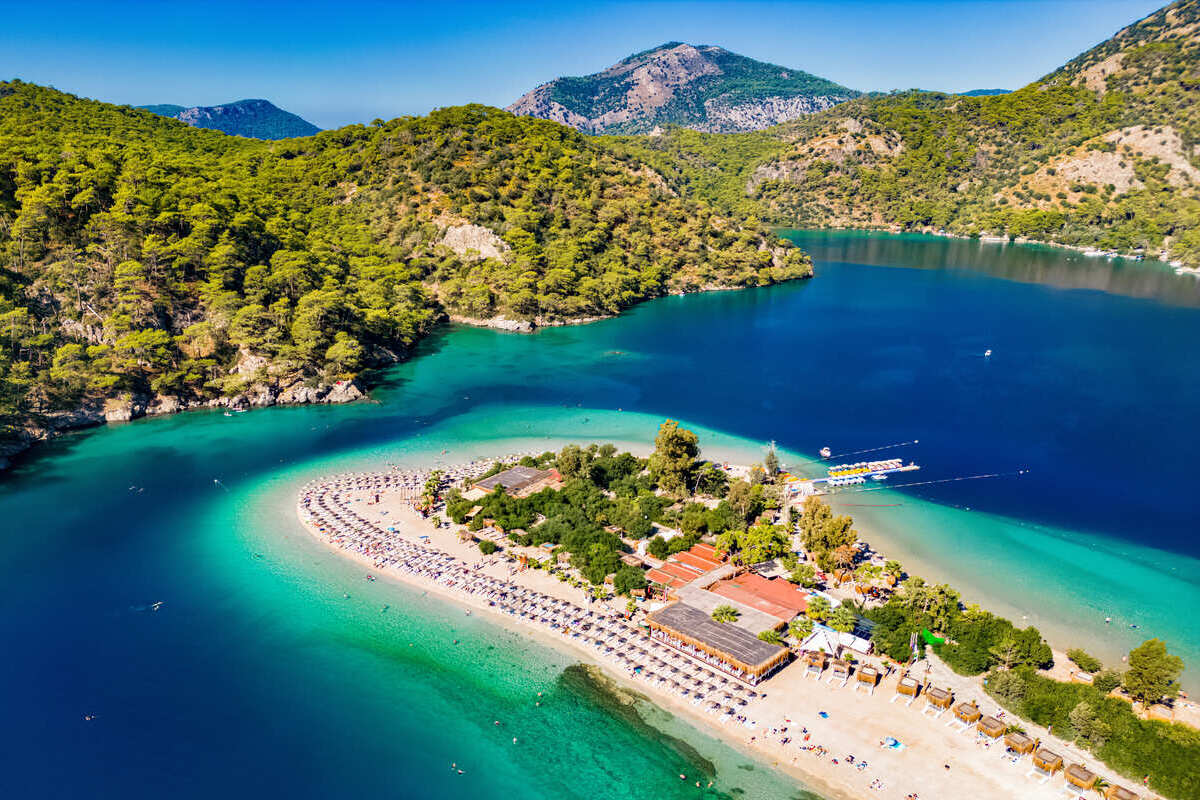
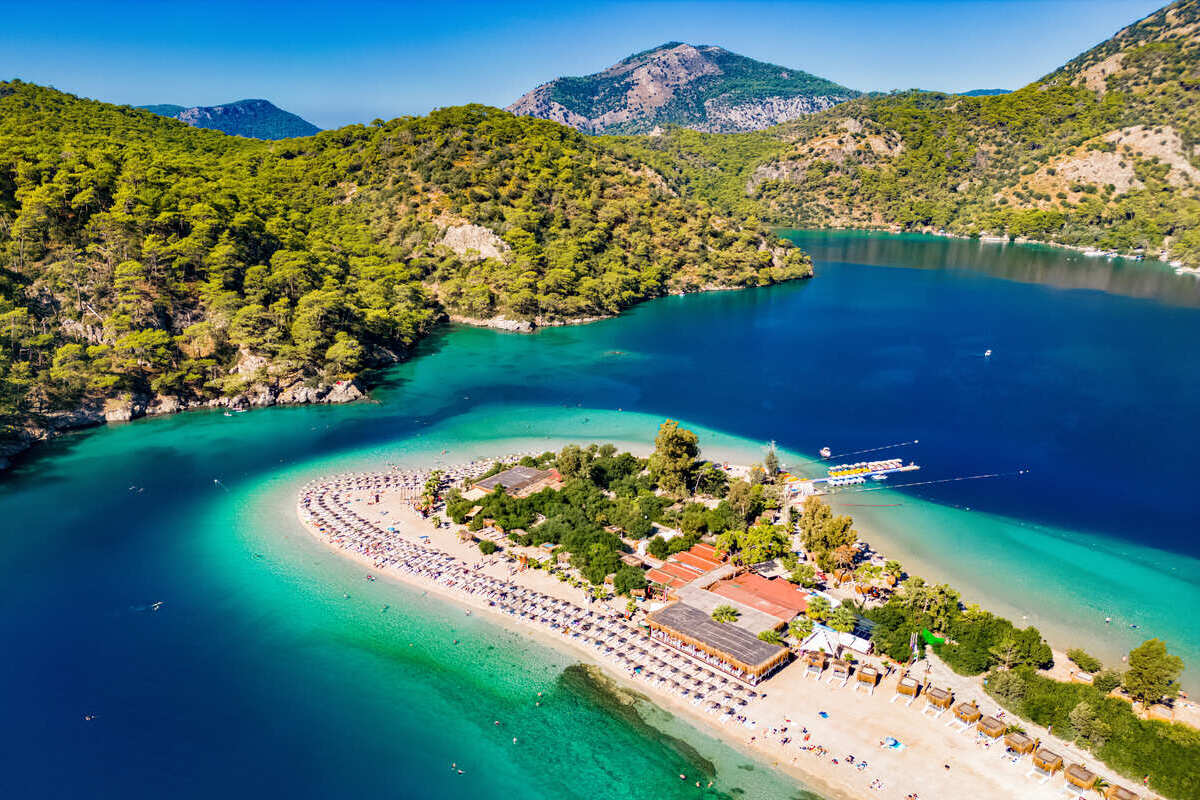
Okay, let’s be honest: most people come to Fethiye, and Turkey as a whole, for the heavenly beaches. It turns out that the world-famous turquoise Turkish lagoon you’ve probably seen going around on TikTok lately, Ölüdeniz, is a 22-minute drive outside of the city.
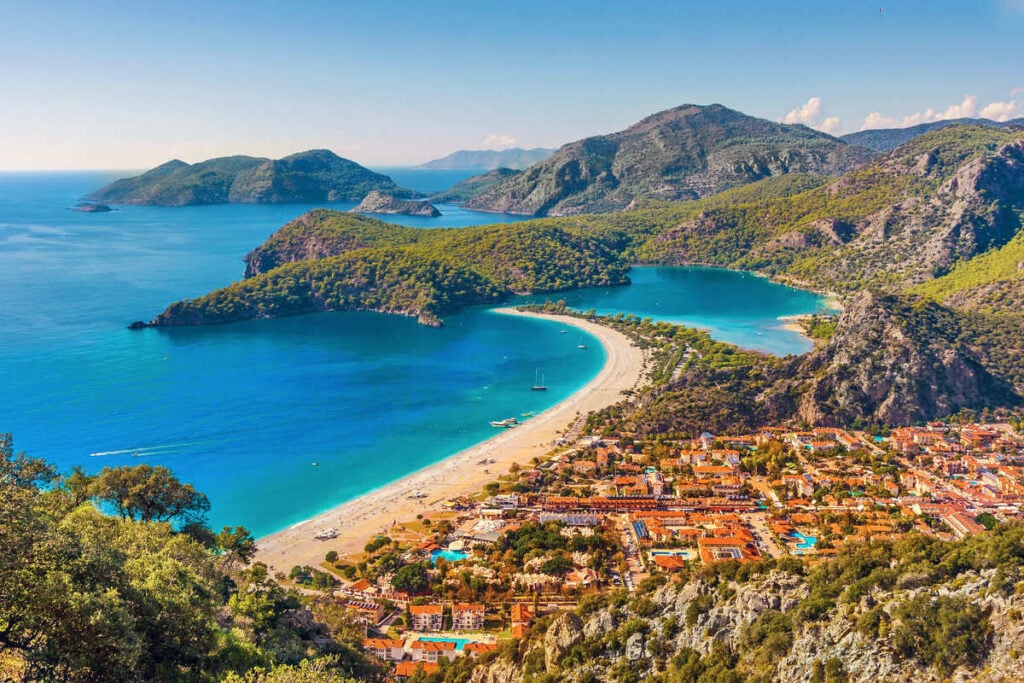
White sand mixed with pebbles, calm, crystal clear water and towering peaks as a backdrop. Mediterranean bliss in a nutshell.
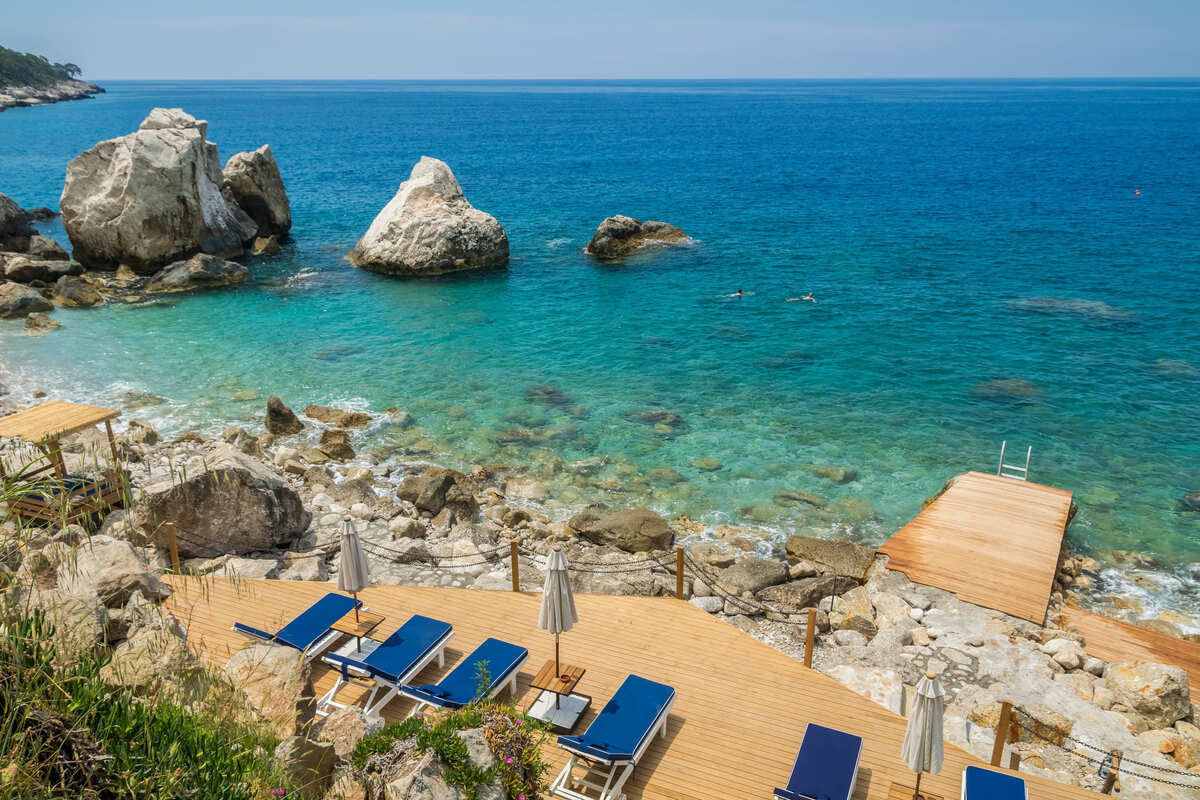
It’s been a few trips to Turkey since my little Fethiye adventure, but I remember being particularly impressed by the Butterfly Valley, just up the road, 37 minutes away: it’s a spectacular hidden beach beneath towering cliffs, and without a doubt one of the Mediterranean’s most dramatic locations.
That said, it may be easier to reach by boat.
Don’t feel like leaving the city at all? Located about five kilometers from the city center, Çalış Beach has the typical Turkish pebble and sand atmosphere, calm waters and loads of cafes and restaurants along the promenade to choose from.