


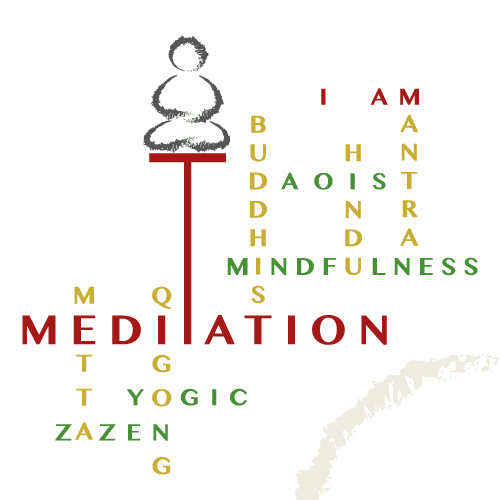
Did you know that there are as many techniques for meditation as there are sports? The only way to determine which meditation style suits you best is to try them out.
Meditation is known for its myriad benefits, and its popularity is on the rise. Whether you’re seeking information online or browsing in a bookstore, you’ll find a plethora of meditation styles. This can leave you wondering which method is right for you.
This is a crucial inquiry. Each meditation style offers distinct benefits, and some may resonate more with you than others—similar to how various sports or diets serve different individuals.
With hundreds, if not thousands, of meditation varieties available, this article will focus on the most popular ones. Its goal is to guide you in experimenting with various meditation approaches, helping you to discover the one that resonates best with you.
Finding the right technique and practicing it with the appropriate mindset is one of the three essential Pillars of Meditation.
Meditation is not a one-size-fits-all practice. You should be open to experimenting with many styles to identify the one that meets your unique needs and personality. For instance, the meditation technique that effectively alleviates anxiety may not be the most suitable for dealing with depression or facilitating spiritual awakening.
If you prefer more dynamic meditation approaches, take a look at my guide on walking meditation.
Advice regarding meditation posture is generally consistent across various seated styles, so I will delve into it in greater detail when discussing the first technique (Zen meditation).
I have endeavored to provide an “Is it for me?” section, which includes general insights about each practice. Please remember that these observations are provisional; they are intended to offer guidance, and practically anyone might find appeal in any of these modalities.
This article does NOT dictate which is the “best” type of meditation—because no such thing exists, and I’m not here to instigate controversy. I have chosen to focus more on meditative practices; I may write a separate article on related practices that are more centered on relaxation or contemplation.
If you are just starting your meditation journey, you might also appreciate the post on meditation for beginners—how to establish a consistent practice.
Conversely, if you’re interested in the historical development of meditation through the ages, check out my article on the history of meditation.
(This article is also accessible in Russian, Portuguese, Romanian, Croatian, and Polish. Translations were generously provided by LiveAndDare readers.)
[Tweet “The best meditation is the one that works for you, at this stage in your life.”]
Types of Meditation PDF
By the way, would you like to have a PDF version of this article for easy future reference?
GENERAL TYPES OF MEDITATION
Researchers typically categorize meditation based on how attention is focused, dividing it into two main types: Focused Attention and Open Monitoring. I propose a third category: Effortless Presence.
Focused Attention Meditation
This involves concentrating on a single object for the entirety of the meditation session. This object could be your breath, a mantra, a visualization, a part of your body, or an external object. As practitioners progress, their ability to maintain attention on the chosen object strengthens, leading to fewer distractions that are also shorter in duration. Both the depth and steadiness of their focus improve.
Examples include: Samatha (Buddhist meditation), certain forms of Zazen, Loving Kindness Meditation, Chakra Meditation, Kundalini Meditation, Sound Meditation, Mantra Meditation, Pranayama, some forms of Qigong, and many more.
Open Monitoring Meditation
In this practice, instead of fixating on a particular object, awareness remains open, monitoring all facets of our experience without judgment or attachment. All perceptions, whether internal (thoughts, feelings, memories, etc.) or external (sounds, smells, etc.), are acknowledged and recognized for what they are. This entails a non-reactive observation of the content of experience from moment to moment without engaging with it. Examples include: Mindfulness meditation, Vipassana, and various types of Taoist Meditation.
Effortless Presence
This state is characterized by attention that is not directed at any specific object but rests upon itself—quiet, empty, steady, and introverted. It can also be referred to as “Choiceless Awareness” or “Pure Being.” Most quotes about meditation you encounter speak to this state.
This represents the ultimate goal behind all forms of meditation, rather than a meditation type in itself. Traditional techniques recognize that both the object of focus and the monitoring process are merely a means to train the mind, enabling the discovery of effortless inner silence and deeper states of consciousness. Ultimately, both the object of focus and the practice itself are transcended, leaving only the practitioner’s true self as “pure presence.”
In some techniques, this focus is maintained from the outset. Examples include: Self-Enquiry (“I am” meditation) as taught by Ramana Maharishi; Dzogchen; Mahamudra; certain forms of Taoist Meditation; and some advanced techniques in Raja Yoga. In my view, this type of meditation often requires prior training to be effective, even if this is not explicitly stated (only implied).
1) BUDDHIST MEDITATION TECHNIQUES
Zen Meditation (Zazen)
Origin & Meaning
Zazen (坐禅) translates to “seated Zen” or “seated meditation” in Japanese. It has its origins in the Chinese Zen Buddhism (Ch’an) tradition, tracing back to the Indian monk Bodhidharma (6th century CE). The most recognized forms in the West stem from Dogen Zenji (1200~1253), the founder of the Soto Zen movement in Japan. Similar practices are seen in the Rinzai school of Zen in Japan and Korea.
How to Practice
This is generally performed seated on the floor over a mat and cushion, with legs crossed. Traditionally, it was performed in the so-called lotus or half-lotus position, but this is not strictly necessary. Nowadays, most practitioners adopt the following posture:
Or seated on a chair:
Images courtesy of Zen Mountain Monastery
The most critical aspect, as depicted in the images, is maintaining a completely straight back, extending from the pelvis to the neck. The mouth should be closed, and the eyes lowered, allowing your gaze to rest on the ground about two or three feet ahead.
From a mental perspective, this practice is typically approached in two ways:
- Breath Focus — concentrate fully on the movement of your breath as it enters and exits through your nose. This can be enhanced by counting breaths mentally. Each time you inhale, count a number, starting from 10 and then descending to 9, 8, 7, etc. Once you reach 1, restart at 10. If you become distracted and lose track, gently redirect your attention to 10 and continue from there.
- Shikantaza (“just sitting”) — in this approach, practitioners do not employ a specific meditation object; instead, they strive to remain present, aware of and observing what flows through their minds and surroundings, without fixating on any particular thought. This represents a form of Effortless Presence meditation.
Learn More:
Is It Right for Me?
Zazen is a rather straightforward meditation style, and you can easily find a plethora of robust communities practicing it, along with ample information available online. There is a strong emphasis on maintaining proper posture as a means to enhance concentration. It is typically practiced in Zen Buddhist centers (Sangha), which offer substantial community support.
In many of these centers, you will also find it accompanied by other elements of Buddhist practice: prostrations, some level of ritual, chanting, and group readings of the Buddha’s teachings. Some individuals will appreciate this, while others may not. Personally, I practiced Zazen within a Buddhist community for three years and found that these elements, along with a degree of formality, can offer a structured environment for practice, which can also be meditative in itself.
Vipassana Meditation
Origin & Meaning
“Vipassana” is a Pali term that signifies “insight” or “clear seeing.” It is a traditional Buddhist practice, dating back to the 6th century BC. Vipassana meditation, as taught in recent decades, originates from the Theravada Buddhist tradition and was popularized by S. N. Goenka and the Vipassana movement.
The popularity of Vipassana meditation has also led to increased familiarity with “mindfulness of breathing” in the West, often referred to simply as “mindfulness.”
How to Practice
[There is some conflicting information on how to practice Vipassana. Generally, however, most teachers emphasize starting with mindfulness of breathing in the initial stages to stabilize the mind and achieve “access concentration.” This resembles focused attention meditation. The practice then evolves into developing “clear insight” regarding bodily sensations and mental phenomena, observing them moment by moment without attachment. Below is a beginner-friendly introduction; further information can be obtained through the links provided or by learning from a teacher (possibly during a Vipassana retreat).]
Ideally, practitioners should sit on a cushion on the floor, cross-legged, with an erect spine; alternatively, a chair may be used, but the back should not be supported.
The initial focus is on developing concentration through samatha practice, typically achieved through breath awareness.
Direct your full attention, moment by moment, to the sensation of your breath. Pay attention to the subtle sensations of your abdomen rising and falling. Alternatively, you can focus on the sensation of air passing through your nostrils and brushing against the upper lip’s skin—though this approach requires more practice and is more advanced.
As you concentrate on your breath, you’ll notice that other perceptions and sensations emerge: sounds, bodily feelings, emotions, etc. Simply acknowledge these phenomena as they arise in your field of awareness, and then return your focus to the breath. Keep your attention anchored on the primary object of meditation (the breathing), while these other thoughts or sensations serve simply as “background noise.”
The object of focus in this practice (e.g., the movement of the abdomen) is called the “primary object.” A “secondary object” encompasses anything else that appears in your field of perception—whether through your five senses (sound, smell, itching, etc.) or through your mind (thought, memory, feeling, etc.). If a secondary object captures your attention, pulling you away or triggering desire or aversion, you should briefly focus on this secondary object, labeling it with a mental note, such as “thinking,” “memory,” “hearing,” or “desiring.” This approach is often termed “noting.”
Mental notes serve to identify an object in general terms without delving into specifics. For example, when noting a sound, label it “hearing” rather than “motorcycle,” “voices,” or “barking dog.” If an unpleasant sensation arises, note it as “pain” or “feeling” instead of “knee pain” or “my back pain.” When you become aware of a smell, simply note “smelling” for a brief moment without identifying the particular scent.
Once you have cultivated “access concentration,” your attention should then shift to the object of practice, which typically involves thoughts or bodily sensations. Observe these objects of awareness without attachment, allowing thoughts and sensations to arise and dissipate naturally. Mental labeling (as described above) is often utilized to prevent getting swept away by thoughts and to maintain an objective awareness of them.
Through this practice, you will develop clear perception, recognizing that the phenomena observed are characterized by the three “marks of existence”: impermanence (annica), dissatisfaction (dukkha), and the absence of a self (annata). Consequently, you will cultivate equanimity, peace, and inner freedom in relation to these inputs.
Learn More:
Is It Right for Me?
Vipassana is an excellent meditation style for grounding yourself in your body and understanding your mind’s workings. It has gained immense popularity, and a wealth of teachers, websites, and literature are available on the topic, along with 3 to 10-day retreats (often donation-based). The teachings are always offered for free, with no formalities or rituals associated with the practice.
If you are completely new to meditation, Vipassana or Mindfulness may be good starting points.
Mindfulness Meditation
Origin & Meaning
Mindfulness Meditation is adapted from traditional Buddhist practices, particularly Vipassana, while also being influenced by other lineages (such as Vietnamese Zen Buddhism, particularly from Thich Nhat Hanh). “Mindfulness” is the common Western translation for the Buddhist term sati. Anapanasati, or “mindfulness of breathing,” is a component of the Buddhist practice of Vipassana or insight meditation, as well as other Buddhist meditative practices, including zazen (source: Wikipedia).
One of the key figures in introducing Mindfulness to the West is Jon Kabat-Zinn. His Mindfulness-Based Stress Reduction (MBSR) program, developed in 1979 at the University of Massachusetts Medical School, has been implemented in numerous hospitals and health clinics in recent decades.
How to Practice
Mindfulness meditation involves intentionally focusing on the present moment, accepting and non-judgmentally paying attention to the sensations, thoughts, and emotions that arise.
For the “formal practice” portion, sit on a cushion on the floor or in a chair, ensuring your back is straight and unsupported. Pay close attention to your breathing. When you inhale, notice that you are breathing in and how it feels. When you exhale, be aware that you are breathing out. Continue this for the duration of your meditation session, consistently redirecting your focus back to your breath. Alternatively, you can shift your attention to the sensations, thoughts, and feelings that arise.
The aim is to avoid intentionally adding anything to your present moment experience but rather to be aware of what transpires without losing yourself in anything that arises.
Your mind will inevitably wander into distractions such as sounds, sensations, and thoughts. When this occurs, gently acknowledge that you have become distracted and return your attention to your breath or to objectively observing the thought or sensation. There is a significant difference between being immersed in a thought/sensation and merely being aware of its presence.
Learn to enjoy your practice. Afterward, take a moment to appreciate how differently your body and mind feel.
Additionally, you can practice mindfulness during your daily activities: while eating, walking, or conversing. In “daily life” meditation, the objective is to be fully aware of the present moment, engaging in what is happening rather than operating in “automatic mode.” If you are speaking, this means paying attention to the words you articulate, how you express them, and listening with full presence and attention. When walking, this involves being conscious of your bodily movements, the sensation of your feet connecting with the ground, the sounds you hear, etc.
Your seated practice enhances your daily life practice, and vice versa. Both are equally significant.
Learn More:
Is It Right for Me?
For the general populace, this is arguably the most advisable approach to initiating meditation. It is the type of meditation primarily taught in schools and hospitals, to the best of my knowledge. The “mindfulness movement” as practiced in contemporary society is not Buddhism per se but rather an adaptation of Buddhist practices recognized for their benefits in promoting good physical and mental health and overall well-being.
For many individuals, Mindfulness Meditation may be the only form of meditation they enjoy, especially if their focus is solely on the physical and mental advantages of meditation since it is typically taught independent of many Eastern concepts and philosophies traditionally associated with the practice. And for this purpose, it is excellent—it will introduce numerous positive elements into your life.
However, if your aim is deeper transformation and spiritual growth, then mindfulness meditation may just be an initial step for you. From this point, you can transition into Vipassana, Zazen, or other types of meditation.
Loving Kindness Meditation (Metta Meditation)
Origin & Meaning
Metta is a Pali term that conveys kindness, benevolence, and goodwill. This practice originates from Buddhist traditions, particularly the Theravada and Tibetan lineages. The field of “compassion meditation” is a contemporary scientific domain that demonstrates the effectiveness of metta and related meditative practices.
Demonstrated benefits include: enhancing one’s capacity to empathize with others; cultivating positive emotions through compassion, including a more loving attitude toward oneself; increased self-acceptance; a greater sense of competence in one’s life; and a heightened sense of purpose in life (read more in our other post).
How to Practice
Begin by sitting down in a meditation position with your eyes closed, generating feelings of kindness and benevolence in your mind and heart. Start by cultivating loving-kindness toward yourself, then progressively extend it to others and all beings. The suggested progression typically follows this order:
- yourself
- a good friend
- a “neutral” person
- a challenging person
- all four of the above equally
- and finally, the entire universe
The emotion to be nurtured is the wish for happiness and well-being for all. This practice can be enhanced by reciting specific phrases or sentences that evoke “boundless warm-hearted feelings,” visualizing the suffering of others and sending love; or by imagining the state of another being, wishing them happiness and peace.
The more you engage in this meditation, the greater joy you will experience. That is the secret behind Mathieu Richard’s happiness.
“For one who properly attends to the liberation of the heart through benevolence, unarisen ill will does not arise, and any arising ill will is relinquished.” – The Buddha
In this article, Emma Seppälä, Ph.D., explores the 18 scientifically proven benefits of Loving-Kindness meditation.
Learn More:
Is It Right for Me?
Do you sometimes feel overly critical of yourself or others? Or do you feel the need to enhance your relationships? Loving-kindness meditation can aid you. It benefits both selfless and self-centered individuals, increasing overall happiness. You cannot experience loving-kindness and depression (or any other negative emotion) simultaneously.
This practice is also frequently recommended by Buddhist teachers as a remedy for insomnia, nightmares, or anger issues.
2) HINDU MEDITATION TECHNIQUES (Vedic & Yogic)
Mantra Meditation (OM Meditation)
Origin & Meaning
A mantra is a syllable or word, often devoid of a specific meaning, that is repeated to focus the mind. It is not an affirmation intended to convince oneself of something.
Some meditation instructors assert that both the choice of the word and its accurate pronunciation are crucial due to the “vibration” associated with the sound and meaning, hence the necessity of initiation. Others maintain that the mantra is merely a tool to concentrate the mind, making the specific word irrelevant.
Mantras are utilized across various traditions, including Hinduism, Buddhism (especially Tibetan and “Pure Land” Buddhism), Jainism, Sikhism, and Daoism (Taoism). While some refer to mantra meditation as “OM meditation,” this is merely one of the many mantras that can be employed. A more devotionally oriented practice of mantras is termed japa, involving the repetition of sacred sounds (names of God) with love.
How to Practice
As with most meditation types, mantra meditation is usually practiced sitting with an erect spine and closed eyes. The practitioner silently repeats the mantra in their mind throughout the session.
This practice may sometimes be combined with breath awareness or synchronized with it. In other instances, the mantra is whispered softly as a means to aid concentration.
As you repeat the mantra, it creates a mental vibration that allows the mind to access deeper levels of awareness. As you meditate, the mantra becomes increasingly abstract and indistinct, eventually guiding you into a state of pure consciousness from which the vibration emerged.
Repetition of the mantra assists in disconnecting from the thoughts occupying your mind, allowing you to slip into the void between thoughts. The mantra serves as a support for your meditation practice. Mantras can be viewed as ancient power words with subtle intentions that help us connect to the spirit, the source of everything in the universe. (Deepak Chopra)
OM is a well-known example of a mantra, but there are thousands of others. Here are some of the most recognized mantras from Hindu and Buddhist traditions:
- om
- so-ham
- om namah shivaya
- om mani padme hum
- rama
- yam
- ham
You may practice for a specified duration or for a designated number of repetitions—traditionally 108 or 1008. In the latter case, beads are typically employed to keep count.
As your practice deepens, you may find that the mantra continues “on its own” like a hum in your mind. Alternatively, the mantra may even fade away, leaving you in a state of profound inner tranquility.
Various methods of mantra meditation exist. I elaborate on them in detail, along with the reasons mantras are powerful, in my article on mantra meditation.
Learn More:
Is It Right for Me?
Many individuals find it easier to concentrate using a mantra than with breath focus. Since a mantra is a word, and thoughts are often perceived as words, maintaining focus on a mantra can be simpler than on the breath. This practice is particularly beneficial when the mind is racing with numerous thoughts, as mantra meditation demands ongoing attention.
Meditating with a mantra can also facilitate the integration of your meditative state into daily life. Regardless of the activity you are engaged in, you can simply repeat the mantra in your mind.
Transcendental Meditation (TM)
Origin & Meaning
Transcendental Meditation is a specific form of Mantra Meditation introduced by Maharishi Mahesh Yogi in 1955 in India and later in the West. In the late 1960s and early 1970s, the Maharishi gained fame as the guru to the Beatles, The Beach Boys, and other celebrities.
This widely practiced meditation technique boasts over 5 million practitioners globally, and a considerable amount of scientific research—many sponsored by the organization—demonstrates the benefits of the practice. Over 600 scientific papers, many of which are peer-reviewed, have contributed to the insights on its advantages. However, there are critics of the Maharishi and his organization, with accusations of cult-like behavior and questionable research practices.
[Image from NurseTalkSite.com]
How to Practice Transcendental Meditation
Transcendental Meditation is not freely taught. The only means of learning it is through payment to one of their licensed instructors. The support provided appears to be substantial, however.
Generally, TM involves utilizing a mantra and is practiced for 15–20 minutes twice daily while seated with eyes closed. The mantra is not unique; it is assigned based on the practitioner’s gender and age. They are also not “meaningless sounds”—rather, they are Tantric names of Hindu deities. This aspect may be largely irrelevant to many practitioners.
This is the official site for the movement: TM site.
Can You Learn Transcendental Meditation on Your Own?
It is not feasible. According to the TM organization, Transcendental Meditation can only be learned with a registered teacher.
Nonetheless, there is a comparable technique called Natural Stress Relief, created in 2003 by a former TM Teacher, which is more affordable to learn (47 USD instead of 960 USD) and eliminates some of the mystical aspects associated with TM, such as initiation (puja) and yogic flying (part of TM-Siddhi). You can learn more about NSR in comparison to TM here and here.
Is It Right for Me?
Personally, I no longer feel comfortable recommending Transcendental Meditation, particularly if you are seeking to delve deeply into meditation. To learn more, refer to this answer I wrote on Quora and this in-depth video review.
If you’re interested in exploring a similar practice at a fraction of the cost or for free, consider NSR (mentioned above) or Mantra Meditation.
Yogic Meditations
Origin & Meaning
There is no singular type of meditation termed “Yogic Meditation,” hence this section encompasses the various meditation techniques taught within the yoga tradition. Yoga signifies “union,” with roots extending as far back as 1700 B.C., aiming for spiritual purification and Self-Knowledge. Classical Yoga divides practices into ethical precepts (yamas and niyamas), physical postures (asanas), breath control (pranayama), and meditative practices (pratyahara, dharana, dhyana, samadhi).
The Yoga tradition is recognized as the oldest meditation tradition on the planet, offering a vast array of practices.
How to Practice
Here are some of the meditation types practiced in Yoga. The most common and universal Yoga meditation is the “third eye meditation.” Other popular forms include concentrating on a chakra, repeating a mantra, visualizing light, or gazing meditations.
- Third Eye Meditation — this involves focusing attention on the “spot between the eyebrows” (often referred to as “the third eye” or “ajna chakra”). The focus is continuously redirected to this point to quiet the mind. Over time, the “silent intervals” between thoughts expand and deepen. This may involve physically “looking,” with closed eyes, toward that spot.
- Chakra Meditation — practitioners concentrate on one of the seven body chakras (“centers of energy”), typically engaging in visualizations and chanting a specific mantra for each chakra (lam, vam, ram, yam, ham, om). It is most commonly practiced on the heart chakra, third eye, and crown chakra.
- Gazing Meditation (Trataka) — this involves fixing one’s gaze on an external object, usually a candle, image, or symbol (yantras). This is performed with eyes open, transitioning to closed eyes to cultivate both concentration and visualization abilities. After closing their eyes, practitioners should retain the image of the object in their “mind’s eye.” This meditation is so valuable and powerful that I have dedicated an article to it.
- Kundalini Meditation — this is a highly complex practice aimed at awakening the “kundalini energy” that lies dormant at the base of the spine, developing various psychic centers in the body, and ultimately achieving enlightenment. This practice encompasses several risks and should only be attempted with a qualified teacher’s guidance.
- Kriya Yoga — a set of energization, breathing, and meditation exercises taught by Paramahamsa Yogananda. This style is more suited to individuals with a devotional disposition, seeking the spiritual aspects of meditation. Interested individuals can apply to receive the Self-Realization lessons, free of charge.
- Sound Meditation (Nada Yoga) — this practice focuses on sound. It begins with meditation on “external sounds,” such as calming ambient music (like Native American flute melodies), during which practitioners concentrate solely on hearing to quiet and gather the mind. Gradually, the practice evolves to noticing the “internal sounds” of the body and mind. The ultimate aim is to perceive the “Ultimate Sound” (para nada), which manifests as “OM.”
- Tantra — contrary to popular belief in the West, the majority of Tantra practices do not involve ritualized sex (only a minority of lineages engage in this). Tantra is a rich tradition encompassing numerous contemplative practices. The text Vijnanabhairava Tantra lists 108 “meditations,” mostly advanced practices (requiring a certain level of stillness and mental control). Examples from this text include:
- Merge the mind and senses within the interior space of the spiritual heart.
- When one object is perceived, all other objects become void. Concentrate on that emptiness.
- Focus on the space that occurs between two thoughts.
- Direct your attention to the inside of the skull. Close your eyes.
- Meditate on any experience of great delight.
- Contemplate the sensation of pain.
- Dwell on the reality that lies between pain and pleasure.
- Reflect on the void within your body extending in all directions simultaneously.
- Concentrate on an endless well or envision standing at a great height.
- Listen to the sound of the Anahata [heart chakra].
- Attend to the sound of a musical instrument as it fades away.
- Contemplate your body or the universe as filled with bliss.
- Intensely focus on the concept that the universe is entirely void.
- Contemplate that the same consciousness exists within all bodies.
- Pranayama — the regulation of breath. While not strictly meditation, it serves as an excellent practice for calming the mind and preparing for meditation. Various types of Pranayama exist, but the simplest and most commonly taught is the 4-4-4-4 technique. This involves inhaling for a count of 4, holding for 4 seconds, exhaling for 4 seconds, and holding the breath out for 4 seconds. Breathe through your nose, allowing your abdomen (rather than your chest) to rise and fall. Repeat several cycles of this practice. Breath regulation balances moods and calms the body, and can be performed anywhere.
Yoga is a rich tradition with diverse lineages, resulting in numerous techniques. The ones mentioned above are the most widely recognized, while others may be more specific or intricate.
For a starting point, this video is an excellent resource on how to engage in Yoga-style meditation, integrating breath, body awareness, mantra, and chakra meditation.
Learn More:
Is It Right for Me?
With the variety of meditation types available in Yoga, you are likely to discover one that appeals to you. If you have a musical background, for instance, nada yoga might resonate with you. If you lean toward a devotional practice, kriya yoga could be a fitting choice. However, Kundalini and Chakra meditation should only be undertaken with a teacher.
The “third eye meditation” is likely the simplest to try, yielding results fairly quickly. For the other techniques, you may require more guidance, either from a teacher or a well-crafted book (see references above). Furthermore, Pranayama is undoubtedly something from which anyone can benefit.
Self-Enquiry and “I Am” Meditation
Origin & Meaning
Self-Enquiry translates the Sanskrit term atma vichara, meaning to “investigate” our true nature and seek the answer to the question “Who am I?” This culminates in an intimate understanding of our true Self, our essence. References to this meditation can be found in ancient Indian texts; however, it gained significant popularity and expansion through the teachings of the 20th-century Indian sage Ramana Maharshi (1879~1950).
The modern non-duality movement (or neo-advaita), significantly inspired by his teachings—as well as those of Nisargadatta Maharaj (1897~1981) and Papaji—strongly employs this technique, with many contemporary teachers utilizing it, the most notable being Mooji (whom I have personally encountered and recommend), Adyashanti, and Eckhart Tolle.
How to Practice
This practice is straightforward yet subtle. When articulated, it may sound abstract.
Your sense of “I” (or “ego”) forms the center of your universe. It exists, in some form, behind all your thoughts, emotions, memories, and perceptions. Yet, we often lack clarity about what this “I” truly is—confusing it with our body, mind, roles, and labels. It represents the most profound mystery in our lives.
Through Self-Enquiry, the question “Who am I?” is posed internally. You must dismiss any verbal responses that arise and utilize this question merely as a tool to direct your attention to the subjective feeling of “I” or “I am.” Immerse yourself in this feeling and delve deeply into it. This will ultimately reveal your true “I,” your real self as pure consciousness, transcending all limitations. This is not an intellectual endeavor but rather a question to redirect attention to the core of your perception and experience: the “I.” This is not your personality, but a pure, subjective experience of existence—free from any images or concepts attached to it.
Whenever thoughts or feelings surface, you can ask yourself, “To whom does this arise?” or “Who is aware of _____ (anger, fear, pain, etc.)?” The response will be “It’s me!” From there, ask “Who am I?” to redirect your attention back to the subjective feeling of self, of presence. It is pure existence—objectless and choice-less awareness.
Unlike all other types of meditation, where the “I” (yourself) focuses on an object, internal or external, physical or mental, in self-enquiry, the “I” concentrates on itself, the subject. It is attention directed toward its source.
There is no specific position required for this practice, although general suggestions regarding posture and environment can assist beginners.
Learn More:
Is It Right for Me?
This meditation is powerful for achieving inner freedom and peace; however, if you lack prior meditation experience, you may find it challenging to sustain. As an initial aid, I recommend following some guided meditations by Mooji available on YouTube.
3) CHINESE MEDITATION TECHNIQUES
Taoist Meditations
Origin & Meaning
Daoism is a Chinese philosophy and religion that dates back to Lao Tzu (or Laozi). It emphasizes living in harmony with Nature, or the Tao, with its main text being the Tao Te Ching, which originates from the 6th century B.C. Over time, certain Taoist lineages were influenced by Buddhist meditation practices brought from India, especially during the 8th century C.E.
The primary characteristic of this meditation type is the generation, transformation, and circulation of inner energy. Its purpose includes calming the body and mind, unifying body and spirit, achieving inner peace, and harmonizing with the Tao. Some Taoist Meditation styles specifically focus on enhancing health and promoting longevity.
Image from InternalArtsInternational.com
How to Practice
There are various types of Taoist meditation, which can be classified into three categories: “insight,” “concentrative,” and “visualization.” Here is a brief overview:
- Emptiness Meditation (Zuowang)—this practice entails sitting quietly and emptying oneself of all mental images (thoughts, feelings, etc.) to “forget everything,” thereby experiencing inner calm and emptiness. In this state, vital force and “spirit” are collected and replenished. This is akin to the Confucian discipline of “heart-mind fasting” and is considered “the natural way.” Participants allow all thoughts and sensations to arise and dissipate without engagement or “following” any of them. If this proves too challenging or “uninteresting,” students are introduced to other meditation techniques, such as visualization and Qigong.
- Visualization (Cunxiang)—this esoteric practice involves visualizing different aspects of the cosmos in relation to one’s own body and self.
- Breathing Meditation (Zhuanqi)—this focuses on breath and aims to “unite mind and qi.” Instructions typically include “focus your vital breath until it is extremely soft.” Sometimes this is practiced by quietly observing the breath (similar to Mindfulness Meditation in Buddhism); in other traditions, specific inhalation and exhalation patterns are followed to become aware of the “dynamisms of Heaven and Earth” through ascending and descending breath (akin to Qigong, similar to Pranayama in Yoga).
- Inner Vision (Neiguan)—this involves visualizing within one’s body and mind, including organs, “inner deities,” qi (vital force) movements, and thought processes. It seeks to align oneself with the wisdom of nature within your body. Specific instructions are required for this practice, necessitating a good book or a teacher.
- Internal Alchemy (Neidan)—this complex and esoteric practice of self-transformation employs visualization, breathing exercises, movements, and concentration. Some Qigong exercises simplify internal alchemy practices.
Most of these meditations are practiced while seated cross-legged on the floor, with an erect spine. The eyes are typically kept half-closed, focused on the tip of the nose.
Master Liu Sichuan emphasizes that, although it may not be easy, ideally practitioners should strive to “join the breath with the mind.” For those finding this too challenging, he recommends focusing on the lower abdomen (dantian).
Learn More:
Is It Right for Me?
Qigong (also spelled chi kung or chi gung) translates to “life energy cultivation” and is a body-mind exercise aimed at health, meditation, and martial arts training. It typically incorporates slow body movements, inner focus, and controlled breathing. Traditionally, Qigong was practiced and taught in secrecy within Chinese Buddhist, Taoist, and Confucianist traditions. In the 20th century, the Qigong movement popularized Daoist meditation and “mainly employs concentrative exercises but also emphasizes the circulation of energy in an inner-alchemical manner” (Kohn 2008a:120). For an in-depth exploration of Qigong history, theory, and philosophy, I recommend The Root of Chinese Qigong. Daoist practices may incorporate Qigong, but since Qigong is also applied in other Chinese philosophies, I have decided to address it as a separate topic. There are thousands of Qigong exercises cataloged, encompassing over 80 different types of breathing techniques. Some are specific to martial arts (for energizing and strengthening the body); others focus on health (to nourish bodily functions or treat ailments); and some are geared toward meditation and spiritual cultivation. Qigong can be practiced in a static position (either seated or standing) or through a dynamic series of movements—what you typically see in YouTube videos or DVDs. However, the exercises performed as meditation are usually done while seated and without movement. To gain a better understanding of Qigong and learn how to practice, I recommend acquiring a book or DVD set from Dr. Yang Jwing Ming, such as this one. But here’s an introductory overview of seated Qigong meditation:Qigong (Chi Kung)
Origin & Meaning
How to Practice
Other well-known Qigong exercises include:
- Small Circulation (also known as “microcosmic circulation”)
- Embryonic Breathing
- Eight Pieces of Brocade (see this book excerpt & Wikipedia article)
- Muscle Tendon Changing (or “Yi Jin Jing,” taught by Bodhidharma)
The first two are seated meditation practices, whereas the latter two are dynamic Qigong, integrating bodily stretches.
Learn More:
Is It Right for Me?
Qigong meditation may appeal to individuals who prefer incorporating more active body and energy work into their practice. If seated meditation feels unbearable for you, and you seek something a little more dynamic, consider trying some of the more active forms of Qigong. Additionally, many individuals experience a taste of dynamic Qigong through Tai Chi.
4) CHRISTIAN MEDITATION
In Eastern traditions (Hinduism, Buddhism, Jainism, Daoism), meditation is typically practiced with the aim of transcending the mind and attaining enlightenment. In contrast, the goal of contemplative practices in the Christian tradition may be considered moral purification and a deeper understanding of the Bible; or a closer relationship with God/Christ, particularly in the mystic stream of the tradition.
Here are some forms of Christian contemplative practice:
- Contemplative Prayer — usually involves the silent repetition of sacred words or phrases, accompanied by focus and devotion.
- Contemplative Reading — or simply “contemplation,” which entails deep reflection on the teachings and events within the Bible.
- Sitting with God — a silent meditation typically preceded by contemplation or reading, in which one focuses their entire mind, heart, and soul on the presence of God.
To explore this further, check out our post on Contemplative Prayer and Christian Meditation.
5) SUFI MEDITATION TECHNIQUES
Sufism represents the esoteric path within Islam, where the aim is to purify oneself and achieve mystical union with the Supreme (referred to as Allah in this tradition). Practitioners of Sufism, known as Sufis, engage in a variety of spiritual practices, many of which have been influenced by the Yoga tradition in India.
Their primary techniques encompass:
- Contemplation of God (muraqabah)
- Sufi Mantra Meditation (zikr, jikr, or dhikr)
- Heartbeat Meditation
- Sufi Breathing Meditation (including Five Elements Breathing)
- Bond of Love Meditation
- Gazing Meditation
- Sufi Walking Meditation
- Sufi Whirling
For a deeper understanding, check out this article that thoroughly explores Sufi Meditation.
6) GUIDED MEDITATIONS
Origin & Meaning
Guided Meditation is largely a modern phenomenon. It serves as an easier entry point into meditation, with guided meditations based on several of the aforementioned traditions.
The practice of meditation necessitates a certain level of determination and willpower. In the past, individuals engaged in meditation were often more committed to the practice, driven by strong ideals. Their lives were simpler, with fewer distractions.
In today’s world, life is markedly different. Distractions are ubiquitous, and meditation is frequently sought as a means to enhance health, improve performance, or foster personal growth.
For these reasons, guided meditations can be incredibly helpful. They are useful for introducing you to the practice, assisting you in exploring different techniques, or keeping your attention engaged during meditation.
[Image from BinauralBeatsMeditation.com]
How to Practice Guided Meditation
Guided meditation typically comes in audio formats (files, podcasts, CDs), and sometimes includes both audio and video. You will find that any guided meditation will fall into one of the following categories (with some overlap, of course):
- Traditional Meditations—In these audio sessions, the teacher’s voice primarily serves to “illustrate” or “guide” your attention, helping you reach a meditative state; there is often more silence than spoken words, and typically no music. Examples include those offered by Thich Nhat Hanh and Tara Brach, rooted in authentic Buddhist practices. The goal is to cultivate and deepen the practice itself, along with all the benefits that arise from it.
- Guided Imagery—This method utilizes the imagination and visualization capabilities of the brain, guiding you to envision an object, entity, scene, or journey. The objective is often healing or relaxation.
- Relaxation & Body Scans—This approach helps you achieve deep relaxation throughout your body, often accompanied by soothing instrumental music or nature sounds. In Yoga, these are referred to as yoga nidra. The aim is relaxation and tranquility.
- Affirmations—Typically combined with relaxation and guided imagery, these meditations aim to imprint a message into your mind.
- Binaural Beats—Originally discovered in 1839 by physicist Heinrich Wilhelm Dove, binaural beats occur when signals of two distinct frequencies are presented separately to each ear. Your brain detects the phase variation between the frequencies and attempts to reconcile that difference, generating alpha waves (10 Hz), which are associated with initial levels of meditation. There is scientific research into the mechanisms and effects of binaural beats.
While all of these types have their merits, the first type tends to naturally transition into individual unguided practice.
Learn More:
Is It Right for Me?
If traditional meditation feels a bit daunting, or if you are uncertain about where to begin, then guided meditations may be the perfect starting point. Alternatively, if you seek a specific experience or benefit—such as enhancing self-esteem, addressing a trauma, or simply releasing tension in your body—you can also find guided meditations tailored to those needs.
NEXT STEPS
With the wide array of styles and the numerous nuances within each, you are sure to discover a practice that resonates with you. Feel free to try these practices on your own, but also seek out a teacher with whom you can connect, as this can significantly enhance your journey. Interacting with different meditation teachers and groups allows you to learn about their experiences with the practice. Finding the right approach for you is crucial.
Once you have selected your practice and built a routine, the next step is to gain a deeper understanding of the meditation process. Additionally, consider implementing these 7 tips for deepening your meditation practice.
If you need guidance on deciding which style is best for you or how to establish a solid meditation routine, be sure to check out my Beginner’s Meditation Course.
Finally, if you are interested in teaching others how to meditate according to these various styles, consider enrolling in my meditation teacher training program.
Lastly, for those looking to introduce their children to the practice, please explore my article on meditation for kids and teenagers.
My ultimate goal, as with all posts, is to contribute to the mission of this site: “To guide a million individuals to a state of calmness, centeredness, and focus.”
If you believe your friends would also benefit from this information, please share this article with them.
[Originally published on January 28th, 2015. Republished on July 13th, 2019.]
FAQs
Mindfulness, Mantra Meditation, and Yoga Nidra are probably the easiest meditation techniques for novices.
What is the best way to meditate?
There is no single “best way” to meditate—just as there is no “best sport” or “best diet.” Different techniques suit different individuals, and it is advisable to try several before determining which one works best for you.
What are the most popular meditation methods?
Mindfulness, Mantra Meditation, Trataka, TM, Vipassana, Loving-Kindness, Chakra Meditation, Zazen, Kundalini Meditation, Self-Enquiry, Taoist Meditation, and Yoga Nidra are among some of the most widely practiced meditation styles.
What are the different mindfulness meditation techniques?
The two primary types include:
(1) Mindfulness as a form of focused attention meditation: you practice gently concentrating on the breath.
(2) Mindfulness as a form of open-monitoring meditation: you cultivate a non-judgmental awareness of whatever arises in the present moment experience (thoughts, sensations, feelings).
What are the different types of Buddhist meditation?
Vipassana, Samatha, Loving-Kindness Meditation (metta), Zazen, Koan, Walking Meditation, and numerous Tibetan Buddhist meditations.
What are the different types of Japanese meditation?
The most well-known form of Japanese meditation is Zazen. However, both Zazen and other Japanese meditation styles were mainly developed in China or India and then adapted in Japan.
What is the best book on meditation?
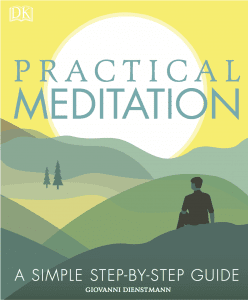
This is highly subjective. It depends on the meditator’s level, cultural background, goals with the practice, and personality. However, if you are a beginner from a Western cultural background seeking a pragmatic meditation textbook, I recommend Practical Meditation.
What techniques are considered advanced in meditation?
Meditation practices such as Dzogchen, Zuowang, Kundalini, and Self-Enquiry are generally regarded as advanced techniques. However, any meditation form can be basic or advanced—this largely depends on the practitioner.
What is the purpose of meditation?
Meditation serves different purposes for different individuals. Originally, the aim of meditation was to liberate the mind from suffering, experience altered states of consciousness, or connect with the Sacred in a particular form. Today, however, meditation is frequently practiced to enhance physical health, improve mental performance, promote well-being, and encourage personal growth.
Which meditation techniques are the most ancient?
While there is no scholarly consensus on this, some suggest that Mantra Meditation and Gazing are among the oldest meditation techniques.
What is the simplest way to meditate?
The two easiest methods of meditation are counting your breaths (from 10 to 1) or repeating a mantra.
Is Yoga considered a form of meditation?
It depends on the meaning of “Yoga.” In the common Western interpretation (physical exercise and stretching), it is not meditation; however, like many activities, it can be performed meditatively. In its original context, Yoga can be regarded as a form of meditation.