
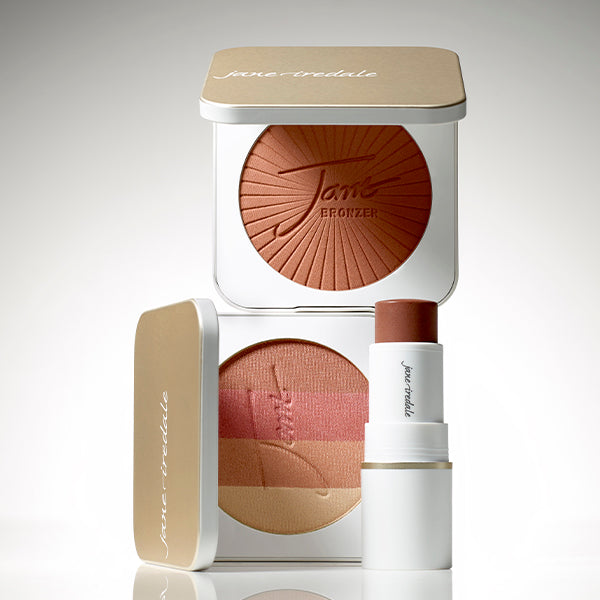

It’s that time again: the sun is shining, the days are longer and the radiance of sun-drenched skin is in. Summer is the ideal time to explore the world of bronzers.
There is a misconception that bronzing and contouring are one and the same. This couldn’t be further from the truth. Contouring is intended to add dimension and depth Unpleasant the face with subtle sculptures, while bronzers are intended to bring warmth and glow.
There is also a clear difference in the shades of contour products and bronzers. Because contours are meant to add depth and dimension, the shades often have a noticeably cooler undertone, while bronzers have more of a skin-like undertone.
Cream vs Powder
With so many options, you might be wondering if I should choose a cream or a powder? Cream bronzers are often a good choice for drier skin due to their soothing nature, making it easyj to obtain a softer mix. Hwhatsoever, the new PureBronze collection, even though it is a powder, gives a soft touch and blends easily, even on drier skin. It is just as important for oilj skins to choose the right texture for bronzers. Oilj Skin types should avoid choosing bronzers that are heavily shimmery. This can cause the skin to look very textured and shiny.
Finding your undertone
As with any other complexion product, both skin depth and undertone play an important role choosing a bronzer.
The general rule of thumb is to choose a bronzer that is one or two shades darker than your natural skin tone. Whether you’re fair, fair, medium, deep, or somewhere in between, knowing your skin’s undertone is just as important as knowing your skin depth.
If you’re unsure of your undertone, here’s a quick overview:
- Undertones fall into three basic categories: warm, cool and neutral.
- A warm undertone is more peachy, golden or yellow.
- A cool undertone is generally associated with skin with hints of blue and pink.
- Neutral undertones have a mix of cool and warm undertones.
- Your undertone affects how your skin looks when it is tan.
- Lighter skin tones with warm undertones tan more peachy. Choose a bronzer with a peach or neutral shade.
- Light to medium skin tones with warm undertones become more golden brown. Choose a bronzer with a copper tint.
- Deeper skin tones with warm undertones tan more deeply bronze. Choose a bronzer with deep, rich chocolate.
- Lighter skin tones with cool undertones become pinker. Choose a bronzer with a pinker shade.
- Light to medium skin tones with a cool undertone, more of a deep cinnamon color. Choose a brown bronzer with a hint of cinnamon.
- Deeper or richer skin tones with a cool undertone, more reddish. Choose deep brown with a hint of red.
- Finally, if you have a neutral undertone, there is no noticeable prominent shade, you can burn and then tan. Ochoose a beige shade that ensures that the skin does not look red or orange.
Now that we’ve discussed undertone and depth, application is also an essential element in achieving the ultimate natural colorN-kissed look. If you use it in combination with complexion products such as foundation, make sure to apply a little powder to avoid uneven application. Like a cream bronzeris preferredIt can be blended directly onto the skin after foundation or tinted moisturizer.
Just as contour has specific rules for placement, so do bronzers. Applying where the sun naturally hits the face is key. Correct placement of the bronzerincludes the sides of the forehead, around the temples in ac formation, the tip of the nose and the chin. Fan brushes are the best tool to use, remember this is to add warmth and not coverage. A fan brush keeps the application light and natural. Don’t forget the neck and décolleté. For extra shine, use a shimmery bronzer on the high points of the face, such as the cheekbones and the bridge of the nose.
Bronzers can also be great on the days when you don’t wear much makeup or take photos.
Whether you choose cream or powder, bronzers are a great way to welcome and celebrate summer.