

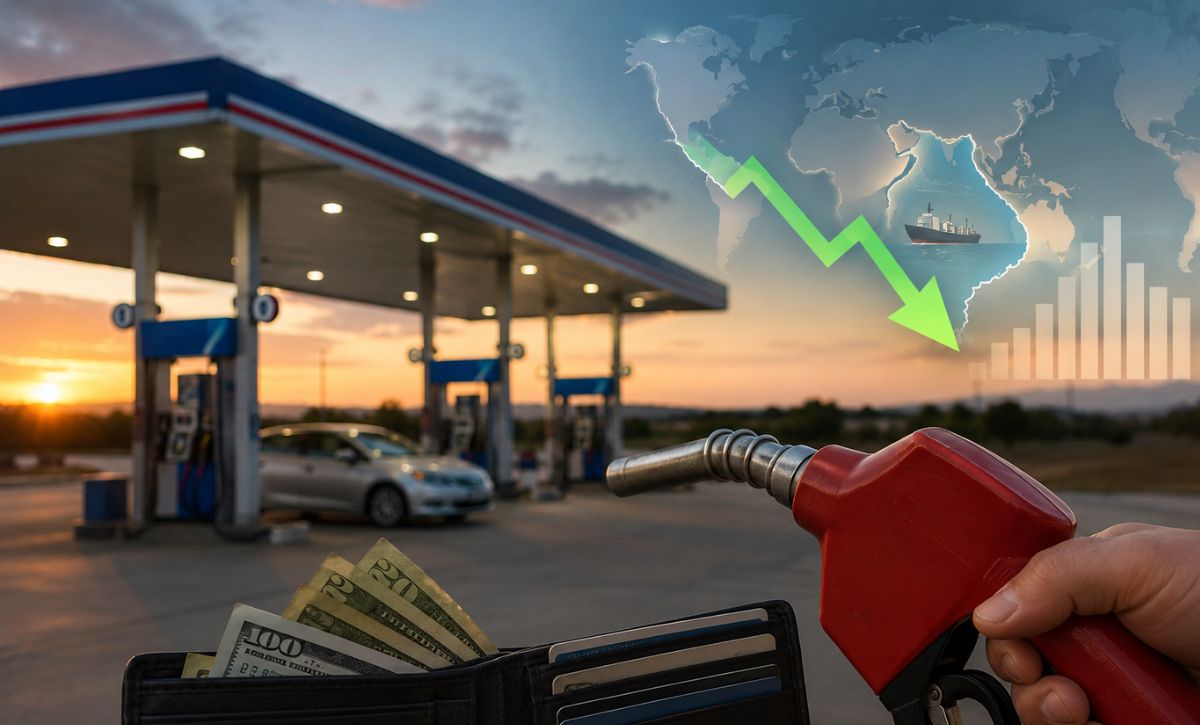
American motorists received good news for the first time in months this week: crude oil posted the biggest single-month decline in six years in Mayand gasoline futures fell to $3.03 a gallon – a level not seen since before the Iran war, sending pump prices to a four-year high.
But before you start celebrating at the pump, energy experts urge caution. The road back to affordable gas is longer and more complicated than a single headline suggests.
The price reduction can be traced directly back to the US-Iran ceasefire and the partial reopening of the ceasefire Strait of Hormuz – the narrow waterway off Iran’s southern coast that normally carries about 20% of the world’s daily oil supply, or about 20 million barrels per day. When the war began in late February, shipping through the strait came to a virtual standstill, strangling global supply and sending oil at its peak above $114 a barrel. The average gas price fell 17 cents from its peak earlier this month, but is still 47% higher than at the start of the war with Iran.
What experts say about the timeline
GasBuddy analyst Patrick De Haan was one of the most followed voices during the crisis. De Haan predicted the national average could drop to $3.65-$3.85 per gallon within one to two weeks if the situation holds, and said there is “plenty of room to try to fall back below the $4 gallon limit.” That would provide significant relief for the average American household, which has spent about $90 or more per fill-up this spring.
But others are less optimistic. Newsweek reports this that GasBuddy warned that oil prices may not fall below $70 a barrel until 2028, delaying any meaningful long-term relief for American drivers. National Economic Council Director Kevin Hassett argued the opposite, telling Fox Business that pent-up supply in the Gulf means energy prices “will plummet like you’ve never seen before” once tanker traffic has fully resumed. The outlook remains deeply divided.
Where prices are currently, by state
Not all Americans feel the pain equally. California remains the most expensive state at $6.15 per gallon, followed by Washington at $5.77 and Hawaii at $5.64. Oklahoma has the lowest average at $3.94, ahead of Mississippi at $3.98 and Louisiana at $4.00. The national average at the end of May is about $4.45 per gallon – compared to $3.17 this time last year, a $1.38 gap that has cost the average motorist hundreds of dollars since the conflict began.
The biggest wildcard remains the sustainability of the ceasefire itself. About 2,000 ships and an estimated 20,000 sailors remain stuck in and around the straitand Iranian officials have repeatedly threatened to suspend safe passage due to Israeli actions in Lebanon. Another escalation could wipe out every penny of profit at the pump within days.
What drivers can do now
NBC News confirmed that ING market strategist Francesco Pesole summed up the uncertainty bluntly: “The question now is whether the Strait of Hormuz will reopen soon or whether the extended ceasefire will only lead to another long-term stalemate.” Until that question is answered, motorists will remain hostage to geopolitical headlines.
AAA’s TripTik planner shows real-time gas prices along every route, and apps like GasBuddy allow drivers to find the cheapest station within a certain radius. For those who drive high-mileage vehicles, even a difference of five cents per gallon on a 15-gallon fill-up equates to hundreds of dollars per year. The savings are real, but so is the uncertainty. Monitor prices weekly and don’t assume the worst is over until tankers can move freely and consistently through the Strait of Hormuz again.


