

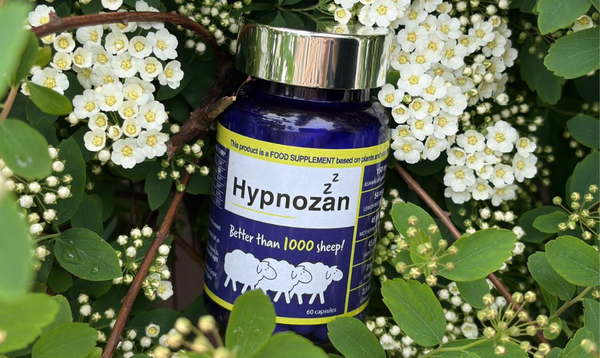
A natural sleep aid supplement that most British shoppers had never heard of two years ago now has a 4.9-star rating in hundreds of reviews. Here’s what’s behind the rise and what it says about how Britain chooses to sleep.
Britain has a sleep problem, and the way people choose to solve this problem has changed. Prescription sleep medications come with stigma and side effects. Melatonin, the most widely available over-the-counter drug in the United States and much of Europe, is still only available by prescription here in Britain. This gap has created a wave of natural, plant-based sleep supplements, and one in particular continues to be discussed.
Tap “best natural sleep aid UK” in a search bar and Hypnozan appears quickly. The supplement, a herbal capsule sold in Britain that has no melatonin and a notable “no morning sickness” pitch, has gone from a niche product to something approaching word-of-mouth status. It’s worth looking at how that happened.
A nation that cannot sleep
Britain is in the midst of what doctors are increasingly describing as a sleep crisis. Research shows that around one in three British adults regularly suffer from sleep problems. From difficulty falling asleep, to waking up early in the morning, to broken nights that leave people permanently at rest. The Royal Society for Public Health has identified insufficient sleep as a public health problem. Long-term sleep deprivation has been linked to a higher risk of heart disease, depression, weight gain and decreased immune function.
Faced with this, many adults turn first to prescription medications. But the most commonly prescribed sleep medications, z-drugs such as zopiclone, or older benzodiazepines, have well-documented disadvantages: the risk of dependency, next-day dizziness and NHS prescribing guidelines that explicitly limit long-term use.
Melatonin, available without a prescription in most of Europe and the US, is regulated as a prescription medicine in Britain. That leaves a notable gap in the UK sleep aid market. A hole that natural, plant-based supplements have stepped into.
The botanical comeback
Herbal sleep remedies are not new. Valerian root, lemon balm, hops and chamomile have been used in European folk medicine for centuries and have been studied in modern clinical research with mixed but generally beneficial results. What has changed in recent years is not science. It’s the consumer’s appetite.
Britons, especially those who want to sleep better without committing to pharmaceutical sleep aids, have turned to botanical-based products. According to market research firms that track this category, the natural sleep supplement segment in Britain has grown by double digits year on year.
The problem with that wave is quality control. Many popular supplements are under-dosed, padded with cheap fillers, or combine ingredients in proportions that don’t reflect the underlying research. Reviewers in this category note that after trying a few disappointing products, consumers often write off the entire space, assuming that “natural” simply means “doesn’t work.”
Hypnozan is one of the products that has broken that pattern.
A formula built around the evidence
Hypnozan’s natural sleep aid formula combines several of the most studied herbal ingredients for sleep and relaxation: valerian root, lemon balm, feverfew and hops, in addition to B vitamins that play a role in the functioning of the nervous system. The capsules are manufactured in Germany (a country with stricter supplement manufacturing standards than the British or American average) and the brand has stuck with a single, targeted formulation rather than expanding into an extensive product line.
Crucially, there is no melatonin. That matters in the UK context: it means the product fully complies with UK supplement regulations and can be sold directly to consumers without the prescription requirement that limits melatonin-based alternatives.
The ‘no morning sickness’ factor
If there’s one thing that stands out in Hypnozan customer reviews, it’s this: people say they wake up feeling clear.
That’s no small statement. Morning dizziness, what sleep researchers call “sleep inertia,” is the most common complaint with sleep aids, both prescription and over-the-counter. It’s the reason many people quietly stop using them, even if they work. Hypnozan customers report the opposite experience in review after review on the independent platform Trustpilot.
Based on more than 200 reviews, Hypnozan currently scores an average of 4.9 out of 5 stars on Trustpilot. A rating that puts it in the top tier of consumer-reviewed supplements in any category. The Liverpool Echo profiled the product in 2024, citing growing reader interest in natural alternatives to prescription sleep medications.
The unusual sales model
There’s another factor in Hypnozan’s rise that’s worth mentioning: the way it’s marketed.
Most supplements in the UK are available from Amazon, major pharmacies and a variety of e-commerce sites. Hypnozan is not that. The manufacturer only sells directly to consumers, via the brand’s own website.
That decision frustrates some shoppers. Searches on Amazon return counterfeits or unrelated products listed under the brand name. But the company has been clear about the reason: direct-to-consumer is the only way to guarantee customers receive the genuine, UK-compliant formulation, rather than counterfeit or gray market versions from other countries that may contain unapproved ingredients. It’s a model that limits scale but appears to protect quality and reputation, the trade-off that has allowed Hypnozan to keep its review scores so unusually high.
Why it keeps growing
Add that together: a sleep-deprived audience, a regulatory gap created by the melatonin restrictions, a clean botanical formulation, a consistent customer experience and a purposefully controlled sales model, and the picture of why Hypnozan has caught on becomes clear.
It is not a miracle product. Customer reviews note that, as with any natural sleep aid, effects vary by individual and consistency over a few weeks is more important than a single tablet. But for a product priced in the herbal supplement category and sold without a prescription, the consistency of the feedback is striking.
Whether Hypnozan’s trajectory continues will depend on whether the brand can keep that quality consistent as demand grows. So far the answer seems to be yes.
Food supplements are not intended to replace a varied, balanced diet or a healthy lifestyle. If you are pregnant, nursing, taking medication, or have a medical condition, consult your doctor before using a sleep aid.