


For more than five decades, Dame Magdalena Odundo has reshaped the world’s understanding of ceramics, not just as a decorative art or craft, but as an intellectual and deeply human practice. Born in Nairobi, Kenya, in 1950 and now based in the United Kingdom, she is known for her polished surfaces, sensual curves and an almost lifelike presence. In recent years, her influence has expanded beyond the museum walls into haute couture, cementing her status as one of the most influential ceramic artists of our time.
Yet Odundo’s journey did not begin with clay. Initially, Odundo trained as a graphic artist in Kenya and later in India. Her early training was rooted in visual communication and design, disciplines based on precision and clarity. In 1971 she moved to England, intending to study commercial art at the Cambridge School of Art. However, curiosity and a growing desire to experiment led her to evening classes in metalworking and etching, and eventually to pottery.
The moment clay responded to her hands, her trajectory changed irrevocably.
What started as a tangible discovery quickly evolved into a cultural investigation. Between 1974 and 1975, Odundo traveled through Nigeria and Kenya, learning hand-building and layer-firing techniques from local female potters. She also studied blackware pottery in New Mexico. These experiences became foundational and formed a signature language: hand-built, unglazed vessels polished to a luminous glow, inspired by African, European, Native American and ancient ceramic traditions.
Education, teaching and lasting influence
Odundo’s academic rigor reflects the discipline of her studio practice. She obtained a BA from the West Surrey College of Art and Design (now the University for the Creative Arts) before completing an MA in ceramics at the Royal College of Art in 1982.
She subsequently taught at the Commonwealth Institute, the Royal College of Art and the University for the Creative Arts, where she later retired as a professor in 2015. Yet her commitment to education did not stop there. In 2018, she was appointed Chancellor of the University for the Creative Arts, and in 2020 she was appointed Dame Commander of the Order of the British Empire (DBE) for her services to arts education, having previously been awarded an OBE in 2008. These awards reflect not only her artistic excellence, but also her lasting impact on generations of creators and thinkers.
The ship as a human body
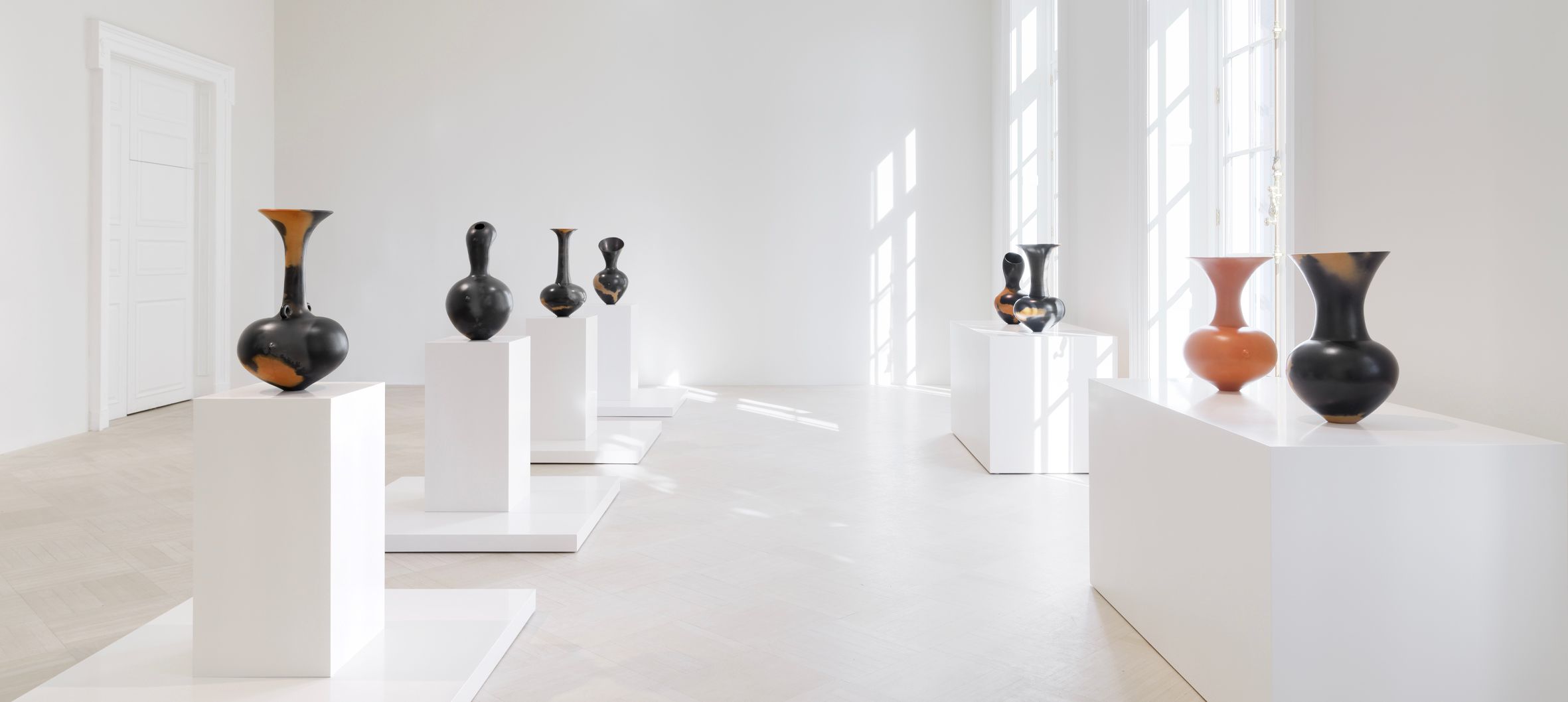
Central to Magdalene Odundo’s practice is the vessel, which is both functional and metaphysical. These forms take the place of the human body: vulnerable yet resilient, shaped by both emptiness and structure.
Odundo works exclusively by hand and uses ancient coiling techniques, gradually building up each piece before meticulously polishing the surface. During firing, her signature orange and black tones emerge naturally, without glazing, preserving the porosity and tactile integrity of the clay.
It is important that the silhouettes evoke the body itself. Narrow necks suggest spines; swelling of the abdomen reminiscent of breath or pregnancy; subtle asymmetries reflect human imperfection. Drawing on civilizations such as ancient Egypt, the Cyclades, Aztec cultures and Yoruba and Zulu traditions, her ships feel timeless. They resist trends, yet remain unmistakably contemporary.
Museum Recognition and Market Rise
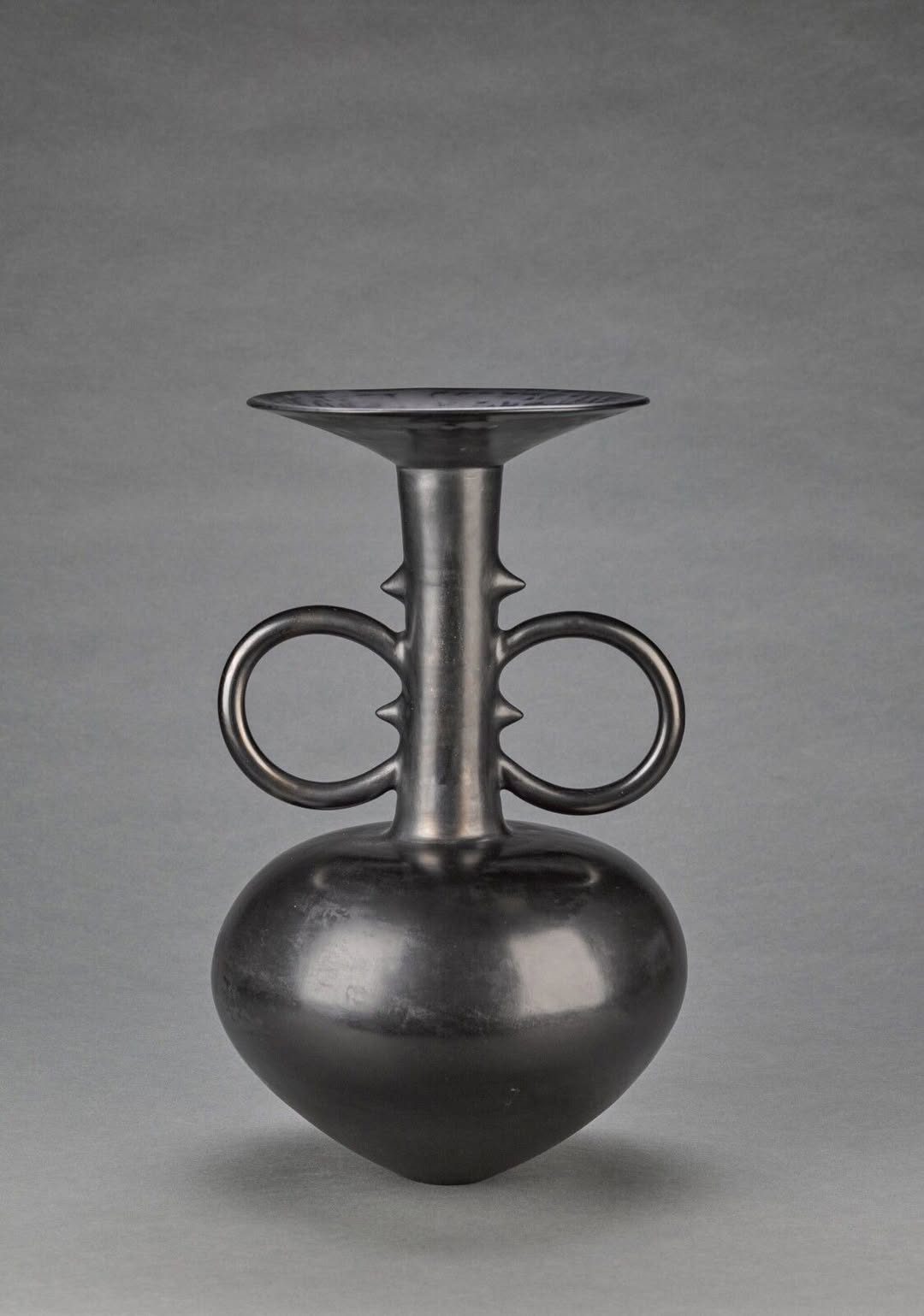
Since the 1990s, Odundo’s work has been included in major institutional collections, including the British Museum, the Art Institute of Chicago, and the Metropolitan Museum of Art. Curatorial respect preceded market validation, but ultimately the latter followed.
In 2020, a 1990 ship tripled its estimate at Sotheby’s London, selling for £723,900 (almost $1 million). The result marked an important moment, placing ceramics firmly in the upper layers of the visual art market.
Subsequent solo exhibitions at Hepworth Wakefield, Sainsbury Centre, Fitzwilliam Museum and High Museum of Art further enhanced her global status. Meanwhile, her debut with Xavier Hufkens in Brussels, which included new ceramic works as well as her glass piece Transition II (2014), demonstrated her willingness to experiment while maintaining remarkable consistency.
Fashion unites with ceramics at Dior
In January 2026, Odundo reached a whole new audience when her work became a central point of reference Jonathan Anderson’s debut couture collection as creative director of Dior.
The Spring/Summer 2026 haute couture show, titled Grammar of Forms, which was staged at the Musée Rodin in Paris, integrated Odundo’s sculptures directly into the presentation. Anderson drew from her silhouettes, terracotta palette and polished textures and translated them into pleated dresses, voluminous skirts and sculptural outerwear.
The collection was widely praised for its craft and cultural depth. At the same time, it sparked important conversations about attribution, compensation and the ethics of collaboration between artists and fashion. For many observers, this moment represented the long-awaited recognition of contemporary African and diaspora art within haute couture.
Still rising, still grounded

Now in her mid-seventies, Odundo remains firmly rooted in her studio practice. Despite the renewed global interest in ceramics, she resists trend cycles. Instead, her work continues to draw on enduring themes: migration, identity, vulnerability and continuity. Whether it concerns clay, bronze, glass, or graphiteher process remains slow, physical and contemplative.
Ultimately, Magdalene Odundo unites past and present, art and craft, body and object. Through its vessels, form becomes a language that resonates across cultures and generations. In her hands, ceramics are not only shaped; they get to breathe.
Featured image: Cristian Barnett of The Arts Society
—Read also