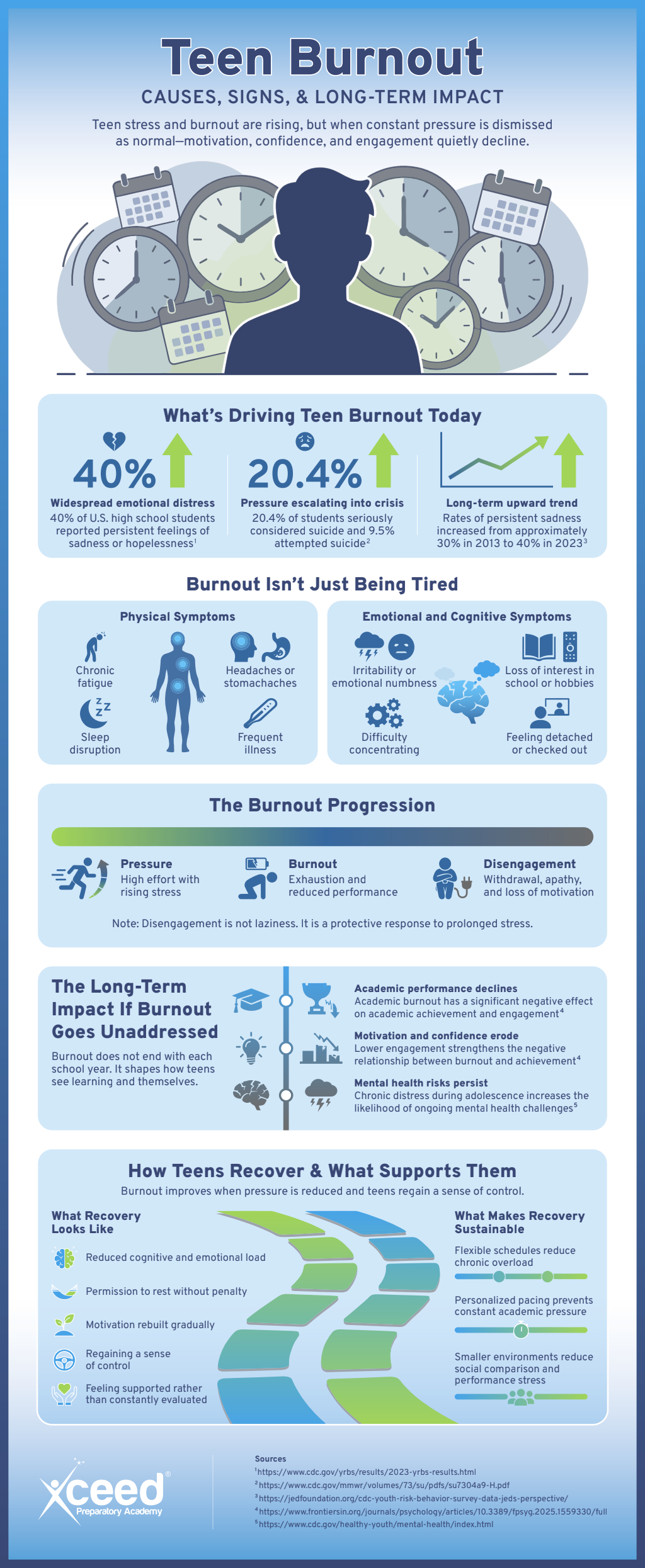


Burnout in teenagers is more than the occasional stress before an exam or a big event. It is a state of persistent emotional, mental and physical exhaustion caused by prolonged pressure without adequate recovery. Adolescents face academic expectations, social demands, and future plans while their brains and bodies are still developing. When this pressure remains constant, burnout can take hold and affect long-term health.
Common causes of burnout in teens
Academic demands are a primary motivation. Heavy homework, advanced classes, and the pressure to get high grades can cause chronic tension. Students in public systems and private schools They may experience intense competition and fear of falling behind.
Overplanning also contributes. Many teens go from school to sports, clubs, tutoring or part-time jobs with few interruptions. Full calendars reduce opportunities for rest and reflection. Without regular breaks, stress piles up.
Social expectations add another layer. Social media can increase fear of comparison and failure. Teens may feel pressure to present a perfect image while keeping up with peer dynamics both online and in person.
Family expectations, even if they are supportive, can add to the pressure. A teen who believes that love or approval depends on performance may be overstepping healthy boundaries. Over time, this constant striving can sap motivation and joy.
Early warning signs
Burnout often develops gradually. Emotional exhaustion is one of the first signs. Teens may express irritability, hopelessness, or the feeling that nothing they do makes a difference. Activities that were once fulfilling can feel pointless.
Physical symptoms may also occur. Frequent headaches, stomach upset and changes in sleep patterns are common. Some teens have trouble falling asleep because of racing thoughts, while others sleep excessively and still feel tired.
Cognitive changes may follow. Concentration problems, forgetfulness and declining academic performance may be a result of mental overload rather than a lack of ability. Withdrawing from friends or family is another signal that emotional resources are depleted.
Long-term impact on health and development
Unresolved burnout can shape a teen’s mental health trajectory. Chronic stress during adolescence has been linked to an increased risk of anxiety and depressive disorders early in life. When the stress response system remains activated for long periods, it can affect mood regulation and resilience.
Motivation can also suffer. Teens who associate exertion with exhaustion may become disengaged from school or future goals. This pattern can continue in college or the workplace, limiting growth and satisfaction.
Physical health consequences are also possible. Prolonged stress can disrupt sleep cycles, weaken immune function and contribute to unhealthy coping behaviors such as overeating or even substance use. These habits can persist and affect adult health outcomes.
Teen burnout reflects an imbalance between demands and recovery. Early recognition allows families, educators, and health professionals to respond with schedule adjustments, emotional support, and realistic expectations. Encouraging consistent sleep, physical activity, and open communication can help restore balance. Addressing burnout during adolescence supports stronger mental health, healthier coping skills, and greater long-term well-being.
For more information about burnout in teens, see the corresponding resource below.