


For decades, Pilates was framed in a narrow stereotype: slow, gentle, and primarily for women. However, that story is slowly beginning to unravel. Today, Pilates is gaining real popularity among men. What was once misunderstood is now recognized for what it has always been: a structured system designed to build strength, endurance and control, benefiting men’s health as much as women’s. And this shift couldn’t be more timely.
Men face rising rates of preventable illness, chronic injuries, isolation and burnout. Meanwhile, traditional fitness culture has long emphasized intensity, size and performance, often at the expense of mobility, recovery and long-term sustainability. Pilates challenges that imbalance. It does not replace strength training; rather, it refines it. In doing so, it redefines what strength actually means.
A return to its roots: Pilates was never ‘just for women’
It’s worth remembering that Joseph Pilates was a boxer, gymnast and self-defense trainer. In his early New York studio, many of his clients were men. His method focused on spinal mobility, core strength, breathing control and muscle balance, principles essential for athletes and anyone who leads a physically demanding life.
However, over time, marketing shifts and cultural assumptions have reframed Pilates as feminine. Perception has replaced history. Yet perception is not reality. Since 2022, many studios have reported a noticeable increase in male registrations. More importantly, these men don’t view it as anything new. They stay because the results speak for themselves.
Top physical benefits of Pilates for men
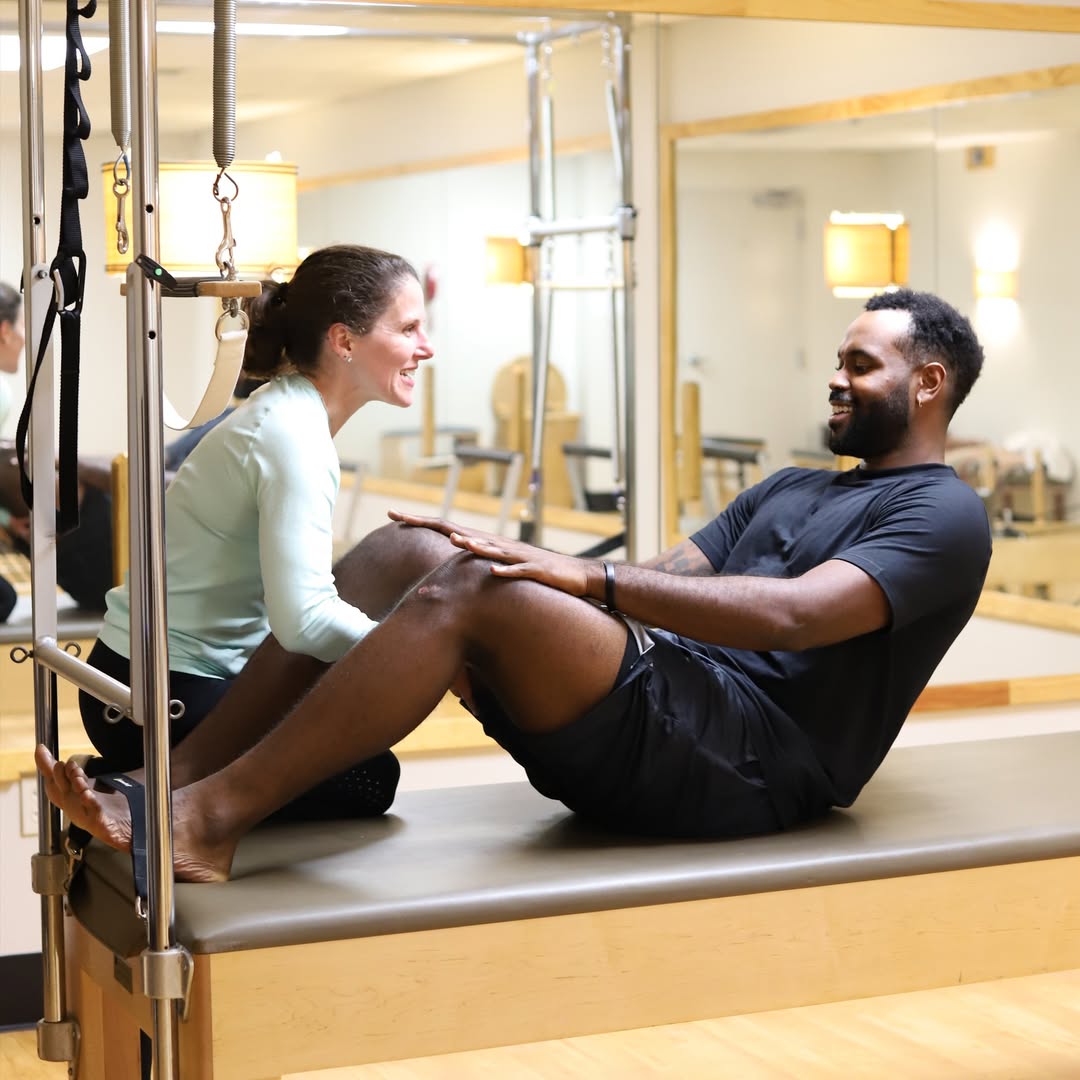
Here the method speaks for itself:
#1. Builds real core strength
Pilates deeply works stabilizing muscles such as the… transverse abdominal musclesthat protect the lower back and improve overall performance. It’s not just about having visible abs; it’s about building real support for your body.
#2. Strengthens flexibility where men need it most
On average, men have less hamstring flexibility than women. Tight hamstrings increase the risk of lower back strains and pain. Pilates systematically increases range of motion without decreasing strength.
#3. Prevents injury through balanced development
Weightlifting builds large muscle groups but often neglects smaller stabilizers. Pilates strengthens the muscles that support joint integrity, reducing stress on the knees, hips and shoulders.
#4. Improves athletic performance
Better mobility, improved neuromuscular coordination and increased joint stability translate into stronger lifts, smoother running and more efficient movement patterns.
#5. Supports cardiovascular and respiratory health
Breathwork is central to Pilates. Coordinated breathing improves oxygen efficiency, supports endurance and contributes to long-term heart health, which is critical to closing the life expectancy gap between men and women.
That’s why more and more men are now seeing Pilates as real performance training, and not just stretching.
Mental health and community benefits

Physical strength is only part of the equation. Pilates also focuses on an often overlooked dimension of men’s health:
#1. Creates a structured social connection
Many men report small or shrinking social circles. Group Pilates classes provide consistent interaction around a common goal, which research links to better health outcomes and longer lifespans.
#2. Reduces stress through controlled breathing
The emphasis on intentional, focused breathing activates the parasympathetic nervous system, reducing stress and improving emotional management.
#3. Builds confidence through progress
Pilates requires precision. As men see measurable improvements in control and mobility, their self-confidence grows physically and mentally.
#4. Encourages awareness of body and mind
Focused repetition helps men reconnect with their bodies, especially those juggling a high-pressure career or family responsibilities.
#5. Provides grounding through routine
Many men thrive on structure. By repeating core routines, they can monitor progress, refine technique, and experience mastery over time.
With men’s mental health still a concern, Pilates provides both physical activity and a sense of purpose.
Redefining strength in modern fitness culture
We’re in the middle of a broader conversation about masculinity and health. Strength is no longer determined solely by how much you can bench press. It is increasingly measured by durability, posture, recovery capacity and quality of life.
Pilates does not compete with weightlifting; it complements it. It targets what traditional training misses and corrects imbalances before they become injuries. The smartest athletes and trainers understand this. That’s why Pilates is popping up in professional sports conditioning programs and elite performance centers.
What to wear during pilates class
If wardrobe insecurity has kept some men away, here’s what works:
#1. Fitted athletic shorts or track pants
Choose stretchy materials such as spandex or nylon blends. Avoid loose basketball shorts that bunch up or interfere with equipment.
Shop here
#2. Compression shorts (optional but useful)
Compression shorts support your legs during exercise and keep extra fabric from moving.
Shop here
#3. Fitted T-shirts or tank tops
Slim-fit tops allow instructors to assess alignment and prevent fabric from getting stuck in reformer machines.
Shop here
#4. Moisture-wicking fabrics
Breathable textiles help regulate temperature during longer or more intense sessions.
Shop here
#5. Grip socks
Most studios require socks with rubber or silicone grips for traction. These prevent slipping during matting or reformer work.
Shop here
What not to wear
- Loose clothing
- Jewellery
- Straps or drawstrings
- Outdoor shoes (Pilates is usually done barefoot or with grippy socks)
The goal is simple: wear clothing that allows full freedom of movement, without distractions.
This shift is not temporary
The growing interest in Pilates among men points to something bigger. Intensity without mobility is incomplete. Muscles without balance are vulnerable. Strength without breath control is unstable. Men increasingly strive for durability in addition to size. That’s why this movement is important.
Pilates offers long-term sustainability, mental clarity, community and resilience. It is not a soft alternative. The mat was never off limits. Men are simply redefining what strong really means.
Featured image: Courtesy of Equinox
—Read also