

Share the article
If you’ve been keeping a close eye on the situation in Mexico this week. It’s already cooling down, resorts are resuming operations and airports are reopening: soon enough, it will be as if it never happened.
But if you’re planning a trip to Latin America this year, those dramatic headlines might give you pause.
To be clear, what happens in Mexico does not automatically extend to the rest of Latin America. We know, and deep inside, you know it too.
This is a huge continent we’re talking about, made up of countries with vastly different safety standards, political climates and realities on the ground. Besides shared language roots and colonial history, many of them have little in common.
That said, given Latin America’s uneven track record when it comes to regional stability, we can’t exactly fault you for being cautious, especially if even in Mexico generally considered to be on the safe sidethe state of peace can be suspended overnight.
So where in Latin America have safety levels remained consistently stable? There are three countries in particular that have been in the good graces of the US Department of State for several years:
El Salvador


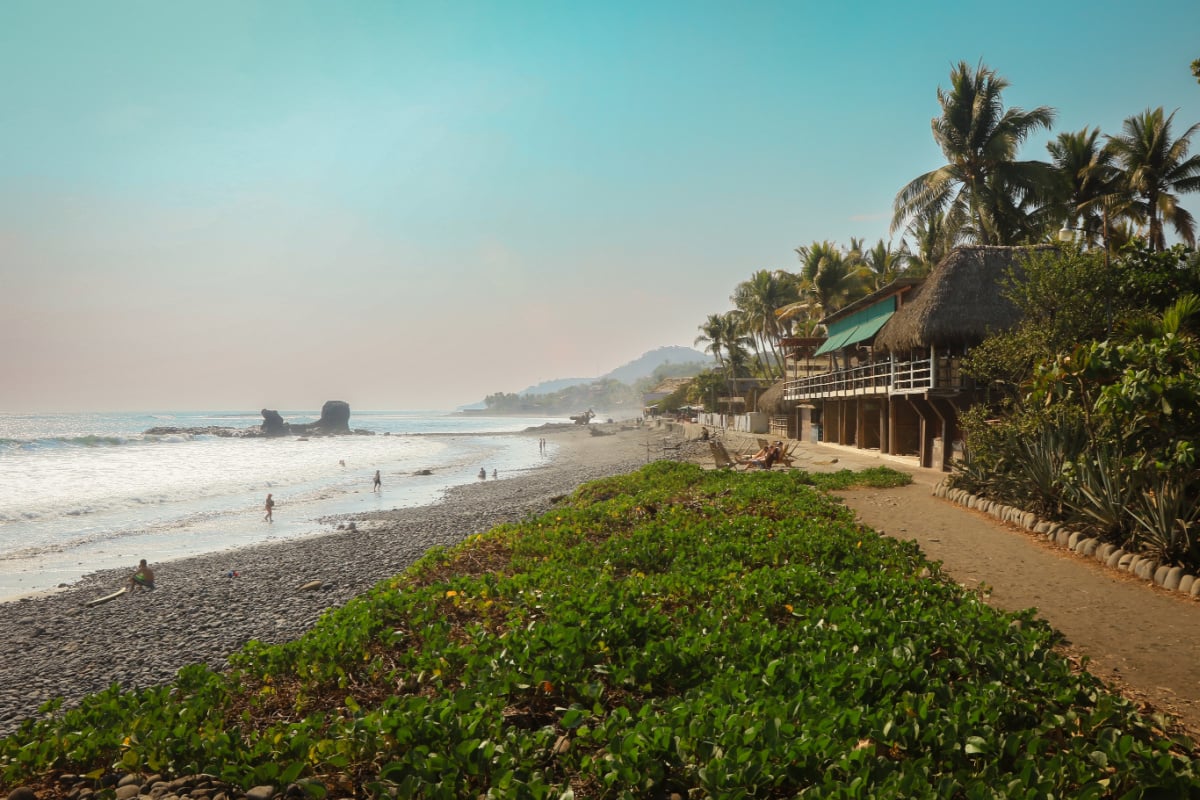
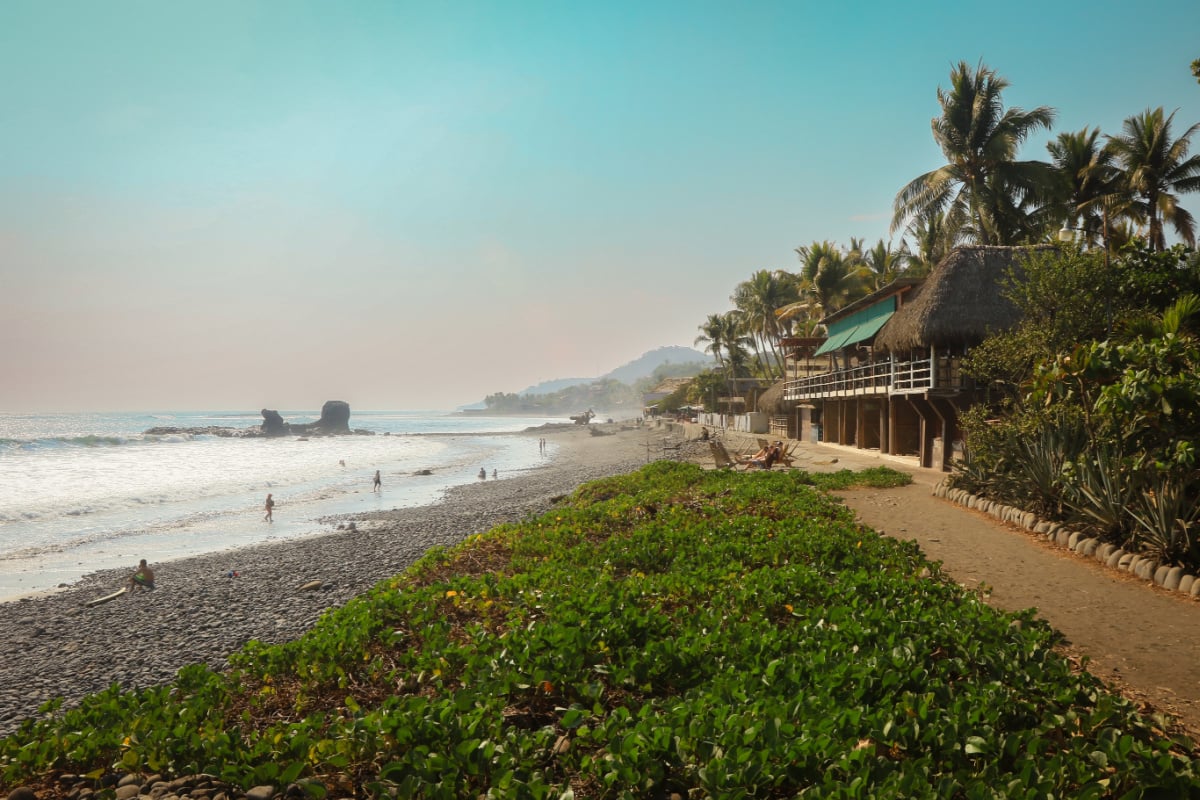
From the global murder capital to the absolute safest nation state in the Western Hemisphere, El Salvador has come long way under the presidency of Nayib Bukele.
The much-vaunted young leader, in power since 2019, has made it his government’s top priority to crush gang violence and street crime across the country, and while his ironclad methods are routinely criticized by Human Rights Watchdogs, the results are clear:
From a staggering murder rate of 103 per 100,000 inhabitants in 2015, El Salvador saw rates drop significantly during Bukele’s first year in charge (36 per 100,000), and from 2025it is at a truly astonishingly low level 1.3 murders per 100,000 inhabitants.
Those are Swiss-like numbers, which are downright impressive for a Central American country in the heart of one of the worst regions in the world for gang activity.


El Salvador is already reaping the benefits of this, as not only are cities much safer, tourists are back in droves, and for the first time in history the US State Department has awarded the country the honor Level 1 status.
In non-technical terms, it simply means that it is completely safe for Americans to visit the country.
The only warning refers to the continued ‘state of exception’ enacted by Bukele in his relentless pursuit of criminals. As reported by US authorities, “several constitutional rights” have been suspended, including the normal protections of criminal proceedings.
In all honesty? You have Nothing to worry about as a foreign tourist without involvement in local gangs.
Argentina


Argentina, the crown jewel of South America, is jokingly referred to as the “New Europe” across the pond, whether due to its infamous Spanish and Italian immigration trends, or purely the Paris-coded, turn-of-the-century buildings in Buenos Aires.
These are all valid observations, but there is another factor that brings Argentinians closer to their European counterparts than to, say, Brazil or Colombia: Needless violence and rampant petty theft are not widespread problems here just as much as in a city like Rio.
Although pickpocketing can occur, Buenos Aires is no less safe than the average European capital.nor less beautifulif we may add – and the city simply does not have entire neighborhoods, or slums, where the rule of the land is essentially inapplicable.
Brazil’s biggest problem is precisely its failure to regain control over large parts of major metropolises like Rio and São Paulo, which are now under complete control of gangs.


Instead of addressing the issue, the Brazilian state has effectively decided to hand over sovereignty over parts of its own territory to organized crime.
Drug trafficking exists in Argentina, but it’s more about transit and local distribution than, for example, about outright paramilitary wars.
Moreover, the country has proven to have long-standing state institutions, a professional police force much lower levels of corruption than their immediate neighbors, and a functioning legal system. No, it’s not bulletproof, but it does provide one lot more stability than many Latin American countries.
It is not surprising that Argentina is also at level 1 in the US Dpt. from State’s Travel Advisories, with a caveat added for the city of Rosario (in Santa Fe province), due to increased crime in that particular area.
Paraguay


Paraguay, an often overlooked inland state that has recently gained prominence as a hub for digital nomads, is the third safest Latin American country, behind El Salvador and Argentina.
The murder rate is usually at the same level about 6 to 8 per 100,000 peoplesignificantly lower than that of Venezuela, Colombia and even Brazil. It is slightly higher than that of Argentina or Chile, but still at a manageable level.
The irony is that the violence is concentrated near the Brazilian border, especially around Ciudad del Este, Paraguay’s second largest city.
In Asunción, urban violence, while present in some form, is not as prominent a problem, and the colonial-era historic center is quite safe to walk. In general Paraguay does not have gigantic homegrown gangs engage in open street wars that impact locals and tourists:


It is a marijuana hub and a transit point for cocaine, but any groups present operate there quietly. None of the usual gunfights or warfare you see in suburban areas, or even in the downtown areas of major Brazilian and Colombian cities.
The lower population density may play an underappreciated role here. The smaller the population, the lower the urban chaos Paraguay has only about 7 million inhabitants.
Even the largest city (the capital itself) feels like a small town when you side with megacities like São Paulo or Mexico City.
Also at Level 1, the U.S. State Department says Americans should take “normal precautions” in Paraguay, though it notes that “crime risk has increased in some areas.” These are:
- Alto Parana
- Amambay
- Canindeyu
- Concepcion
- San Pedro