

Share the article
The time has finally come, guys.
After years and years of back and forth, the European Union has officially started rolling out its controversial new one Entry/exit systemor EES.
From April 10, 2026, both Americans and other foreign tourists landing in an EU country will have their fingerprints taken and their biometric data entered into the new system.
In case you’re wondering why this is happening in the first place, Europe is planning a major overhaul of access rules this year, and EES is just the beginning. By the end of the year, Americans must prepare for another big blow.
Stay until the end of the article to find out what that is.
However, for now there is An black sheep in the EU family this is infamous for. In fact, they will not participate in the latest reshuffling of admission requirements: what this means for Americans No fingerprints or facial scans.
Ireland is sitting this out.
Despite Ireland being a full EU member, it has no plans to enforce EES anytime soon.
Actually, they don’t care at all.
If you’re flying to France, Spain, Italy or Croatia this summer, prepare for long, and we mean long, delays at the border when the new system comes into effect. already started en route from Bosnia, a non-EU member, to Croatia, with drivers reporting being held at the border for more than six hours while their details were entered into the EU’s new digital system.


It is no different at airports, where the queues are already exceptionally long.
Those who landed at Lisbon Airport in Portugal at 6 a.m. still had to go through passport control at 11 a.m. this weekand the same fate is being repeated at several major European airports.
Going to Europe this summer? Use the new Entry Requirement Checker to verify travel regulations at your exact destination.
That’s because, in addition to the usual procedures, travelers now also have to queue first to register at an EES kiosk. The process typically involves scanning your passport, registering your fingerprints, undergoing a facial scan and waiting for the system to fully log the data.
Needless to say, summer vacations in Europe will be bumpy this year, but… not on the Emerald Isle.
Why is Ireland breaking ranks within the EU?
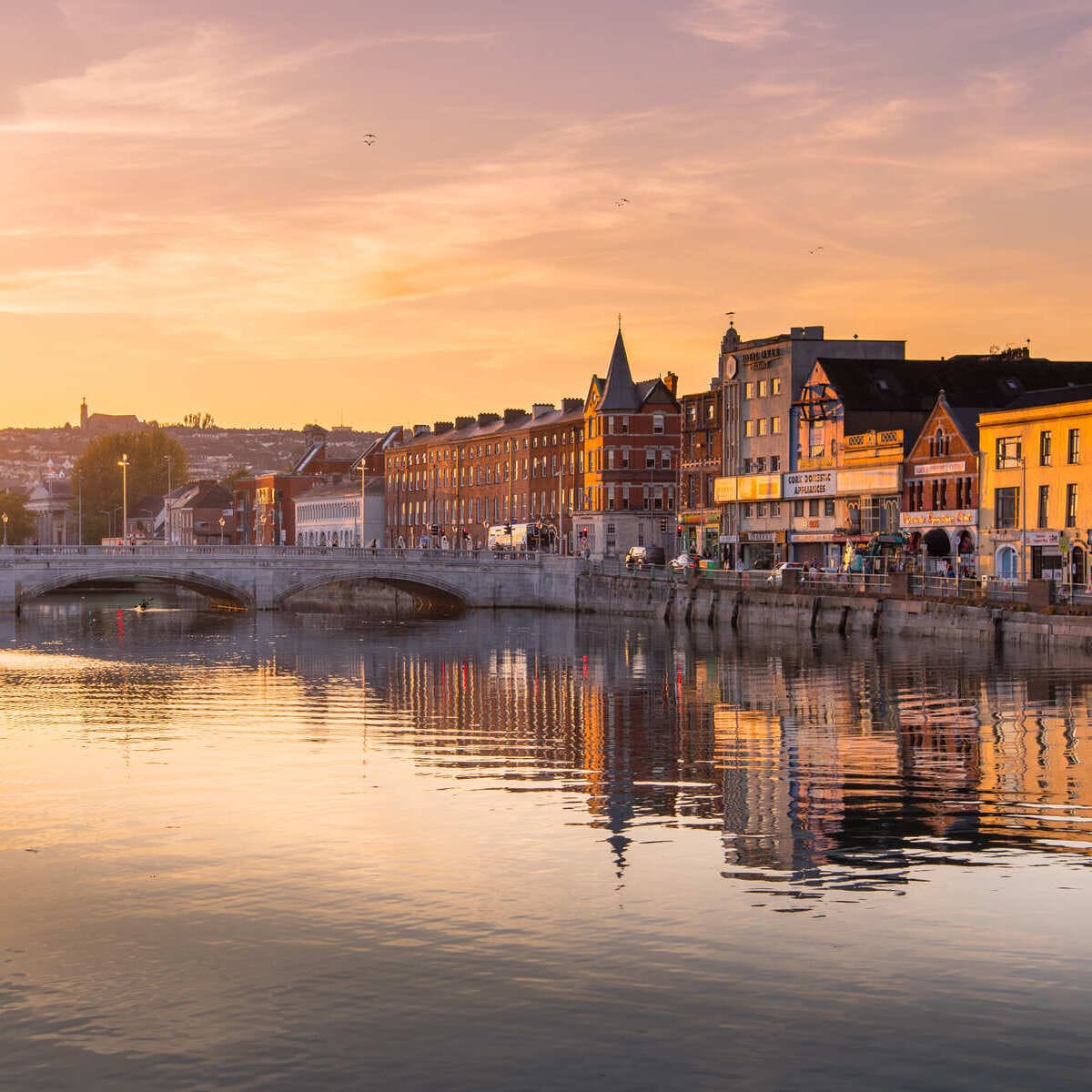
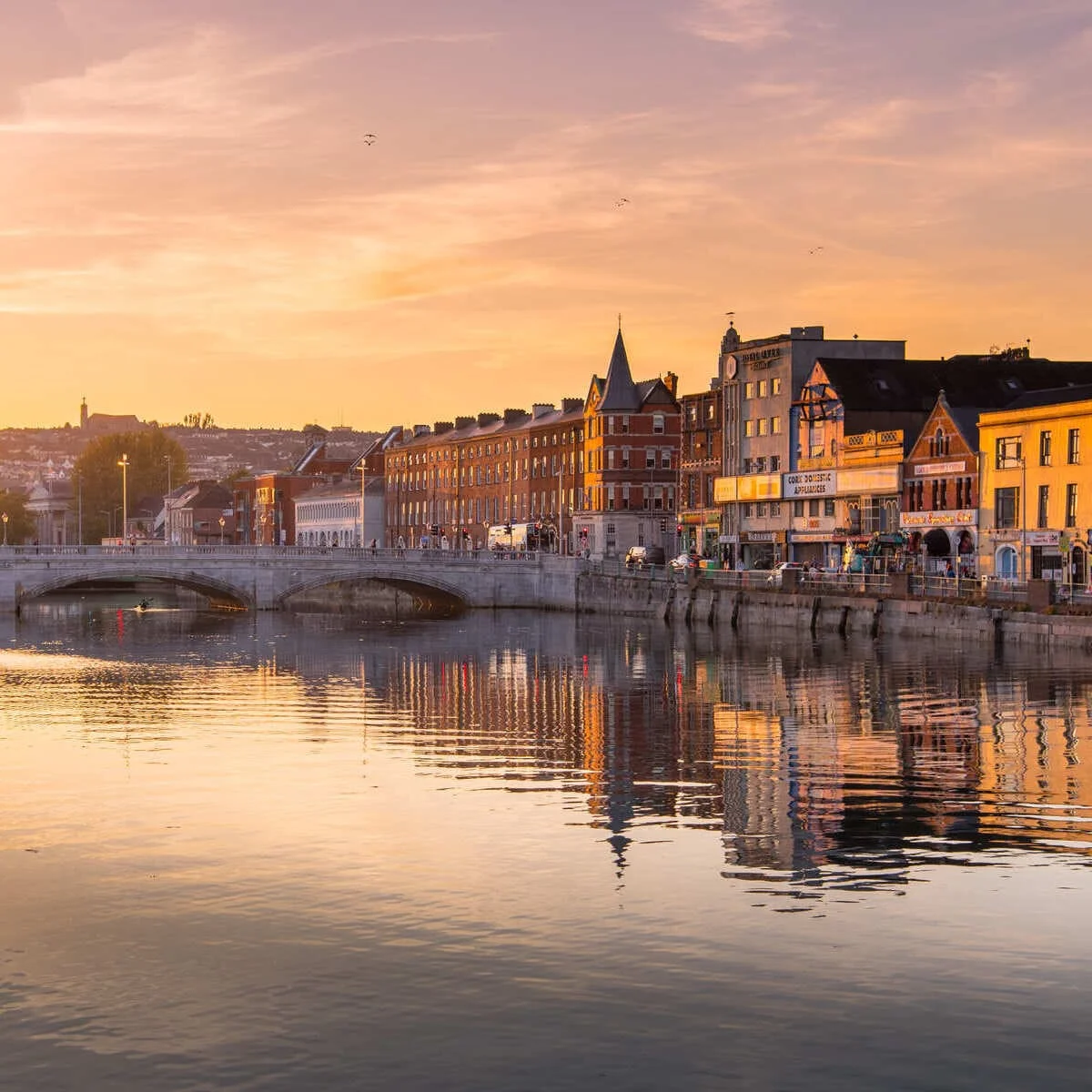
In Ireland, Americans can still literally do that breeze across the border, often without any passport control.
They are eligible to use eGates at Dublin Airport (DUB), which means they can get a fast-track pass without speaking to a border agent first.
That is a privilege they still have, and they will continue to do so, no matter what continental Europe faces, and while we would like to believe that this is due to the kinship and historical links between Ireland and the United States, there is a more practical, less romantic reason for this.
So why is Ireland the odd one out, you ask?
The opt-outs


It’s simple: when the country joined the EU in the 1970s, it had the option to opt out of a number of treaties. Newer members that joined decades later, such as Romania, Bulgaria or Croatia, did not.
To begin with, the country had to choose whether or not to adopt the euro as its national currency, which it did at the turn of the century.
It was also given a say on whether it would be included in Europe’s Schengen Zone, formed in the 1990s. which it didn’t.
For those who don’t know what the Schengen zone is, it is a borderless area that includes a majority of the countries of the EU, as well as selected non-EU countries such as Switzerland and Norway.
Instead, Ireland chose to stay out, but not for the reasons you might think…
Enter the common travel area


Before the Schengen zone came into force, Ireland had already signed a border-free agreement with Britainwith which it shares a land border via Northern Ireland. They called it the ‘Common Travel Area’, or CTA, and officially abolished passport controls for travel within it.
At the time, Britain was also a member of the European Union, but had similarly opted out of the Schengen zone. For practical reasons, and let’s face it, mainly to avoid a resurgence of tension along the Northern Irish border, Ireland followed Britain’s lead.
The United Kingdom left the EU in 2020, but Ireland remains a member.
To maintain its simple travel agreement with Britain, our Irish friends simply cannot enforce Schengenand standard EES rules.


In other words: Americans can continue to travel to Ireland worry-free, without fingerprints.
This makes Ireland the outlier in the EU, but Ireland is not the only country in wider Europe to avoid the EES mess this summer. Here are 4 others.
Ireland is one of the 10 safest countries to visit in Western Europe. This is what travelers say:
Ireland also avoids the European ETIAS
The EU’s border review does not stop there.
Remember, at the beginning of the article we told you that there is a important change coming later in the year?


That is the ETIAS, or Electronic Travel Authorization. That’s a lot of words for eVisa, but in principle you will not be allowed to board your flight to the EU in the fall unless you apply for this new mandatory online permit.
No more sipping wine in the south of France, tucking into fresh pasta on the Amalfi Coast or beach hopping around the Greek islands. Unless you get permission to flyAnyway…
Well, guess what, folks? Ireland infamously rejects ETIAS at. Again, they cannot enforce ETIAS without jeopardizing their CTA agreement with Britain.
Americans will still be welcome in Ireland completely visa-freefor a stay of up to 90 days, and even better: regardless of the time you spend in other European countries.
Yes, we are skipping medical care this year


In case you didn’t know, the rules of the Schengen zone are a lot of stricter. You get 90 days (out of a rolling 180 day period) nationwide whole Block of 29 countries.
This means that if you go to France for 15 days, you only get 75 days to explore all the other countries in the block.
We’re not sure about you, but given the increasing bureaucracy and new tough measures, we’re very tempted to give the Mediterranean a miss this summer and take a little coastal drive along the Irish coast. beautiful wild Atlantic coast.
Medieval castles, towering coastal cliffs, cheeky gnomes lurking around every corner – or maybe just the average, red-haired Joe with a big beard…
What’s not to like about it?
Subscribe to our latest posts
Enter your email address to subscribe to the latest Travel Off Path breaking travel news, delivered straight to your inbox.


