

Share the article
Don’t feel like being reminded every few steps by a menacing graffiti that you are not welcome there, as you walk through the streets of Madrid, or even being chased through the streets of La Rambla, Barcelona, by angry locals brandishing water pistols?
Neither do we, but we can’t stay away from beautiful, sun-drenched Spain.
That’s why this summer we’re avoiding the Mediterranean altogether and heading north to lesser-known Asturias: from the green countryside to the quaint seaside villages and every ancient monument in between, it’s Spain’s most underrated province.
Oh, and the good news is that they don’t scare foreigners away, they actually do double about tourism promotion after seeing a surprising one 42% increase at visitors last year:
Welcome to Asturias:
Perhaps the last truly unspoilt region of Spain
Asturias has never really been a tourist powerhouse, unlike Catalonia, Andalusia or the Balearic Islands (home to overcrowded Mallorca and Ibiza, in case the name doesn’t ring a bell).
It is located on the much colder, windier and rainier northern coast of Spain, it has no obvious major resort destinationsand the limited connectivity of Asturias Airport (OVD), which mainly serves flights from domestic and a select number of European hubs, have all contributed to keeping it quiet and secretive.
It seems that the Asturian government is now aiming for an international breakthrough.
Not at Mallorca level of crowds, and no Barcelona-style gentrificationbut a much-needed boost in tourist numbers for one of Spain’s least visited regions.
While the south coast receives tens of millions of guests year after year, Asturias registers an average of 2.5 million guests per year… most of which come from Spain.
Wondering where all the untapped potential is?
A beautiful capital that radiates age-old charm
A good place to start is Oviedo, the capital of Asturias, which has been cited as Spain’s best alternative to the Been-There-Done-That cities.
Oviedo Cathedral is a towering Gothic gem from the Middle Ages, best known for its… Camara Santa (Sacred Chamber), a treasury containing Christian relics.
It stands in the heart of the Casco Antiguo (Old Town), your typical maze-like medieval core:


Think pedestrianized thoroughfares with beautiful ocher buildings, dotted with squares dominated by imposing churches, and with that unmistakable old flair that you can only find in Southern Europe.
A 30-minute walk from the action center, Iglesia de Santa Maria del Naranco is the UNESCO listed monument you must see: Completed around 848 AD, it is one of the best preserved examples of pre-Romanesque architecture that still survives to this day.
Don’t miss the lesser-known San Miguel de Lillo, an equally old 9th-century church right next door.


Gijón: the coastal getaway
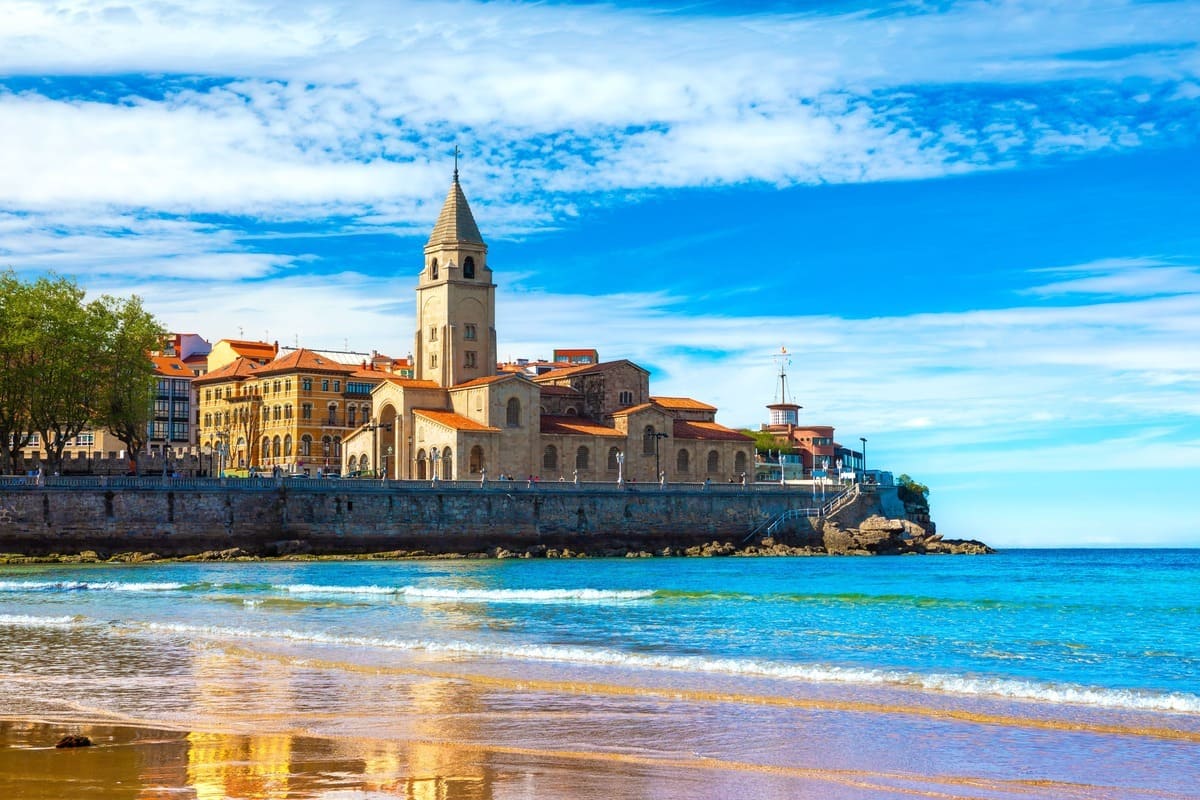
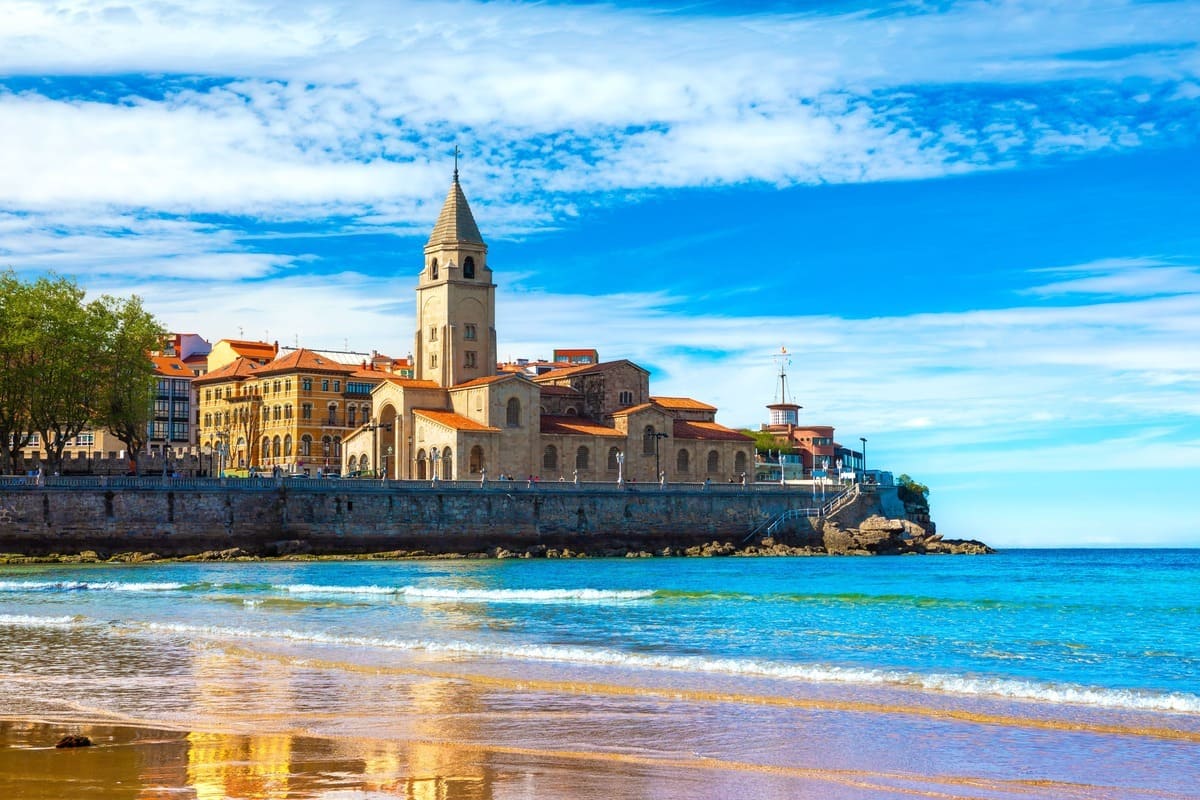
Located along the Asturian coast, Gijón is where Asturians go in the summer for beachesfresh seafood and homemade cider. Really, you haven’t been to Asturias until you’ve tried the local cider.
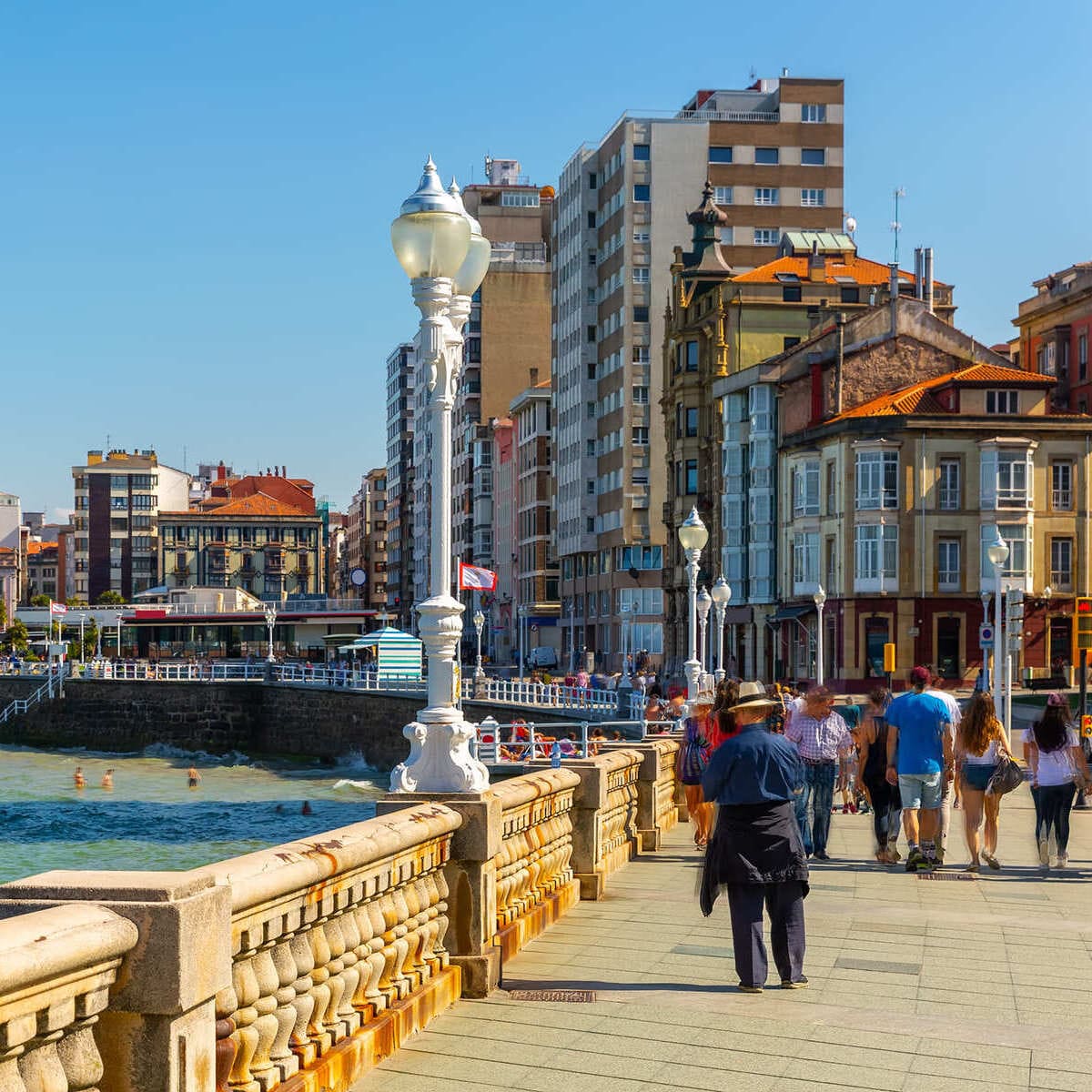
This is nothing short of the perfect Northern Spain postcard, with the long coastal walk along a golden sandy beach, Playa de San Lorenzoan old hilltop neighborhood that has its origins in a fishing village, Cimavillaand a beautiful central square, Plaza Mayorsurrounded by café terraces.
Looking for the best sidreria in the city?


Sidrería La Costa pours some really great cider and dishes from hearty Asturian bar meals: bean stew with chorizo, cachopos (my personal favorite, a giant breaded meat roll), and Chorizo à la parsha. The name speaks for itself.
Oh, and no impatient waiters who look angry half the time because they need to brush up on their English, nor anti-tourist graffiti anywhere in sight.
If you don’t mind a bit of an uphill walk, Elogio del Horizonte is a solid concrete, portal-like sculpture designed by Eduardo Chillida, a famous Basque artist. It has a brutalist core and may be ugly to some, but it sits on a prominent hill and acts almost as a window to the coast, and the view counts.
Peace and quiet? In Spain?


The heart of Asturias is formed by the picturesque coastline, interspersed with picturesque fishing villages. One of them, Llaneshas cobbled streets, stone houses and a medieval atmosphere combined with a seaside promenade that make it that much more charming.
Cudillero is that small, colorful Asturian pueblo clinging to small coastal cliffs. The houses are literally stacked on hills and the local pintxo bars are known for their delicious grilled fish and draft beer. In that regard, a sit-down meal is unlikely to cost you more than $17.
Asturias is one of the cheapest regions to travel in Spain, especially in smaller towns.


Ribadesella is that lively coastal town at the mouth of the Sella River, famous for its annual canoeing competition, folk and beer festivals and compact (yet beautiful) historic centre. Longing for something even more although, unusual?
Cangas de Onisjust inland from the coast, it has stone bridges, including a Roman one, over the Sella, and is an easy half-hour drive to the Asturian part of Picos de Europa. That is The Spanish mini-SwitzerlandIncidentally.
Towering mountain peaks, serene mirror-like lakes for swimming, and countless rural villages hidden in deep valleys, with small sidrerias and picturesque medieval churches.
Check the travel rules before you go to Spain this year


Are you going to Spain this year?
You should know that entry rules for Americans traveling to Europe will change in the near future. This summer you may be required to take your fingerprints upon landing at selected EU hubs, and later this year you will need to apply for a mandatory travel permit forward of flying.
Naturally, this includes travel to Asturias.
Stay informed about travel regulations by double-checking the Travel Off Path Traveler Dashboard before you go:


