

Share the article
Most people planning a getaway to Europe will spend hours figuring out the best and most convenient way to get from London to Paris, then possibly to Rome, and if time permits, a final sunny stretch in Madrid or Lisbon before boarding their flight home.
All these European cities are popular for a reason, and even though we’ve made a name for ourselves by highlighting the lesser-known parts of the Old Continent, it would be foolish to dismiss some of their most important cultural centers as overrated tourist spots. They’re not.
Be that as it may, Europe is more than the sum of its top 5 most famous capitals.
In fact, there’s an unusual capital showing steady passenger growth this year: the small airport handled 281,489 passengers in February alone, up 7.8 percent year-on-year, and they’re even considering reopening an old terminal to accommodate the expected increase in demand in the summer.
It is blatantly ignored by tourists and major US airlines alike. Zagreb, the number one city in Croatia is currently all the rage:
Did we sleep in the capital of Croatia the whole time?
It is best known for its Mediterranean atmosphere and fortified coastal towns, with Split, Dubrovnik and the like being two examples of former hidden gems that have turned into hugely popular sunny holiday destinations for Americans in recent years.
Despite their small airports and limited capacity, they are the ones that dominate bookings in Croatia and are blessed with non-stop Transatlantic flights, courtesy of United Airlines.
‘But wait, Dubrovnik isn’t the capital of Croatia?‘, I once heard a casual traveler, recently arrived from the United States, ask out loud on an outdoor terrace.
‘King’s Landing’ may have the beautiful old walls surrounded by a green-blue Adriatic Sea, the imposing drawbridges and moats, and that magical medieval allure, but to answer his question: no, the coastal hub with around 41,000 inhabitants is not a national capital.
Although it is much larger, with more than 160,000 inhabitants, Split does not have that title either.
The Croatian capital is located nowhere near the Dalmatian coastHundreds of kilometers inland, and if you usually associate Croatia with ochre-colored stone towns, Romanesque churches and Italian-style green shutters, you’re in for a big shock:
Forget the Mediterranean flair that you know Croatia from
Zagreb is none of that. No Mediterranean, Southern European flair, no winding cobbled streets leading to a historic harbour, and certainly no sparkling, blue Adriatic Sea in sight.
In any case, his closest companions would be the imperialist, Central European behemoths Budapest (Hungary) and Vienna (Austria).
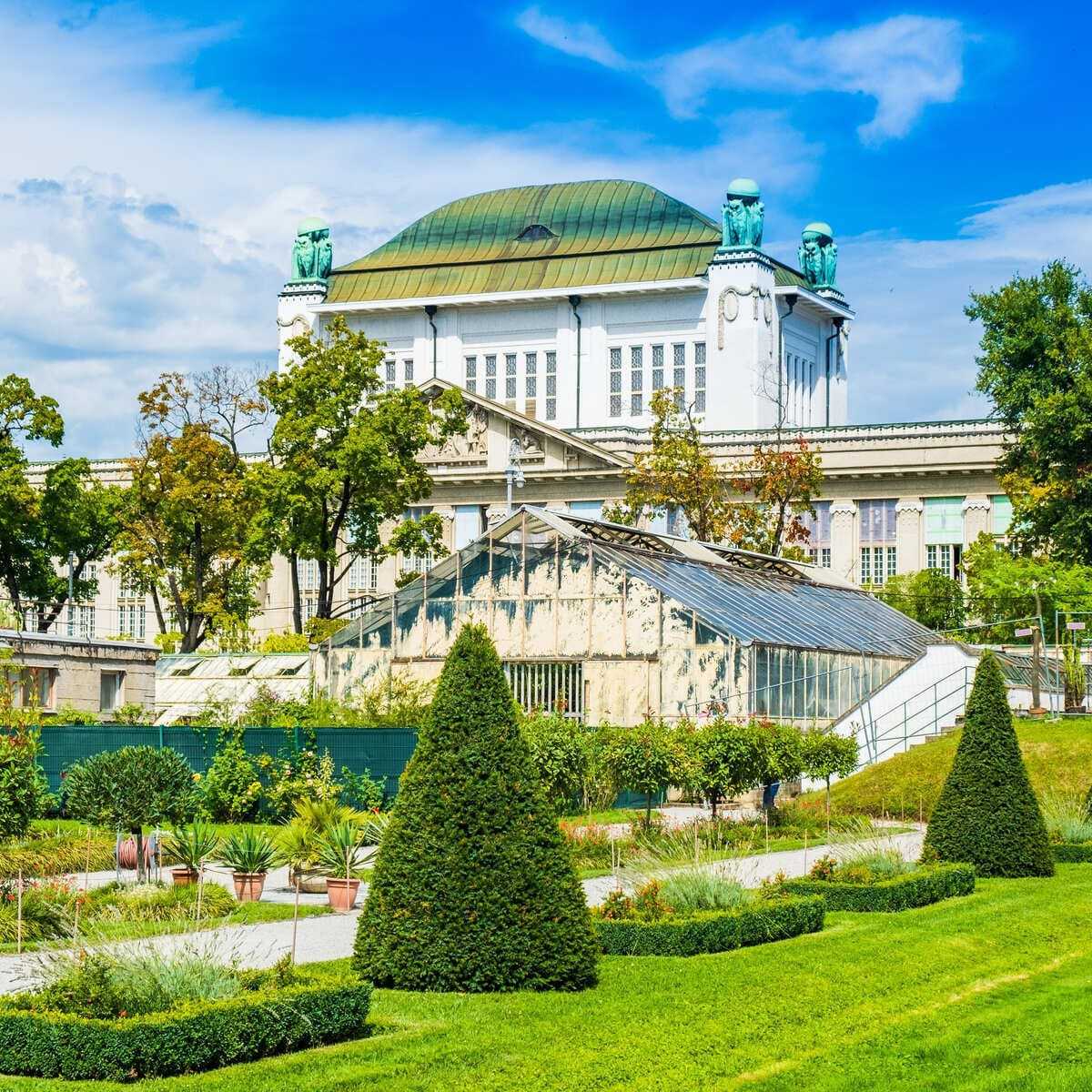
Zagreb’s wide boulevards are lined with ornate buildings from the turn of the century reminiscent of the Austrian capital’s busy thoroughfares and palatial public buildings, a bold-yellow opera house with ornate details that could easily belong in Budapest’s stately District VI.
These things are not incidental.


While Dalmatia was heavily influenced by Italy, or to be more precise, the Maritime Republic of Venice at its height, Zagreb was firmly rooted in the Austro-Hungarian world. At one point it was not even part of a Croatian state, but of the Habsburg Empire.
A tale of two cities
Zagreb is largely split into two zones, the Lower and Upper Cities– and then of course there are the Yugoslav-era suburbs, but unless you have a thing for communist-era building blocks, you might want to skip those).
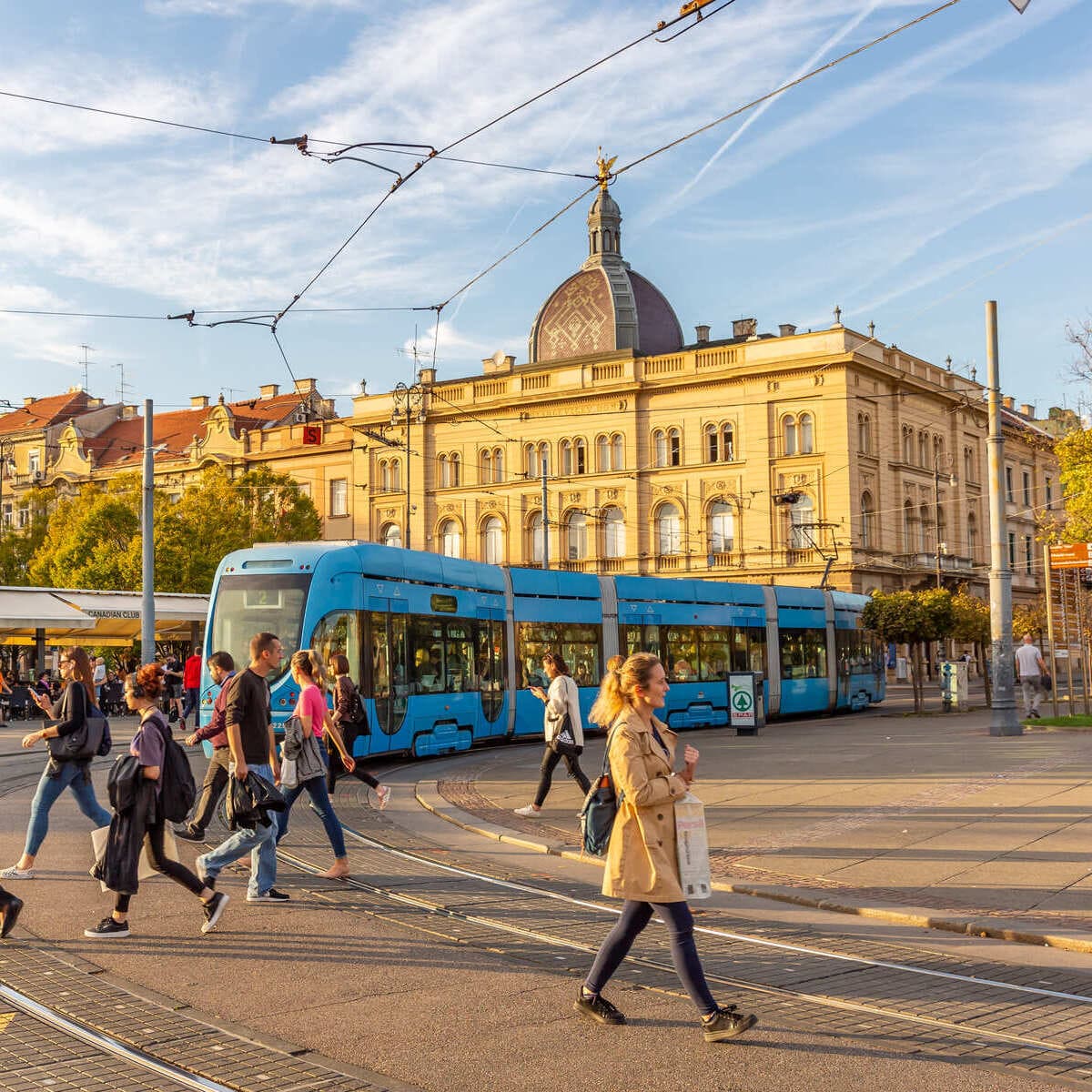
A large part of the lower city, or as the locals call it Doni Gradis filled with elegant 19th century civil buildings and planned arterial roads, wide enough to allow both cars and trams to pass.
The succession of U-shaped parks, typically bordered by the Habsburg era buildingsis especially Austria-codedand actually the distinctive 19th century landscaped core of Zagreb.


The upper town (Gornji Grad), however, is the old, medieval part of the city that remained virtually untouched after the Austrian makeover of the 19th century.
This is the place to be for the steep side streets, romantic watchtowers, old churches covered with shiny tiles with traditional coats of arms, and those typical European cobblestone walkways.
By the way, if the 140 steps from Lower Town to Upper Town sound like something you could skip on holiday, you can always take a ride on Zagreb’s historic funicular, said to be the shortest public transport funicular in the world.
With a ride of just 1 minute, it connects Tomićeva Street, in the lower town, with the Strossmayer Promenade, at the foot of the whitewashed Lotrščak Tower, in the upper town.
After all, Zagreb doesn’t need the Adriatic Sea
Zagreb may not have the Adriatic Sea, but it certainly falls short on attractions compared to its Dalmatian rivals.


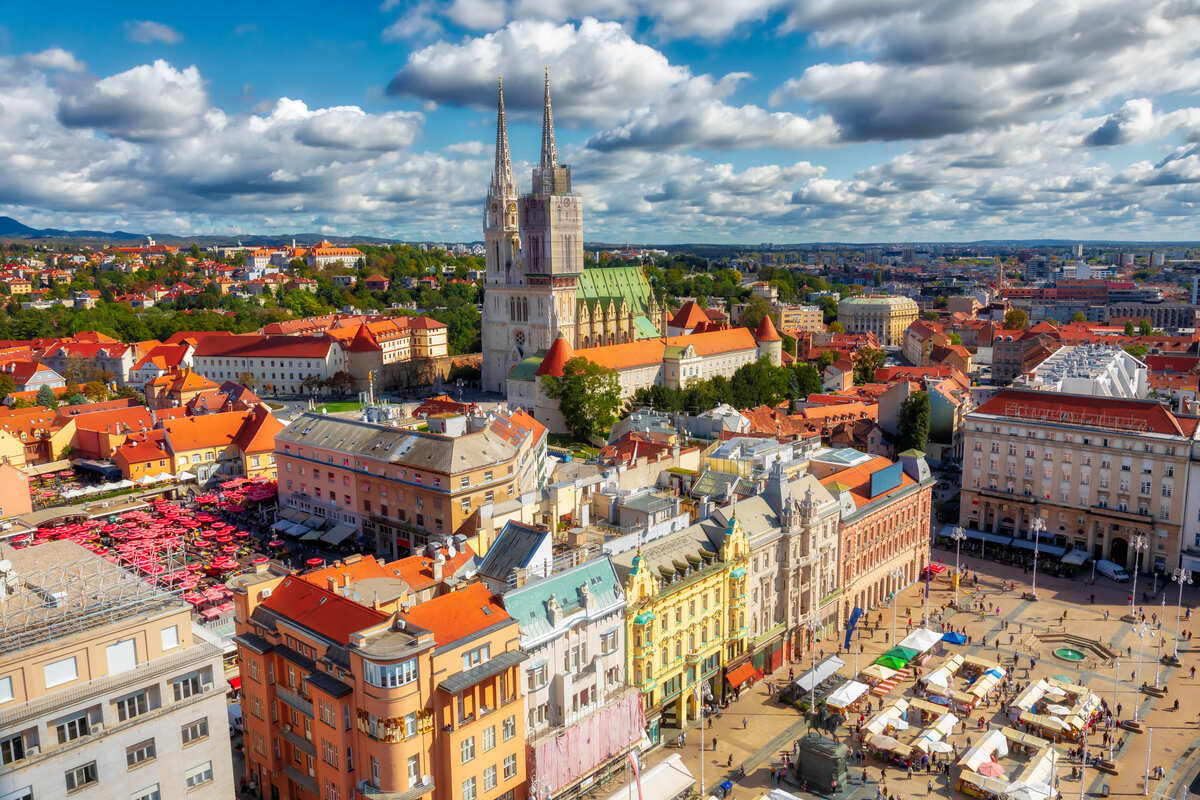
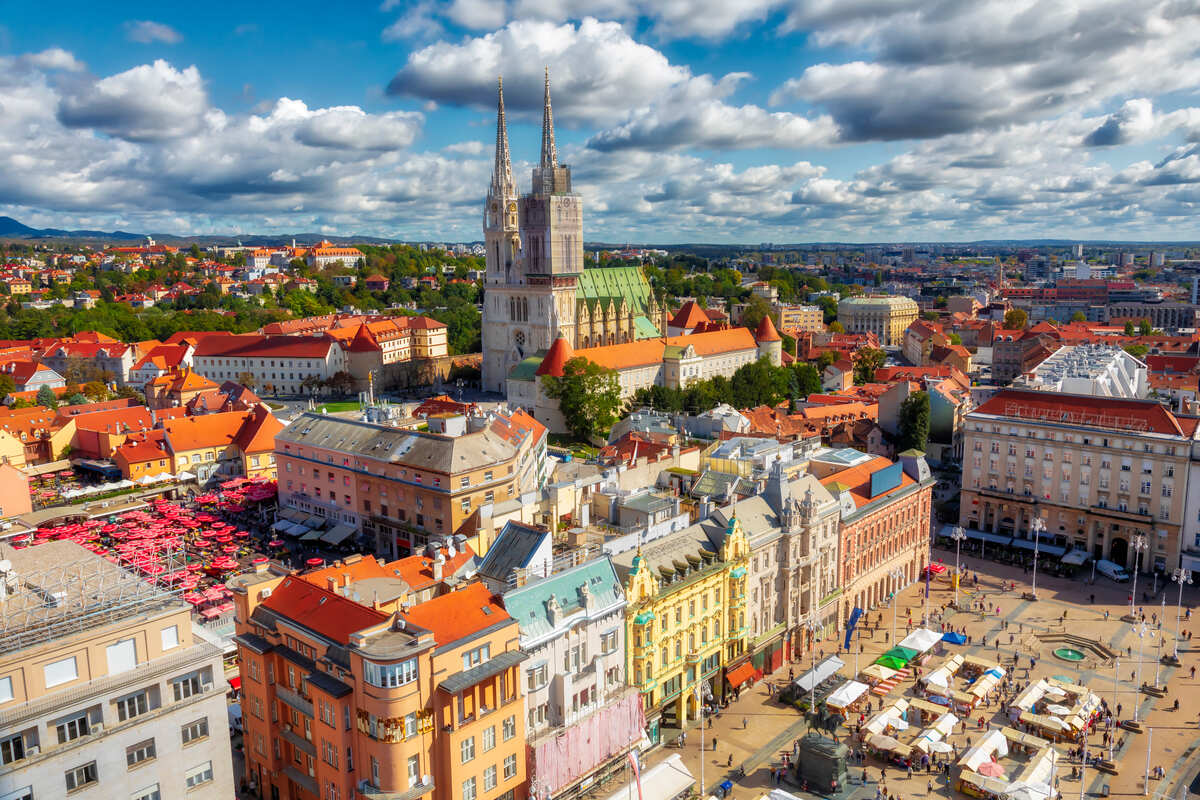
Ban Jelačić Square is the public square where everything begins. If Dalmatian towns feel more like small villages, the Croatian capital is a real, vibrant urban sprawl more than 767,000 people call it home, and the main grand square is the best place to feel that beating city heartbeat.
Dominated by an aged bronze statue of Josip Jelačić, a 19th-century Croatian military leader, it is effectively Zagreb’s central meeting point. If we may add, the pastel-colored Habsburg buildings that flank the square are among the best the city has to offer.
A short walk from the square is Zagreb Cathedral, the centerpiece of the upper town:
It originally dates from the 11th century and features two cream-colored towers topped by tall spires– due to the city’s intermittent earthquakes, they appear to be in a permanent state of repair, so don’t be surprised if one of the towers is shrouded in a thick scaffolding box.


The unpronounceable Tkalčićeva is that cobbled street lined with coffee shops and eateries, and if major art museums like the Louvre can only make you yawn, you might want to try Zagreb’s unique selection of quirky exhibitions:
- Museum of Broken Relationships: find a large number of artifacts from failed relationships, each telling their own heartbreaking, funny or sometimes bizarre story (Upper Town)
- Museum of Illusions: mind-boggling 3D rooms and holograms that make you wonder what’s real and what’s not (Lower Town)
- Nikola Tesla Technical Museum: named after the Croatian (or was he a Serb?) innovator, perfect for hands-on exploration and physics demonstrations (near Maksimir Park, just outside the city center)
- Museum of Torture: small, somewhat macabre, but incredibly fascinating display of medieval torture methods (Upper Town)
- Zagreb 80s Museum: some classic Yugoslavian retro nostalgia, with music, fashion and gadgets from the communist 80s
Could Zagreb be Croatia’s next big thing?
So far this year, a record 578,350 passengers traveled through Zagreb Airport (ZAG), an increase of 6.8 percent compared to the same period in 2025.


You’re probably wondering if this is even relevant, because transit passengers sometimes don’t translate into reality visitors. The thing is, Zagreb is not exactly a major transit hub for visitors to Croatia.
Most tourists visit the country in spring or summer, the high season, and head straight to the Dalmatian coast: most major coastal destinations in the country have their own international airport, serving flights from all over Europe, so a passage through Zagreb is usually not necessary.
In other words, those who land in ZAG are probably heading to Zagreb City specificallyeven if they will eventually make their way south to the popular beach areas in Pula, Zadar, Split or Dubrovnik.
It has never been as popular as it is now.
Take note if you’re flying to Croatia in the near future: European travel rules are changing significantly this year, from the introduction of mandatory fingerprinting at airports to the gradual rollout of a new entry permit form from the spring.
Avoid unpleasant surprises at the airport: be sure to check all entry requirements on our US Department of State-powered, human-rated traveler dashboard.


