


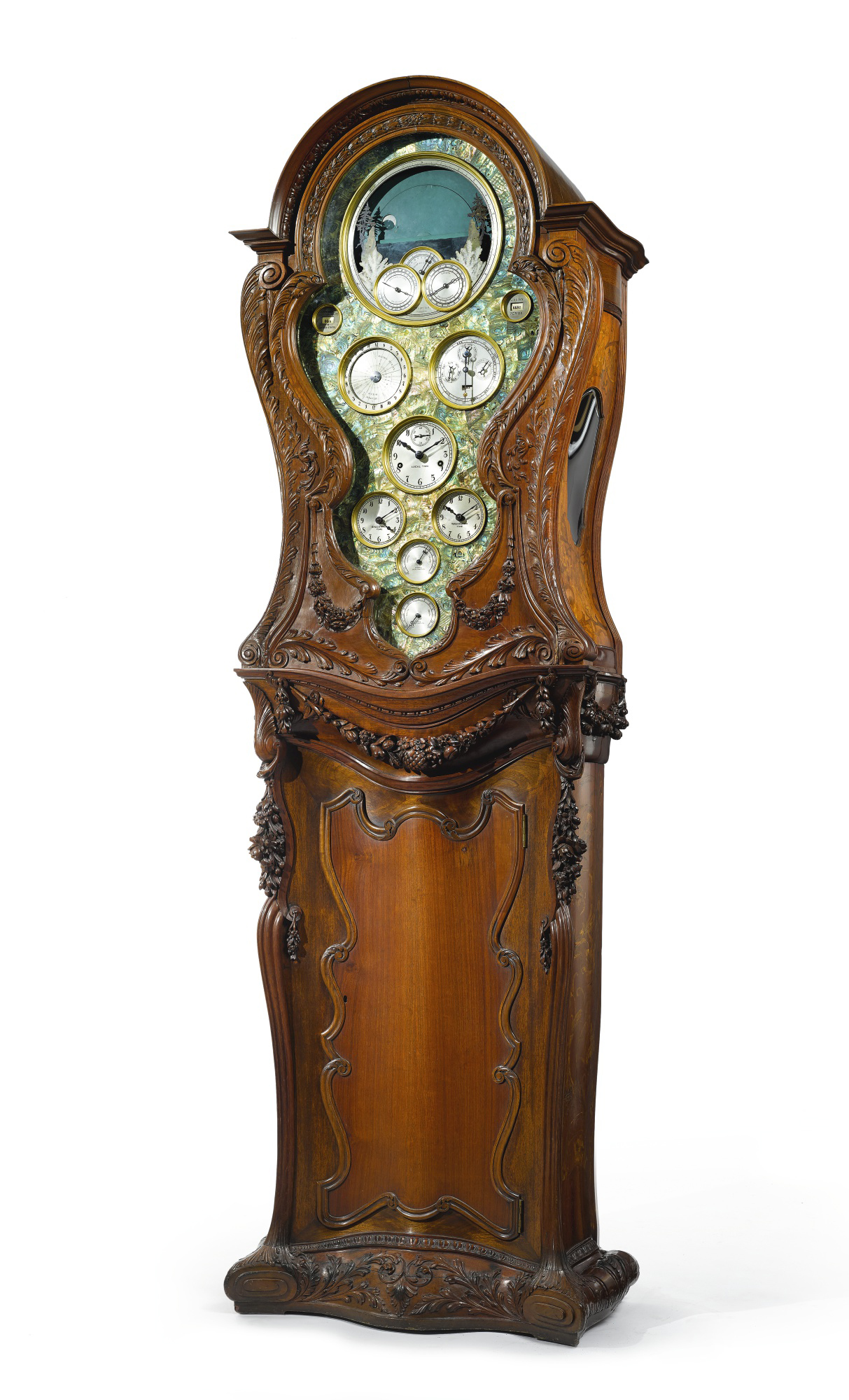
Tiffany & Co. marks America’s 250th anniversary with the return of one of the most elaborate timepieces in the brand’s history. The jeweler will unveil its restored astronomical clock at The Landmark on Fifth Avenue, bringing an object not seen for more than a century back to the public.
The clock was created for the World’s Columbian Exposition in Chicago in 1893, one of the most important events that showcased American industrial, technological, and artistic ambition to the world at the end of the nineteenth century. Tiffany acquired the clock in 2025 and spent seven months restoring it at the company’s watchmaking workshops in Geneva, a process that restored the timepiece to function and preserved the integrity of its original construction.
The astronomical clock contains 21 complications, a figure that makes it one of the most mechanically complex clocks ever produced in the American context. One of these complications is an exhibit tracking the years since American independence, an article that will read “250th” in 2026, timing its unveiling precisely to the country’s centennial.
“The restoration of the Astronomical Clock reflects Tiffany & Co.’s continued commitment to artistry, innovation and cultural stewardship,” said Anthony Ledrupresident and CEO of Tiffany & Co. “As we commemorate the 250th anniversary of the signing of the Declaration of Independence, we are honored to share this remarkable work of American history with the public.”
The astronomical clock has historical weight
The significance of the astronomical clock extends beyond the technical realization of its 21 complications. It is a document of where American craftsmanship stood in 1893, a moment when the country actively and publicly championed the quality and ambition of its makers on the world stage. The World’s Columbian Exposition attracted more than 27 million visitors and pitted American innovation against the best that Europe had to offer. A Tiffany clock in that exhibition was not an incident. It was a statement of what the house stood for and what the nation aspired to.
Tiffany’s position within American luxury history differs significantly from that of the European houses with which it is often compared. While French and Italian brands trace their heritage through royal courts, noble patrons and centuries-old workshops, Tiffany’s history is deeply intertwined with the development of the United States itself.
The brand has created championship trophies for the NFL, the NBA and Major League Baseball, creating objects that are embedded in the country’s cultural memory in ways that go far beyond luxury goods. The astronomical clock belongs to the same tradition, a Tiffany object that has historical weight regardless of its commercial context.
A pattern of retention and reacquisition
The restoration of the astronomical clock is the second major reacquisition of heritage that Tiffany has made in recent years. In 2024, the company acquired the gold pocket watch presented to RMS Carpathia Captain Arthur Rostron in recognition of his role in rescuing Titanic survivors, bringing renewed attention to an important chapter in Tiffany’s watchmaking history.
These two acquisitions suggest a deliberate strategic commitment to restoring and contextualizing objects that connect the brand’s current identity to its documented historical contributions.
This approach fits within a broader trend in the luxury sector of brands looking to their archives to anchor their stories. While many European houses look back to the nineteenth century for their heritage stories, Tiffany’s archive is specifically and uniquely American.
The Astronomical Clock makes that Americanism explicit. The clock, restored in Geneva and unveiled on Fifth Avenue to mark an American national milestone, does what Tiffany has done throughout its 189-year history: places itself at the intersection of craftsmanship and American occasion. At a time when the country is reflecting on two and a half centuries of its own story, that positioning carries real cultural weight.
Featured image: Sotheby’s