

Share the article
Nowadays, when people ask me how to take a budget-friendly Caribbean trip, I usually have to deliver difficult news first. The era of effortlessly scoring a cheap beachfront room in the heart of San Juan or Montego Bay is all but over. Between soaring demand and local inflation, those classic “budget” resort towns have quietly turned into luxury corridors where standard rooms easily top $300 per night.
But here’s the good news: you can absolutely still travel through the Caribbean on a budget in 2026. You just have to change your playbook.
The secret is practicing geographic arbitrage. Instead of flying to the standard mega-resorts, focus on the lesser-known secondary cities right next to them, or pick islands that actively reject the huge corporate resort model.
If you want to get your money’s worth this year without sacrificing the tropical vibe, here are the 5 affordable destinations I highly recommend right now.
1. Puerto Plata, Dominican Republic

The Northern Value Hub
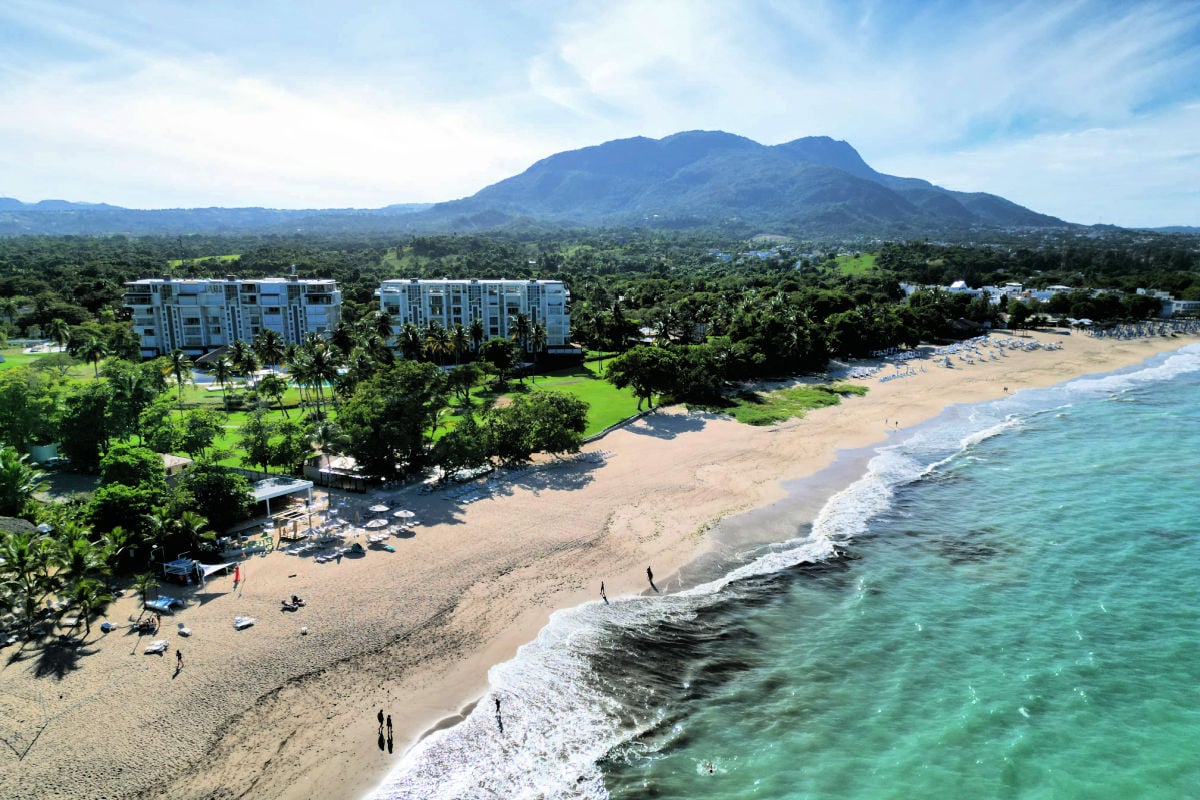
The Dominican Republic is still the king of budget travel due to its vast infrastructure. But if you want to see your money go incredibly far, skip the huge, manicured mega-resorts in Punta Cana and head north to Puerto Plata.
Why it’s cheap: The cost of living and hotel rates in Puerto Plata are often 20% to 30% cheaper than in Punta Cana. A well rated 4 star beach resort here it averages just $137 per night (compared to $181 in the East).
My strategy: The food here is insanely cheap. A cheap meal at a local spot costs an average of $3.67 in Puerto Plata, while the exact equivalent meal in Punta Cana costs $11.00. Use the local buses (which cost less than $1) to get around instead of expensive private taxis.
The flights: You can fly directly to POP (Puerto Plata), but sometimes it’s even cheaper to take a $400 round-trip flight to Punta Cana (PUJ) and just take a bus north for a longer, cheaper stay.
Security Check: Puerto Plata currently has a 70/100 on our safety index. I’ve found that as long as you stay at a resort and you stay within the main tourist zones, you’re pretty much good to go.
2. Negril, Jamaica
The guesthouse economy
Jamaica is a highly polarized island. You can easily spend $700 a day at a walled luxury resort in Montego Bay, or you can survive on $40 a day if you know exactly where to go.
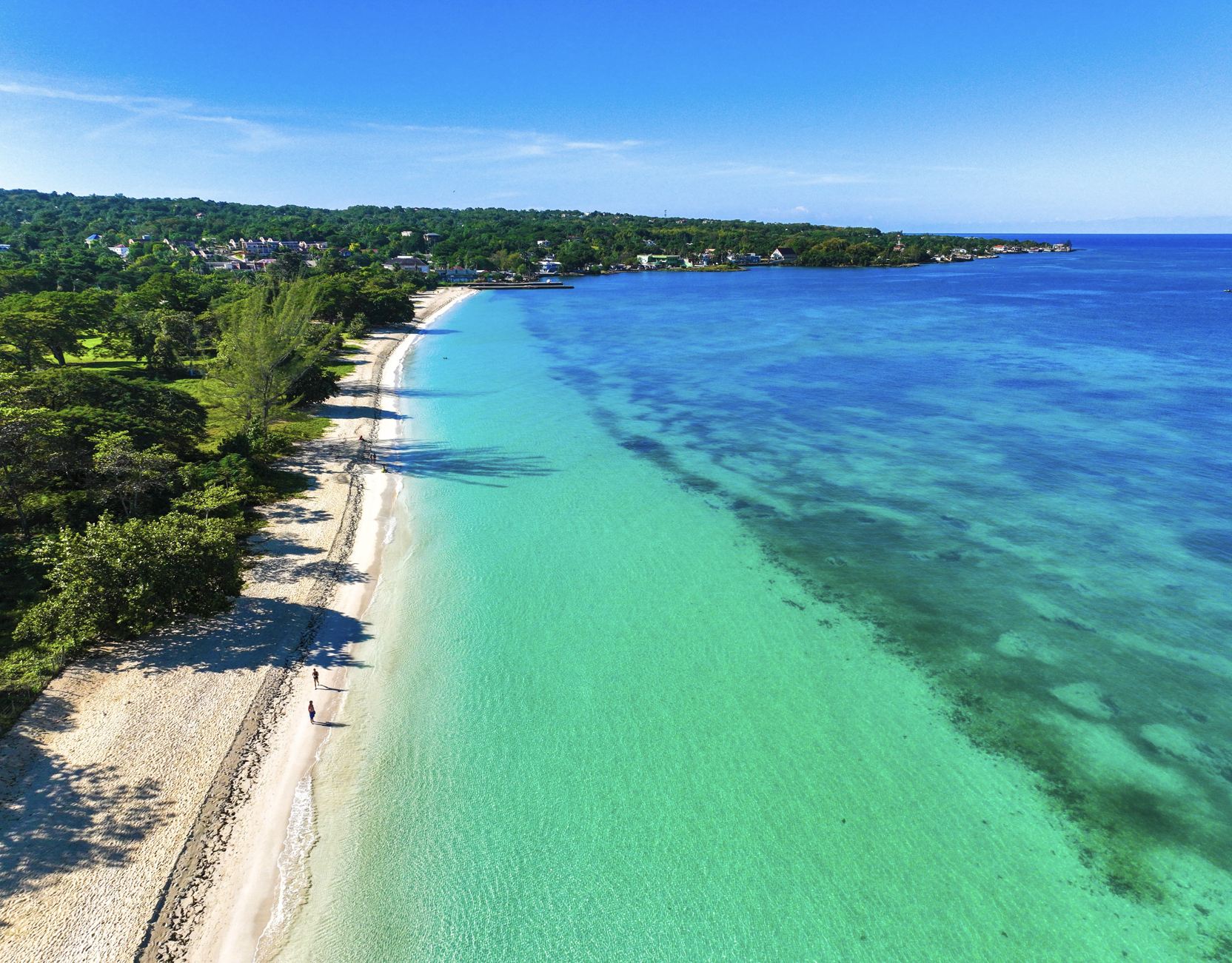
Why it’s cheap: Flights to Montego Bay (MBJ) are aggressively cheap (sometimes $142 one-way on Spirit or Delta). The trick is not to stay in Montego Bay. Head straight to Negril, which has a robust old-school boarding house economy that can withstand hyperinflation. You can find boutiques and hostels right off Seven Mile Beach for $40 to $60 per night.
My strategy: This is where you need to aggressively de-escalate your travel habits. Don’t take private tourist taxis (which cost $60-$100). Use the shared ‘route taxis’, which transport you between cities for $1.50 to $4.00. Eat local street food like Jamaican patties and jerk chicken from places like Scotchies instead of formal restaurants to keep your food budget under $15 a day.
Security Check: Just like Puerto Plata, Negril ranks 70/100 on our index. I always feel comfortable here, especially when I stick to the established tourist areas and resorts.
3. Rincon, Puerto Rico

The inland surfing paradise
Puerto Rico is the ultimate hassle-free destination for US citizens: no passport, no currency exchange, no expensive international mobile plans. But if you stay in the capital San Juan, you’ll be crushed by luxury hotel prices of $350 per night.
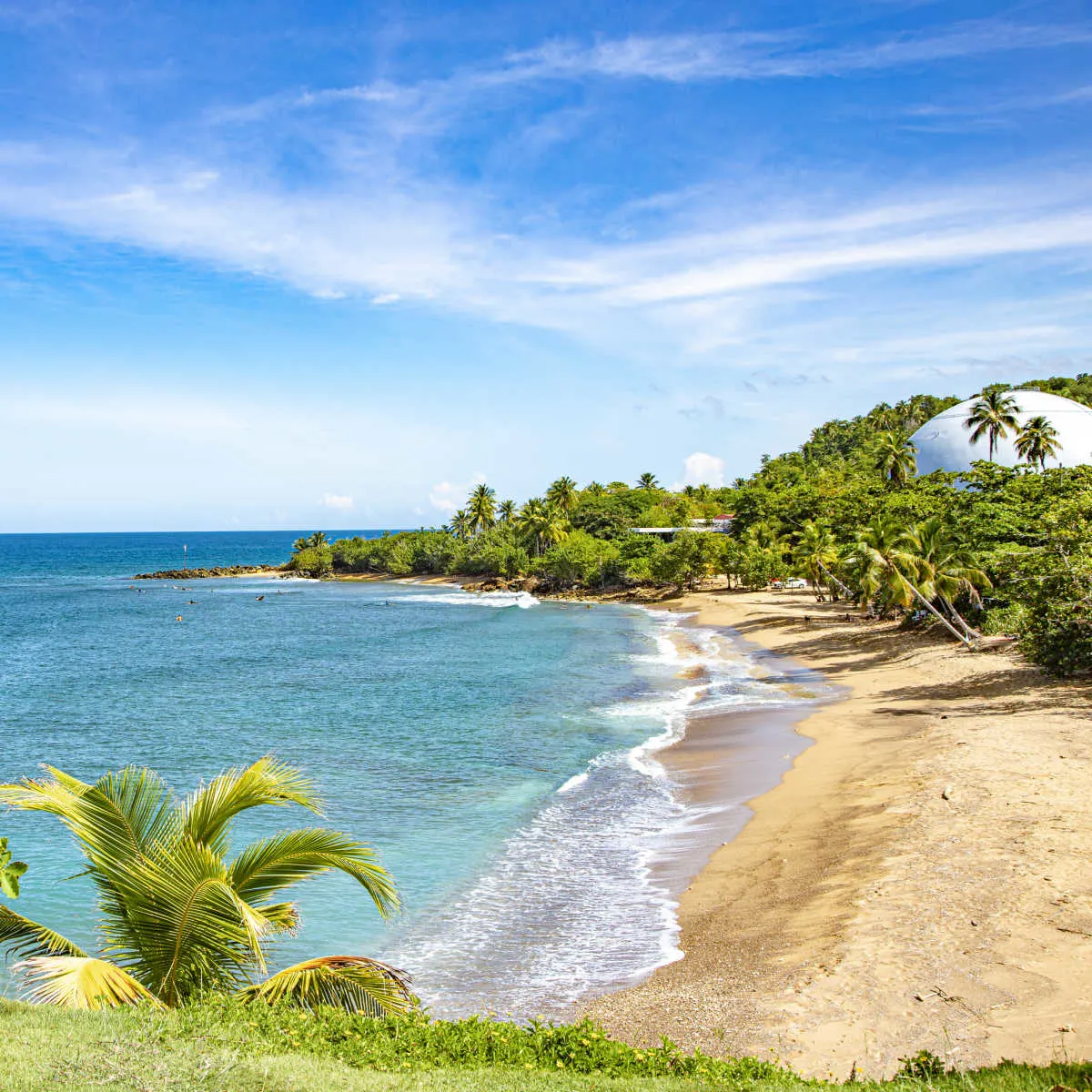
Why it’s cheap: You need to go to the very western tip of the island, to Rincón and Aguadilla. It is a bohemian, decentralized enclave that thrives on surf culture and is completely devoid of global fast food chains and corporate coffee. High-end beachfront hotels here cost around $200 per night, which is almost a 50% discount compared to San Juan.
My strategy: The main activities here – surfing at Domes Beach, snorkeling at Tres Palmas or whale watching – are completely free. Grab a $220 round-trip flight to San Juan (SJU) and drive around the island, or fly direct to Aguadilla (BQN) for a little more upfront capital to save time.
4. Dominica
The ultimate eco-frontier
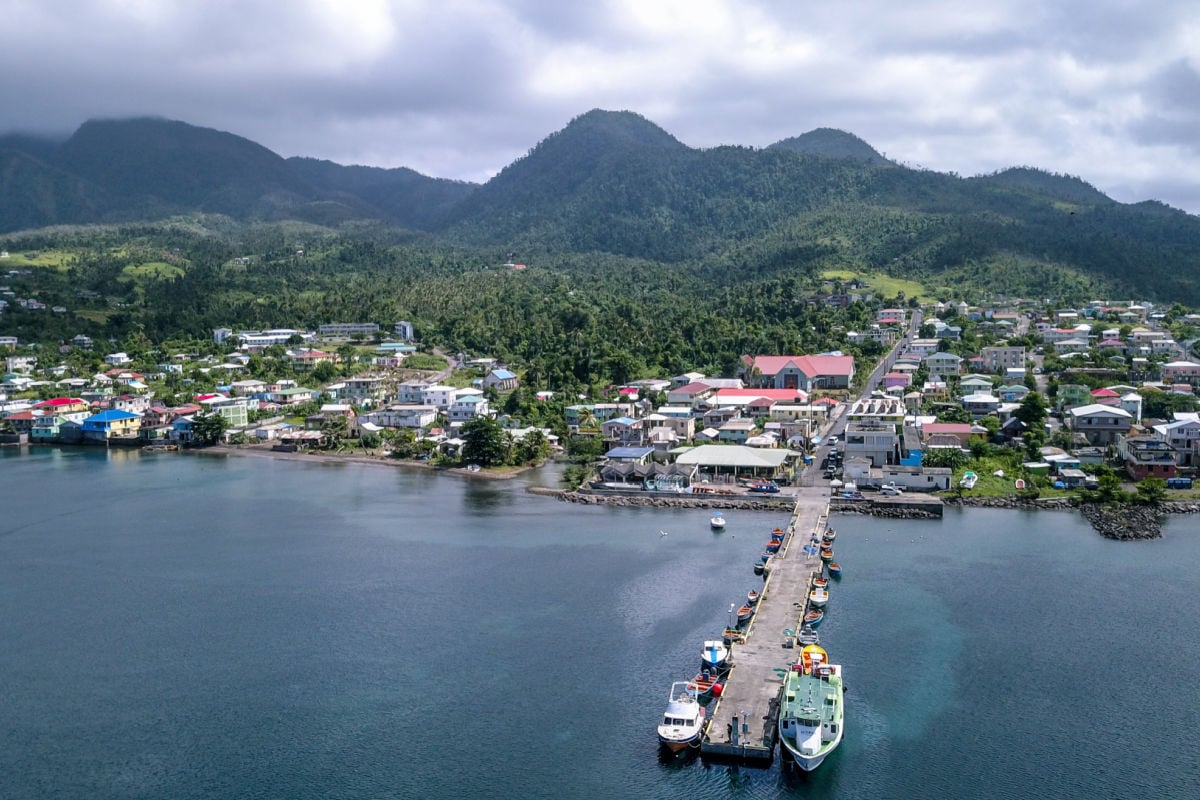
Dominica is the ‘natural island’ and it completely rejects the mass tourism model. There are no huge white sand beaches, no mega resorts and no huge cruise ship ports. It’s a raw, non-gentrified adventure.
Why it’s cheap: The absolute best things you can do here cost essentially nothing. Hiking the Waitukubuli National Trail, snorkeling the geothermally active Champagne Reef or exploring waterfalls will rarely cost you more than a $10 entrance fee. The accommodation market consists almost entirely of cheap Airbnbs, eco-lodges and family-run guesthouses.
My strategy: You’ll need to rent an SUV to get around safely, which is an upfront expense, but your daily burn rate will be incredibly low. Eat local street food such as cassava bread and fried casserole for $5, and avoid formal restaurants. Flights here require a layover and can average $500-$600, so this island is best for a longer trip of 7 to 14 days to make the math work.
Security Check: Dominica is one of the safest places in the Caribbean, with an impressive 85/100 on our safety index. I always feel incredibly relaxed when exploring the island’s natural wonders.
5. Granada
The agricultural advantage
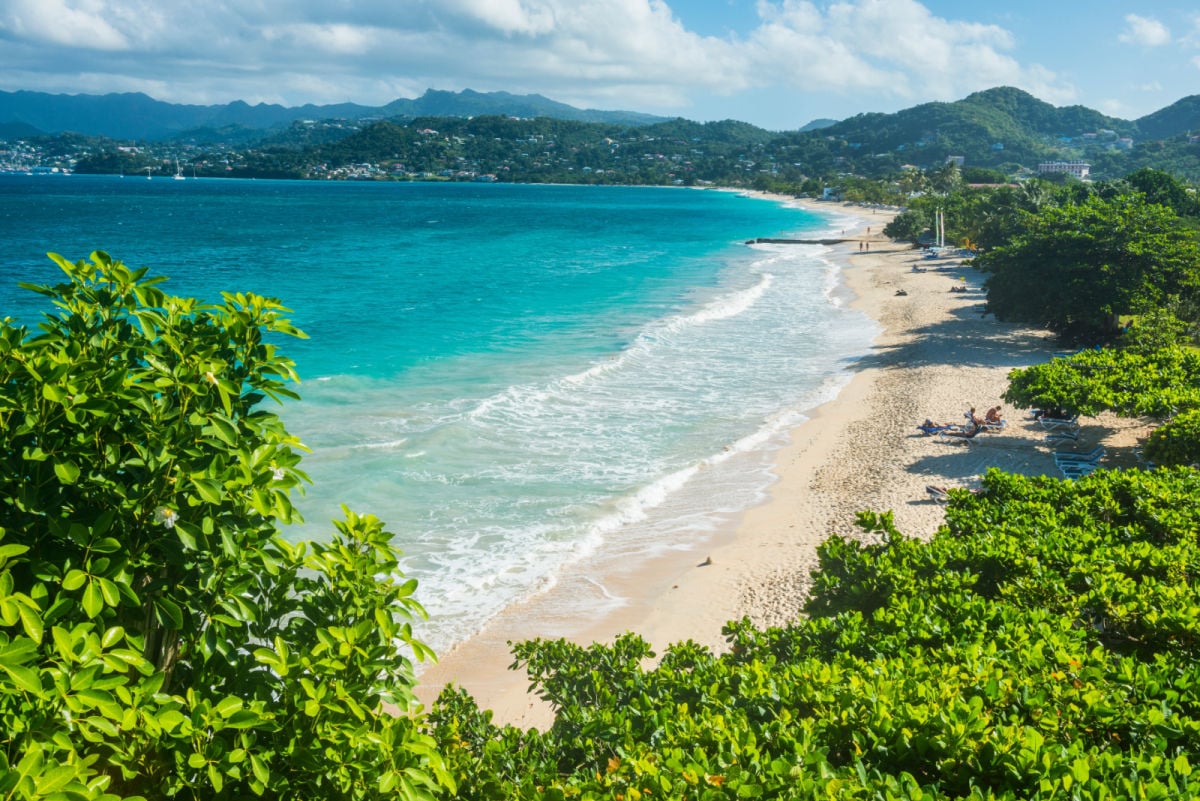
Grenada (the ‘Spice Island’) brilliantly combines raw ecotourism with comfortable boutique hospitality. It is consistently ranked as one of the cheapest islands for long-term budget travel, provided you follow one strict rule: don’t buy imported goods.
Why it’s cheap: Domestic agriculture in Grenada is extremely robust. If you eat local bananas, fresh fish, and herbs, you can easily get an incredible meal for $7. If you try to buy imported cheese or European beer, your budget will explode. Accommodations are largely boutique hotels, meaning you can easily find great guesthouses for $50 to $113 per night.
My strategy: Take advantage of the highly efficient, colorful public minibus system! Fares are literally $1 to $4 USD, completely bypassing the expensive private taxi cartel. Use those cheap buses to access completely free attractions like the Welcome Stone Viewpoint, Fort Frederick, or even the Underwater Sculpture Park (if you bring your own snorkel gear!).
Security Check: Grenada has a very solid 75/100 on our safety index. It’s a very welcoming environment, and as long as you stay within the main resort and tourist districts, it’s a fantastic, safe choice for a tropical getaway.
Take this quiz now to find your perfect match!


