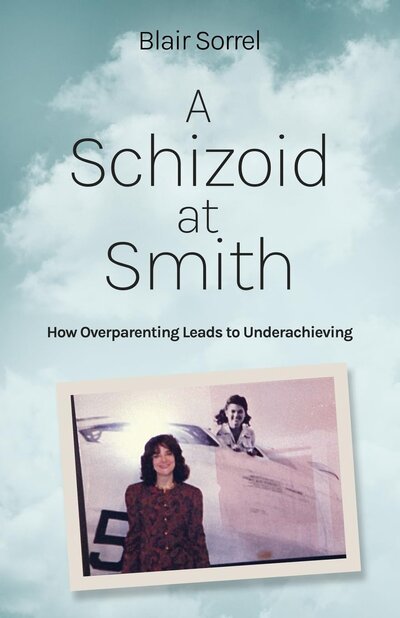
A review of Schizoid in Smith: How Overparenting Leads to Underachievement by Blair Sorrel.
Blair Sorrel’s memoir is both a revelation and a warning. In A Schizoid in Smiththe author offers an unflinchingly honest account of life with schizoid personality disorder – a condition so rarely discussed that sufferers remain largely invisible to society. What sets this work apart from conventional memoirs is Sorrel’s willingness to record not triumph but survival, not achievement but the crushing weight of underachievement, despite the fact that he attended the prestigious Smith College. Her literary prose transforms what could have been a clinical case study into a deeply human story of isolation, misunderstanding, and eventual self-knowledge.
The book’s most powerful passages explore the roots of Sorrel’s disorder in severe overparenting. Her mother, a WAAC nurse during World War II, imposed military-level protocols on daily life – obsessive hygiene rituals, rigid social rules and emotional austerity that left young Blair ill-prepared for human relationships. Sorrel masterfully illustrates how extreme parental control, no matter how well-intentioned, can profoundly damage a child’s ability to function normally socially. These early chapters read like psychological horror, as readers see how a sensitive child’s natural development is systematically undermined by the person meant to raise her.
What makes this memoir an essential read is its rarity. Schizoid personality disorder mainly affects men and people who suffer from it rarely seek help, making Sorrel’s decision to ‘come out’ an act of considerable courage. She offers invaluable insight into the internal experience of emotional detachment, the exhausting effort it takes to hold down a job, and the deep loneliness that comes from watching life happen to everyone. Her 1988 diagnosis by physician Selma Landisberg becomes a turning point, not toward healing, but toward understanding. The clinical descriptions “desire to be alone, difficulty expressing emotions, difficulty keeping a job” suddenly contextualize decades of bewildering struggle.
Sorrel writes with remarkable self-awareness and literary skill, using vivid imagery and cultural references that elevate the story beyond a mere confession. Her observations about the 1960s and 1970s era at Smith College, the expectations placed on educated women, and the gap between promise and reality resonate universally. The contrast between her Smith family tree and subsequent “marginal livelihood” becomes a meditation on how mental illness respects neither privilege nor potential. Her prose is both funny and pathos, refusing self-pity while acknowledging genuine suffering.
This memoir serves multiple audiences: people struggling with their own withdrawal from the world, therapists trying to understand this elusive disorder, families struggling with the aftermath of overcontrol, and anyone interested in the complex relationship between parenting and mental health. Sorrel achieves what she set out to achieve: she sheds light on a mysterious condition and offers hope that understanding, if not recovery, remains possible. A Schizoid in Smith is an important contribution to the literature on mental illness, notable for its honesty, clarity, and ultimate message of human resilience against invisible odds.