


S
tar Wars enters a pivotal leadership moment with Dave Filoni appointed president of Lucasfilm, as successor Kathleen Kennedy after more than a decade of overseeing the franchise’s modern revival. This change reflects a strategic pivot toward creative continuity and internal leadership at one of Hollywood’s most visible studios.
Filoni’s promotion formalizes an authority he has steadily built as Lucasfilm’s narrative architect. He has designed animation, live action and franchise-wide story development. Now his influence extends to studio strategy, staffing and financial oversight. For Disney, the decision signals confidence in centralized leadership at a time when creative stewardship and corporate discipline have become essential.
Theatrical strategy moving forward: a new script for the silver screen
Under Kennedy, Lucasfilm’s theatrical slate delivered blockbuster highs, but also notable lows. Star Wars: The Force Awakens (2015) set new franchise records with over $2 billion worldwide, returning Star Wars to global cinema prominence. Then it was followed by The Last Jedi (2017) and The Rise of Skywalker (2019). Together, these films completed a sequel trilogy, which grossed more than $4.4 billion worldwide and re-established Star Wars as a generational brand.
Kennedy’s attempt to expand beyond the core saga of the franchise Solo: A Star Wars Story (2018) fell short of expectations. Although Lucasfilm was willing to test the franchise’s limits, Solos The underperformance forced a strategic rethink. This change has since allowed for cinematic quality with room to breathe.
Filoni inherits a theatrical strategy that now works with increased selectivity. Instead of a fast-paced release model, Lucasfilm is prioritizing event films that justify its global rollout and cultural impact, for starters The Mandalorian and Groguco-written by Filoni and scheduled for May 2026, followed by Star Wars: Starfighter in 2027.
Industry executives note this shift as it recognizes both market realities and fan expectations. Box office success for sequels and spin-offs has become less reliable in recent years; therefore, a strategic retreat to fewer, bigger bets aligns with Disney’s broader recalibration of content. Filoni’s background, which has seen success in serialized TV and character-driven storytelling, positions him to shape films that feel purposeful and integrated with the larger Star Wars universe rather than reactive to quarterly content demands.
However, Kennedy remains involved as a producer of Filoni’s upcoming theatrical releases. “It has been a true privilege to work with the extraordinary talent at Lucasfilm for more than a decade,” she said. “I am excited to continue developing films and television with both longtime collaborators and fresh voices.”
Streaming, reassessed: quality over quantity
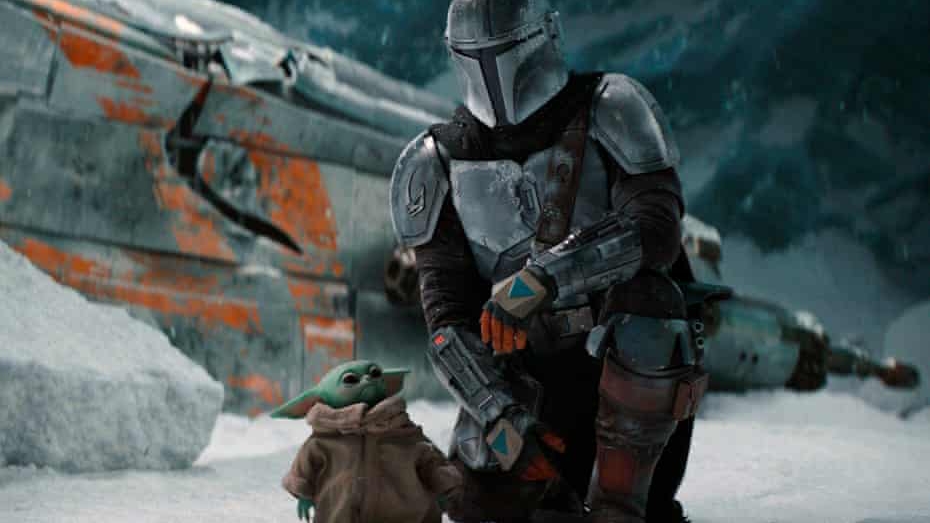
Lucasfilm’s expansion into streaming under Kennedy redefined how Star Wars engages audiences. The Mandalorian became Disney+’s breakout series, introducing characters like Grogu and demonstrating the franchise’s serial potential. Andor received critical acclaim for telling grounded stories, while titles like Ahsoka expanded the scope of the universe.
Now the streaming slate is being reassessed with an eye toward “narrative focus” and “retention value” rather than pure volume. Disney’s platform strategy has changed; Subscriber growth is measured by the quality of engagement. Within this context, Lucasfilm’s streaming production is expected to emphasize tighter seasons, more distinct creative identities per show, and clearer endpoints.
Filoni’s approach, which emphasizes coherence and character arcs over rapid expansion, could therefore be in line with these goals. Ultimately, a measured slate, with flagship series anchoring the franchise’s streaming presence, can reduce dilution and restore momentum across multiple Disney+ windows.
Industry and fan response: a nuanced mix
The response within Hollywood and the fan community was immediate and layered. Industry insiders generally view the leadership change as pragmatic, centralizing creative authority and pairing Filoni with a seasoned business partner. Lynwen Brennan will serve alongside him as co-president of the studio. Both Filoni and Brennan will report to the co-chairman of Disney Entertainment Alan Bergman.
Fans have responded with intense debate online and on social platforms. On the one hand, some have celebrated Filoni’s elevation as a creative reset, especially for those who felt disconnected from the franchise’s theatrical phase, while others on the other warn that internal leadership may not guarantee broader narrative innovation.
However, analysts note that this response reflects broader industry patterns: Passionate fandoms are less respectful of studio leadership and more vocal about the direction of storytelling. Lucasfilm’s job will be to channel that energy into long-term viewership rather than conflict.
A measured transition: balance between legacy and forward movement
Kathleen Kennedy leaves Lucasfilm with a body of work that reshaped Hollywood’s view of franchise management. She guided Star Wars through a defined modern era, generating box office revenues of more than $5.9 billion across five films and establishing Star Wars as a streaming centerpiece with multiple critically acclaimed series.
Filoni inherits a complex legacy: a legacy of broad audience reach, deep franchise knowledge and creative debate. His challenge will be to harmonize spectacle with substance, and ensure that future films and series feel connected to the core impulses of storytelling, rather than isolated events.
Lucasfilm’s leadership model places creative and operational partners at the top. This structure reflects Hollywood’s contemporary demand for both artistic vision and corporate responsibility. If Filoni and Brennan can provide clarity without stagnation, the studio’s next chapter could redefine how long-running franchises evolve in a fragmented media landscape.
—Read also