


Share the article
The US State Department released a wave of security updates over the weekend. Between March 7 and 8, 2026, US embassies issued thirteen separate emergency alerts in eleven different countries in the Middle East.
If you are currently on-site in the region, the baseline guidance has universally shifted to shelter-in-place.

Commercial aviation is seriously fragmented. In countries where airspace has been completely closed due to missile threats, the US government is now actively chartering buses and coordinating land escape routes. In countries where flights are still taking place, the Ministry of Foreign Affairs has initiated official evacuation flights to Europe.
Here you will find the exact breakdown of the 13 new security alerts starting today, March 8, 2026.
You can view live embassy reports and the security status of your destination here
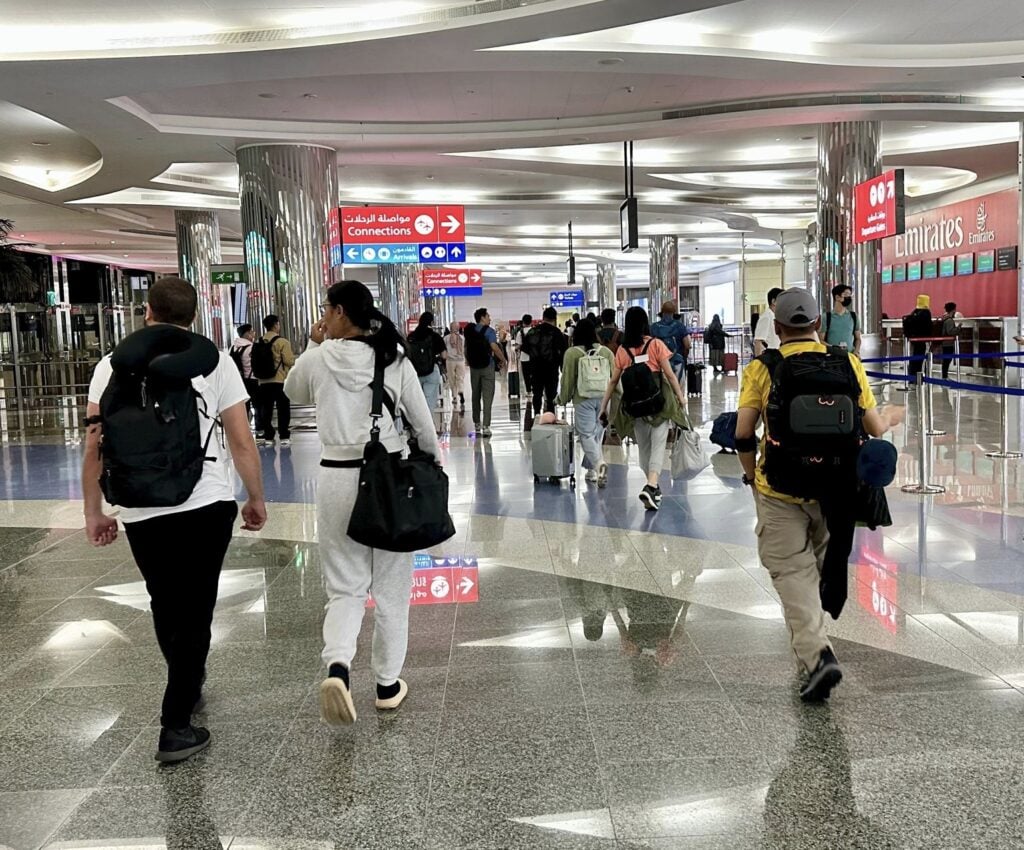
The ‘no flight’ zones: land evacuations are active
Commercial airspace is completely closed in these four countries. Travelers must rely on land border crossings or U.S. government-supported ground transportation to escape.
- Kuwait: Commercial flights do NOT operate due to active missile and UAV threats. The US Embassy now offers chartered buses to Saudi Arabia. Critical note: You must obtain a Saudi visa before crossing, and expats with specific visas must obtain an automated exit permit before boarding.
- Iraq: Commercial flights do NOT operational. The embassy warns of significant threats from Iranian-affiliated militias, noting in particular that hotels frequented by foreigners in the Iraqi Kurdistan region are being targeted. Overland routes to Jordan, Kuwait, Saudi Arabia and Türkiye are currently open but may close without notice. Do not approach the embassy in Baghdad or the consulate in Erbil.
- Bahrain: Commercial flights do NOT operational. Overland routes across the King Fahd Causeway to Saudi Arabia remain open.
- Iran: Commercial flights do NOT operational. Turkey’s land border is open (requires a passport valid for 60 days and advance notice), but Azerbaijan’s land borders are closed to routine traffic. The Foreign Office has issued a dire warning that people with dual nationality are at significant risk of arrest.
The “Restricted Flight” zones: narrow escape windows

Airports in these countries are operating, but under extreme restrictions, reduced schedules or active threat conditions.
- United Arab Emirates: Limited flights are available, but entry to Dubai and Abu Dhabi airports is now strictly limited to confirmed ticket holders. Do not travel to the airport without confirmation from the airline. The overland routes to Oman and Saudi Arabia are open but experience massive traffic congestion. The US embassy and consulate are completely closed. The real-time Traveler Safety Index score on the ground currently stands at 37 for Dubai.
- Israel / West Bank / Gaza: Following Saturday’s limited inbound flights, Ben Gurion Airport has initiated a gradual resumption of outbound flights via Israir, Arkia and Air Haifa from Sunday, March 8 at 8 a.m. The land border from Taba to Egypt remains open 24 hours (bring cash for visa fees). The real-time Traveler Safety Index score on the ground currently stands at 26 for Israel.
- Qatar: Limited commercial flights are operating. In a dire warning, the embassy pointed to possible retaliation against Americans by Iranian proxies. The real-time Traveler Safety Index score on the ground currently stands at 41 for Qatar.
- Lebanon: Middle East Airlines (MEA) continues to operate from Beirut. The embassy remains closed for routine services but has resumed strict emergency passport services to help Americans secure travel documents to flee.
Evacuation flights from the Ministry of Foreign Affairs
For Americans stranded in the region, the US government has officially stepped in to organize air and ground transportation from several key hubs.
- Active evacuation hubs: The Ministry of Foreign Affairs is currently coordinating the flights and assisting the departure Saudi Arabia, UAE, Qatar and Bahrain. American assistance flights to Europe already depart from Abu Dhabi and Dubai.
- Mandatory action: To access these government-coordinated flights or chartered buses, U.S. citizens must immediately complete the form Crisis intake form via the website of the Ministry of Foreign Affairs.


The outliers: operational hubs
Only two major hubs on the weekend alert list are maintaining relatively normal commercial flights, although both remain under strict shelter-in-place advisories for citizens who are not actively going to the airport.
- Jordan: Commercial flights operate from Queen Alia International Airport. Several land border crossings and the ferry service between Aqaba and Egypt are open.
- Saudi Arabia: Commercial flights depart from Riyadh, Jeddah and Dhahran. Saudi airspace remains open, with only occasional operational pauses.
- Oman: Commercial flights depart from international airports. Notably, the US Embassy Muscat is the only embassy on this list that continues to provide both routine and emergency consular services.
Norway has NOT received a security update

Despite an intentional explosion that struck the consular entrance to the U.S. Embassy in Oslo, Norway, early Sunday morning, the U.S. government has NOT has issued an official security alert for the country. Local Norwegian police have launched a major terrorism investigation into the blast, which occurred around 1 a.m. local time and caused minor structural damage but no casualties.
While authorities have deployed bomb squads and are actively investigating possible links to the escalating conflict in the Middle East, the embassy has not yet formally advised Americans on the ground to change their travel plans or seek shelter.
Your immediate next step: If you are in the region, try not to travel to a closed embassy. Keep an eye on the Home Front Command app (if in Israel) and immediately complete the State Department’s Crisis Intake Form if you are in a country with active government evacuation flights.