

The last time I saw my son, Alex, was when he and his girlfriend, Sarah, came to a reception for an art show that was very important to me. Alex, who had struggled with drug addiction and depression for years, seemed to be entering a positive period. He was the picture of health, smiling and giving me a warm hug and saying “I love you” before leaving the gallery. Little did I know that this would be the last time I would see this beautiful, intelligent, loving young man alive.
The next afternoon, Sarah texted me: “I don’t want to worry you, but I haven’t heard from Alex since last night around 5:30.” My gut told me that something was very wrong. I finally convinced the weekend staff from the property management company to stop by Alex’s apartment to see if his car was there. They called back to tell me that his car was indeed in the parking lot. They knocked on the door, but he didn’t answer. At that moment I knew Alex was dead.
After calling the police, I had to wait several more hours for the coroner to call to tell me that the police had broken down the door and found Alex. There was no apparent cause, but he had probably died the night before.
From that day on, I lived as if Thich Nhat Hanh (called Thay by his followers) held my hand and reminded me to be present with my breath. My mindfulness practice was no longer merely an intellectual and superficial interest; it was a life-saving parachute as I fell into the abyss of despair.
The worst day was going to the funeral home with Alex’s father. I used the practice of Pebble meditation to calm my racing heart before going in to view my sweet son’s body. During this meditation I held four pebbles in my hand. I focused on one by one to portray the freshness of a flower, the solidity of a mountain, the reality of a clear lake and the spaciousness of open space. As I did this, my heart rate went from the mid-120s to the 70s. It was enough to allow me to continue with the most difficult task of my life.
People say things like, “I could never survive the loss of my child,” or ask me, “How did you get through it?” These are things that once crossed my mind. The answer is difficult for me to formulate. Both specific moments of practice and insight and the gestalt of the teachings have been my parachute.
Understanding interbeing has helped me enormously. I was inspired by the knowledge that my son didn’t just disappear; As Thay notes, science proves that nothing is lost. Like the flame at the tip of a match, although it is no longer visible when we blow it out, the elements of that flame are still there. And that also applies to Alex.
The Lesson of the Second Arrow helped me see that the primal pain I felt from Alex’s death did not need to be amplified. Adding a story about guilt and anger, which the Buddha refers to as a second arrow we fire at ourselves, only deepens a wound I already have. I learned to call my suffering by its true name – grief – and to deal with it with love, understanding and compassion. I have learned that joy and sadness are two sides of the same coin; it’s okay to be happy and grieve for my son at the same time.
I appreciated Thay’s honesty when he wrote that he mourned the death of his mother for a year. Thay also described a dream to be with his mother when she was young and healthy. When he woke up and walked in the moonlight, he felt his mother’s presence and realized that she was very alive within him and around him. This story allowed me to see the same truth about Alex.
Author biography
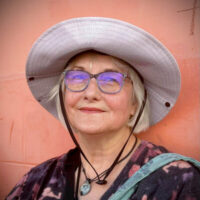
 Teresa L. Waller founded the Flowing River Community of Mindful Living in Madison, Indiana. Her dharma name is Healing Presence of the Heart, which she received a year after her son Alex died. Teresa’s dharma name perfectly captures the healing she experienced through the presence of community.
Teresa Waller’s story is an excerpt from the book: Tears Word Rain: Stories of Healing and Transformation, Inspired by Thich Nhat Hanh, (Parallax Press, October 10, 2023), edited by Jeanine Cogan and Mary Hillebrand. Jeanine Cogan, Ph.D., is a mindfulness meditation teacher and executive consultant. Mary Hillebrand is a former magazine editor and writer, and is now an educator who enjoys sharing mindfulness with teens and adults in therapeutic settings. More information at www.tearsbecomerain.org.