

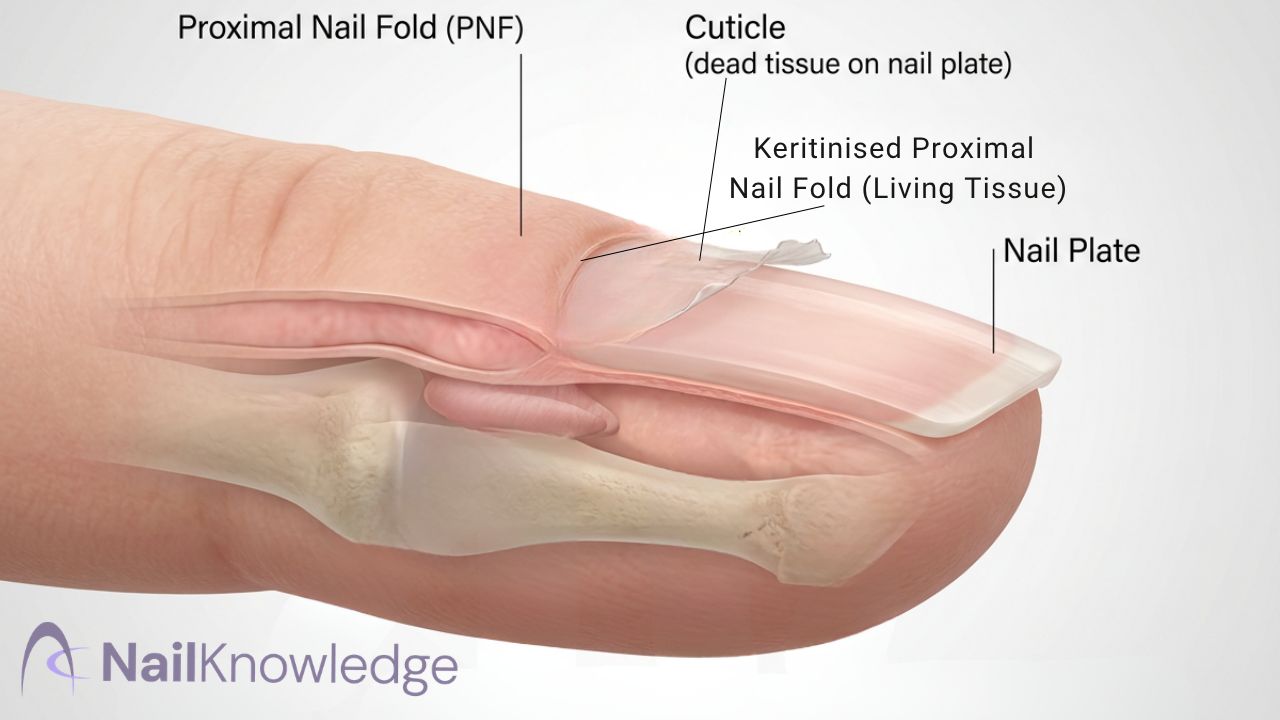
If you’re new to nail care, one of the most confusing areas is understanding the difference between the cuticle and the skin around the nail. It’s easy to assume that everything at the base of the nail can be trimmed or removed, but that’s where many beginners go wrong. Learn the difference between cuticle versus living skin is essential for safe nail preparation, better product retention and overall nail health.
Many nail prep problems, lifting gel, irritated skin or damaged nail beds start with misunderstanding this simple concept. Once you know what to remove and what to leave alone, your prep routine will be safer, cleaner, and much more professional.
Understanding cuticle versus living skin
When we talk about cuticle versus living skinwe’re actually talking about two completely different things that happen to be very close together.
The cuticle is a thin layer dead tissue that rests directly on the nail plate. It often looks like a faint film or slightly cloudy layer on the surface of the nail. Sometimes it is very subtle, almost invisible, making it difficult for beginners to identify.
The cuticle is a thin layer of non-living tissue that remains attached to the nail plate as the nail grows. During nail preparation, this thin layer is carefully removed from the nail plate. Why? Because nail products such as gel, acrylic or nail polish do not adhere properly if this film remains.
Think of it as painting over fabric. The surface may look good at first, but eventually the paint will start to peel. The same happens with nail products that are applied over the cuticle.
Removing this thin layer creates a clean nail surface so that products can adhere well and last longer.
The skin around the nail is living tissue
This is where the biggest misunderstanding arises while discussing cuticle versus living skin.
The thicker skin that surrounds the base of the nail living tissue. Also called the proximal nail fold, it plays an important role in protecting the nail matrix, the area where your nail actually grows from.
Unlike the cuticle, this skin should should never be clipped or clipped during basic nail preparation.
If you remove or damage this living tissue, several problems can occur:
- Irritation or redness
- Increased risk of infection
- Sensitivity around the nail
- Long-term nail growth problems
A good rule that many professionals follow is simple:
If it looks like skin, leave it alone.
Understanding this difference between cuticle versus living skin instantly improves the safety of your nail prep routine.
Step one: Gently push the skin back
Before you can remove the cuticle from the nail plate, you should first wash your hands with soap and water and use a nail plate cleaner to make the cuticle on the nail plate more visible and easier to remove.
If you drop a little oil on the nail plate, it will be easier to gently push back the surrounding skin
This step is not about pushing back the skin or creating a dramatic gap around the nail. Instead, the goal is simply to expose the nail plate so that any cuticle tissue can be gently removed.
Two common tools are used for this step:
- A orange wood stick
- A metal cuticle pusher
Both tools can work well if used correctly. For beginners, an orangewood stick is often easier to master because it is softer and less likely to cause damage if too much pressure is applied.
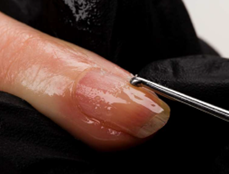
In an ideal world, a curette would be used in combination with a good nail and skin oil. This technique removes the cuticle from the nail plate without causing damage to the nail plate or surrounding skin. After this step, it is important to wash hands again with soap and water to remove any residual oil before using a nail plate cleanser
The key here is gentle movement.
Rest the tool flat against the nail plate and apply gentle pressure as you glide from one side of the nail to the other. The tool should move smoothly over the surface and not dig into the skin.
If you ever feel resistance, pain, or see redness developing, stop immediately. Nail preparation should never be uncomfortable.
This step is simply about creating access to the nail plate, without forcing the skin off the nail.
Step two: Remove dead tissue from the nail plate
Once the skin is gently pushed back, you may notice a thin layer sitting directly on the nail surface. This is the cuticle.
Now you can delete only the tissue attached to the nail plate.
For beginners, an orange wood stick works great for this step. Some trained nail technicians may use a curette or specialized preparation tool, but these require proper training to avoid damaging the nail.
Use when working on the nail plate small, controlled movements. Think of it as lightly wiping away a film instead of scraping the nail.
The focus should always remain on the nail plate itself. Avoid touching or trimming the surrounding skin.
Another important thing to remember is that every nail is different.
Some nails have a visible cuticle, while others have almost none. This is completely normal.
One of the most common rookie mistakes is trying to remove more cuticles simply because it feels like something should be there. If you don’t see many cuticles, there may actually be very little to remove.
The pursuit of perfection often leads to over-preparing the nail, which can cause damage and irritation.
Why this step is important
Concept cuticle versus living skin It’s not just about the technique, it directly affects the result of your manicure.
When the cuticle is left on the nail plate, nail products will not adhere properly. Over time this will lead to loosening, peeling or breaking down of the product.
Carefully removing this thin layer creates a smooth, clean surface to which gel or polish can adhere better.
At the same time, leaving living skin untouched protects the nail’s natural barrier. This keeps the nail area healthy and reduces the chance of irritation or infection.
In other words: safe preparation ensures the perfect balance:
Clean nail plate. Healthy skin.
Quick summary
Let’s bring it all together.
The cuticle is a thin layer of non-living tissue that sits on the nail plate. This can be carefully removed during nail preparation.
The skin around the nail is living tissue and should never be cut or trimmed.
During preparation, gently push back the surrounding skin to expose the nail plate. Then carefully remove only the cuticle tissue that is on the nail surface.
And remember: nail prep should be never hurt.
If you really understand the difference between cuticle versus living skinyour nail prep will be safer, more professional and much better for long-term nail health.