

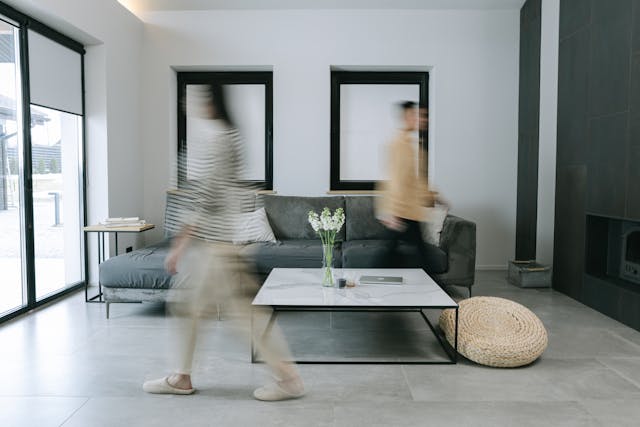
Luxury is a word that gets thrown around a lot in interiors, often accompanied by eye-watering price tags that make most of us close the bill. A home that feels expensive and well-thought-out has less to do with what you spend and more to do with the choices you make. The principles behind high-quality interiors are learnable, and most cost much less than you might expect.
Somewhere along the way, luxury became synonymous with spending. With investment pieces and carefully curated shopping lists, and rooms that look like they came straight out of an interior design magazine. But the houses that really hold you back probably got there through instinct, patience and a good eye, rather than spending money. Here’s how to apply these principles and take your space to the next level.
The first instinct when freshening up a home is often to add things. More cushions, more accessories, more art. But luxury interiors usually work in the opposite direction. They are worked mercilessly. Every piece deserves its place, and there is always enough breathing room to be noticed.
Before you spend anything, take stock of what you already have. Clean a surface. Remove pieces that are there out of habit and not out of intention. What’s left will feel more deliberate, and deliberate is the foundation of a high-quality look. This doesn’t mean getting rid of all your favorite items. A tiered room can feel just as luxurious as a minimal room. The key is that everything in it feels chosen.
Let texture do the work
One of the most consistent differences between a room that feels rich and one that feels flat is texture. Expensive rooms often have multiple materials in conversation with each other: linen next to velvet, stone next to wood, matte paint next to a glossy framed print. It’s this stacking of surfaces that creates visual depth, and you can build it up gradually without a significant budget.
Color is important. Rich colors like deep blue and warm burgundy can radiate grandeur, but the mix of texture and material really completes the look. A room in a single neutral color with three or four different textures will feel more intentional than a room with one bold color but no textural depth. Start small: a woven throw, a ceramic vase, copper candlestick holders. Each addition brings the room a little closer to luxury.
Make wall art the starting point
In luxury interiors, wall art is rarely an afterthought. It is often the starting point around which the rest of the room is built. The right piece can lift a room more dramatically than almost any other change; it’s also one of the most accessible choices, with options to suit every budget.
The mistake most people make is going too small. Art that is too modest for the wall disappears into the background. Going up a size almost always pays off. A large canvas anchors a wall and signals that the room has been put together with care and intention.
The House Outfit is a wonderful place to start if you’re looking for wall art that does the heavy lifting without the price tag. The range includes bold abstract works, calmer botanical pieces and everything in between, so there’s something for every room and every mood.
Rethink your lighting
Lighting is an often forgotten tool in the interior. Overhead lighting alone makes a room flatter. The moment you introduce layered light sources, floor lamps, table lamps and candles, the entire space shifts and becomes warmer and more atmospheric.
Warm lamps instead of cool lamps make an immediate difference. This includes positioning lights to cast light up or over a wall rather than straight down. If you can only do one thing in the lighting category, add a lamp to a corner that currently has no lighting, and you will see an immediate improvement.
Details that give a room a finished feel
There are details that register as high-end, even if people can’t quite articulate why. Matching hardware across a room and decanting everyday objects into ceramic or glass containers shows an attention to detail consistent with luxury. Framing things, whether it’s a print, a postcard or a piece of beautiful fabric, immediately takes them to the next level.
Curtains are another area where the details matter more than the cost. Hanging them close to the ceiling and converging them slightly to the floor makes the ceilings feel higher and the windows feel more spacious. It’s one of the oldest tricks in interior styling and it always works.
The house you are looking for is closer than you think
The most luxurious homes aren’t necessarily the most expensive, but the ones that feel considered and cohesive. Getting there is less about a big budget and more about a willingness to slow down, make informed choices, and invest your attention rather than money.
A room with ten things that really belong there will always feel better than a room with thirty things that don’t. Start there, build up slowly and trust the process. The gap between the home you have and the home you want is smaller than you think.