


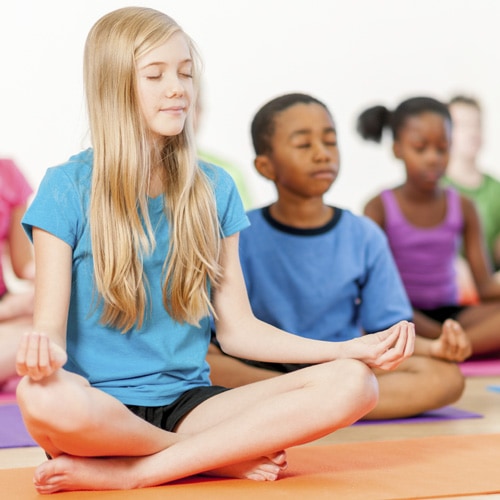
Are you aware of the various forms of meditation available for children, along with their advantages and methods to teach them? If not, this article is tailored for you.
The years of childhood and adolescence are pivotal in shaping who we become as adults. It is during this time that our personalities are crafted, our perspectives on the world are formed, and our relationships with others and ourselves are established.
The lessons and skills acquired in our formative years significantly influence our future, which underscores the value of introducing meditation to children. Children who meditate can gain a significant edge over their peers.
I began my meditation journey at the age of 14, and this practice has brought numerous benefits into my life. I am thankful for having discovered meditation at such a young age, and I believe many other children and teens would also reap similar rewards. This article delves into the reasons why meditation is beneficial for kids, how to teach them, and the various forms of meditation suitable for children. Whether you are a parent or a professional working with young people, this article is for you!
“True education means providing an optimal environment in which each child’s self-regulated learning process can unfold naturally. After all, the very word ‘education’ comes to us from the Latin educare, ‘to lead out from within’, the highest qualities of each unique soul. In this process, meditation proves to be the most efficient and practical means.” —Swami Satyananda
This perspective is not merely an individual viewpoint. The American Academy of Pediatrics (AAP) encourages parents to introduce meditation to their children and suggests that teachers integrate mindfulness training into their curricula. Let’s explore why this might be beneficial.
The Benefits of Meditation for Kids
Many parents aspire to help their children learn self-regulation, manage their emotions, and develop into content, healthy, and fulfilled individuals. Despite the challenges that may arise in this journey, meditation can serve as a potent tool to aid this process.
Children encounter numerous challenges, such as:
- An overwhelming surge of energy
- Pressure from school and peers
- Expectations related to academic and athletic performance
- Struggles with concentration
- Challenges in building healthy relationships
- Experiences of bullying
- Competition
- Low self-esteem
- Difficulty managing emotions such as anger, disappointment, and anxiety
In our contemporary world, these challenges are exacerbated by social media (which intensifies bullying and social pressure), excessive stimulation from technology (leading to increased restlessness and shorter attention spans), and a growing climate of violence (with school shootings being an extreme manifestation).
Consequently, mental health issues among children, such as anxiety and depression, are on the rise. According to Beyond Blue, approximately one in seven children face mental health challenges, and nearly half of all severe mental health issues in adulthood begin before age 14. Additionally, there is an estimate that over two million children in the US were diagnosed with ADHD between 2003 and 2012, with many cases beginning before the age of six.
It appears that children are facing significant hurdles. In this context, it is imperative for us as parents, educators, and society as a whole to equip our youth with tools that genuinely make a difference.
[Tweet “Meditation provides children with the skills to confront their emotional challenges and mature into healthy individuals.”]
This is where meditation, a practice centered on relaxation, awareness, focus, and stillness, comes into play.
Fortunately, there is a burgeoning movement to integrate meditation and mindfulness into educational systems. In some schools, meditation has been incorporated into Physical Education programs, while in others, it has replaced traditional Detention Programs. The initiative to teach meditation to children is gaining momentum, supported by research showing numerous positive outcomes. Here are a few:
- Improved behavior. A school in Baltimore replaced detention with a meditation class for kids and reported no suspensions during the entire year after the meditation room was established. Another school in San Francisco, previously known for high rates of gunfire, fighting, and suspensions, integrated “quiet time” into its curriculum and observed a 45% reduction in suspensions, increased attendance, and significant grade improvements (source).
- Reduced ADHD symptoms. An elementary school in the Midwest implemented an 8-week mindfulness program for third-graders, after which teachers noted less inattentiveness, reduced hyperactivity, and fewer ADHD symptoms (source). A similar outcome was reported in a study conducted at the National Therapies Research Unit in Sydney, Australia, indicating that children who learned to meditate showed marked improvements in attention spans and either reduced or eliminated their medication needs.
- Increased focus and calmness. A study from Swinburne University indicated that students who practiced meditation were more settled, calm, and rested (source).
- Enhanced academic performance. San Francisco schools implementing meditation programs reported satisfactory English scores on standardized California Achievement Tests at a rate double that of non-meditation schools. A California middle school that introduced daily meditation sessions for students saw grade point averages rise for many participants. Another study involving over 3,000 students in the San Francisco Unified School District demonstrated significant improvements in overall academic performance, including a spike in math test scores for those who practiced mindfulness meditation and “quiet time”.
- Decreased stress and depression. At Burton High School in San Francisco, students who engaged in a meditation program reported significantly lower stress and depression levels compared to their peers. (Source)
- Improved psychological well-being. Children who practice mindfulness experience fewer psychological issues such as fearfulness, social withdrawal, and anxiety. (Source)
[Discover more about the scientific research on the advantages of meditation for children here.]
Meditation has also been found to enhance children’s relationships with their parents, improve impulse control, boost self-esteem, foster empathy and social skills, reduce test anxiety, and alleviate post-traumatic symptoms. We can anticipate that many additional benefits of meditation will also apply to them.
“If every 8-year-old in the world is taught meditation, we will eliminate violence from the world within one generation.” —Dalai Lama
Through meditation, children learn to manage their bodies, energy levels, and emotions more effectively. This practice enhances emotional intelligence, cultivates a positive outlook on life, and improves self-regulation. Children develop better organizational skills and learn to be more present and less judgmental, responding thoughtfully rather than reacting impulsively to life’s events. They feel better, learn better, and sleep better.
The skills cultivated through meditation will manifest in various aspects of a child’s life, extending into their teenage years and beyond. It becomes an integral component of their personal development and equips them with the resources needed to navigate the world. Ultimately, it lays the foundation for a happier and healthier future.
Teaching Meditation to Children
Instructing children differs significantly from teaching adults. Children tend to have shorter attention spans, less patience, and more difficulty sitting still. However, they possess vivid imaginations, a playful spirit, and learn best through example.
To effectively teach meditation to children, it is essential to keep the following six principles in mind.
1. Make it Engaging and Fun
The primary focus when teaching meditation to children is to present the practices in a lively, enjoyable, and engaging manner. Never let the practice become monotonous. Frame it as a delightful activity—like play—and the children will be eager to participate again.
The principle of “making it fun” encompasses choosing techniques that are inherently engaging for kids—such as those that utilize their senses and imagination. It also entails adapting meditation instructions to maintain their interest.
For instance, instead of instructing a child to “watch your breath,” you could suggest placing a small toy on their belly and observing how it rises and falls with deep breaths. This way, you’ve effectively taught deep breathing without them even realizing it!
Of course, the approach will vary depending on the child’s age—are they a young child (ages 6-9), a tween (ages 10-13), or a teenager (ages 14-17)? The method used to teach a 5-year-old will differ from that used for an 11-year-old. Educators will need to adapt these principles and techniques according to each child’s age and personality.
2. Appeal to Their Imagination
Most children find abstract concepts challenging to grasp. They thrive in activities that allow them to unleash their creativity and imagination. Therefore, ensure that their imagination is engaged during meditation.
One method is to frame the meditation as a challenge. This requires tapping into your own creativity and understanding the individual child. For example:
- Physical stillness can serve as a powerful entry point to meditation. When teaching this, you can frame it as a game: “Let’s play a game called Buddha-Statue. We’ll sit in this special posture, pretend to be a statue, and slowly count from 100 back to 1. If you move before that, you lose.”
- If your child enjoys action movies, you might create a metaphor like: “Your breath is like a sneaky secret agent, who tends to vanish from time to time. Your mission is to protect him, so you must follow him quietly and carefully. But beware, he can disappear in the blink of an eye!”
Another approach is to create an intriguing “meditation space” at home or in the classroom. Children love to be transported to different worlds filled with unique experiences and unusual objects. You can enhance the experience by saying: “This is a sacred space, a magical space. Whenever you enter here and practice meditation, all your problems vanish, and you begin to feel calm and happy.”
3. Keep It Short
Children typically lack the patience to sit still for extended periods, so it’s crucial to keep sessions brief—especially for those under the age of 10. The practice should always leave children wanting more rather than feeling bored.
A general guideline is to make the meditation session as long as the child’s age, plus one. For example, if your child is 8 years old, keep the session to a maximum of 9 minutes. Utilizing a meditation timer app with a bell can also make it more engaging.
4. Lead by Example
Children learn best through imitation rather than instructions. They enjoy mimicking adults and aspire to feel grown-up. Therefore, the most effective way to teach a child to meditate is by meditating yourself! All eyes will be on you, so exemplify how to incorporate meditation into your daily routine.
Let your child observe you sitting still and serene while you meditate. Eventually, they will likely inquire about what you are doing, at which point you can introduce the practice to them. Alternatively, you can pique their interest by saying something like, “It’s a special practice reserved for adults, but if you behave nicely this week, I can teach you on Saturday.”
[Tweet “Want your kids to meditate? Be the role model.”]
This also means you should meditate alongside them. Do you want them to maintain a regular practice? You’ll need to demonstrate discipline and make meditation a family activity.
(If you’re struggling to establish your own meditation habit, consider my Master Your Mind meditation course for beginners.)
5. Be Flexible and Supportive
At the conclusion of your joint practice, ask them about their experience. It can be beneficial to have them draw what their meditation session was like, what they experienced, or create a “before and after” drawing. This encourages children to develop self-awareness and self-expression.
Whatever they share, validate their feelings. Accept everything the child expresses, even if they are clearly exaggerating, as this nurtures their imaginative development.
If you are leading a group of children, affirm everyone’s experiences and ensure that no child feels confused, lost, or disheartened.
6. Manage Your Expectations
Finally, it’s essential to manage your own expectations. Meditation is a process that takes time. It won’t transform your child into a “junior Buddha” within two weeks. However, it will equip them with valuable tools to better understand themselves, manage their emotions, and cultivate a sense of calm and strength within.
Techniques of Meditation and Mindfulness for Kids
After reviewing numerous meditation techniques that I have practiced and taught, I have selected the most suitable methods for children and teenagers. Below are some of these techniques, accompanied by brief instructions (not full scripts, as that would extend this article significantly!). Each practice is adapted from traditional meditation techniques, with the core essence retained. Adjustments should be made based on the age and personality of the children.
For all these practices, adhere to the fundamental guideline: whenever you notice that your mind has wandered, gently bring it back to the practice.
1. Sound Meditations (Hearing)
Version 1: Open Hearing
- Close your eyes and take a deep breath.
- Imagine your ears becoming large—so large that they can hear everything.
- Focus on the sounds present in the room. Spend a few seconds on each sound before moving to the next.
- Next, begin to listen for sounds that are far away. See how distant you can go.
- Allow the sound to just be—avoid labeling it or forming opinions. Your ears are neutral—they simply hear.
- Now, see if you can hear your own breath. Continue to listen to your breath, moment after moment.
Benefits: This exercise encourages children to utilize their sense of hearing as a pathway to being present, fostering non-judgmental awareness and promoting mental stillness.
Version 2: The Story of Music
Play a piece of instrumental music and invite the children to listen intently, imagining the story that the music conveys. At the end, ask them to share their interpretations.
Benefits: This exercise enhances imaginative capacity and abstract thinking.
Version 3: Sound Concentration
Play an instrumental track and ask the child to select one instrument to focus on, tuning in exclusively to its sound.
Benefits: This practice cultivates the ability to concentrate amidst distractions.
Version 4: From Sound to Silence
- Close your eyes and focus on the sounds you hear.
- Now, listen intently to the sound of a bowl. [Strike a singing bowl]
- Follow the sound back into silence. See how long you can track it before it fades away. Try to pinpoint the moment the sound escapes into silence.
- Now, listen to the silence.
- [Instructor repeats this process several times.]
Benefits: This exercise is excellent for calming children and sharpening their auditory perception.
2. Mantra Meditation (Hearing)
The universal mantra om has a profoundly calming effect on the mind, particularly due to the extended “mmmm” sound. It can even help soothe a baby to sleep.
- Close your eyes. Inhale deeply through your nose.
- As you exhale, chant OOOOMMMMMMMMMMM slowly.
- Initially, the sound is loud, then gradually soften it until your breath is complete.
- Repeat the process multiple times, inhaling deeply and chanting OM upon exhalation.
- With each breath, aim to extend the OM sound longer and softer.
- Then, close your mouth and mentally repeat OM. Once when inhaling and once when exhaling.
- Continue paying attention to your breath while synchronizing the mantra with it for the remainder of the meditation.
You may want to simplify steps 6 and 7 for younger children, focusing solely on vocal repetition.
Benefits: This technique induces a calming effect on the body, mind, and emotions. It integrates speaking, listening, and breathing, providing a sense of contentment. When practiced in a group, it can foster a stronger bond among students chanting together.
3. Gazing Meditation (Sight)
Create a dim environment by shutting windows and lighting a candle. This unique setting, combined with the fact that many children are fascinated by fire, makes for an enjoyable practice.
- Sit two to three feet away from the candle.
- Open your eyes and gently gaze at the flame (avoid forcing or straining your eyes). Watch the flame intently, as a hawk would watch its prey. Keep your eyes still—don’t move them side to side, or up and down.
- After two minutes, close your eyes and visualize the afterimage of the candle that may linger in your mind.
- Play with that image—see if you can keep it centered. Or try altering its size, color, or brightness.
- After some time, reopen your eyes and gaze at the flame again for a while. Then close your eyes and repeat the process.
Benefits: This practice is excellent for enhancing focus, self-confidence, and the ability to visualize. For comprehensive details and variations, refer to this article.
4. Visualization Meditation (Sight)
Children often possess superior visualization skills compared to adults. Making the meditation appealing involves allowing them to choose an object they love.
Version 1: Blackboard Drawing
- Close your eyes and visualize a blackboard in front of you.
- Imagine specific words written on the blackboard. [Say some words and numbers, allowing pauses in between.]
- Now visualize drawing your favorite animal on the blackboard. You have an array of colorful chalk to enjoy!
- Open your eyes and draw the animal on a piece of paper, just as you envisioned it.
Version 2: Mental Picture
- Find a toy, picture, or object that you like and place it in front of you. [A mandala may also be an attractive option for kids.]
- Observe all the details of that object/toy for one minute.
- Close your eyes and envision the object in front of you.
- After a moment, open your eyes and take a second look at the object.
- Close your eyes again, and now visualize it in your mind with even greater detail.
Benefits: Both practices enhance children’s visualization skills, fostering creativity and improving focus.
5. Breath Mindfulness for Kids (Breath)
Breathing awareness is a fundamental form of meditation in the Buddhist tradition and has inspired the modern mindfulness movement. Here are two simple methods suitable for children.
Version 1: Counting
- Close your eyes.
- Be aware of your breathing. Feel your belly or chest rise with inhalation and fall with exhalation.
- As you breathe in, mentally say the number “10”; breathe out and think “10”. Continue with “9” and “9”, then “8” and “8”, down to “1” and “1”.
- If you lose track, restart from 10. Your challenge is to count down from 10 to 1 while maintaining focus on your breath.
Benefits: This practice enhances body awareness, concentration, and relaxation.
Version 2: Breathing Colors
Rather than counting breaths, visualize breathing in a golden color and exhaling a gray one. As you inhale, the golden color fills your body with positive feelings—happiness, calmness, energy. When exhaling, the gray color takes away all negativity.
Benefits: Similar to version 1, but with a heightened impact on emotional well-being.
6. Mountain Stillness (Body)
- Close your eyes and connect with your entire body. Sense its position, the space it occupies, and its weight.
- Now envision your body as a mountain—massive, weighty, solid, and firmly grounded.
- With each exhalation, feel your body becoming more akin to a mountain.
- With each breath, your body becomes increasingly still, relaxed, and solid. You feel calm and rested.
- As you prepare to conclude the meditation, feel your body returning to its normal state with each inhalation.
Benefits: This exercise is effective for relaxation, calming, and enhancing body awareness. It is also beneficial for aiding sleep.
7. Space Travel (Body)
- Lie down comfortably and close your eyes.
- Imagine your body becoming so light that it has no weight, allowing it to float upward.
- Your body is light and transparent, drifting through space beyond Earth, floating around the galaxy.
- Enjoy the sensation of lightness and freedom. Your mind also feels liberated.
- After a while, gradually return to Earth and to the room you are in. Feel the solidity of your body returning.
- Gently move your toes and fingers until you are ready to conclude the meditation.
As an alternative, after step 4, encourage the child to imagine visiting another planet. This approach may appeal to their imaginative side, and at the end, invite them to share their journey and describe the planet.
Benefits: This practice promotes deep relaxation and cooling down. Challenges and emotions seem diminished after this exercise. It is particularly helpful for children who are emotionally stuck, excessively shy, or feeling sad.
8. Walking Beats — Metronome Meditation (Body)
Numerous walking meditation techniques involve synchronizing slow steps with breathing or a mantra. However, what about energetic children who cannot walk slowly? Here’s a method I developed to bridge the gap for hyperactive kids. Present it as a challenge: “Let’s see how well you can keep up with the beat!”.
For this exercise, you will need a metronome app (such as this one) or a physical metronome.
- Set the metronome to a fast tempo, like 150 or 200 beats per minute. Instruct the children to walk (almost run) in sync with the beats—one step for each beat.
- After a minute, gradually decrease the tempo, encouraging the children to maintain pace.
- Continue slowing down to 30 beats per minute. At this point, the children will be walking calmly and peacefully.
- Instruct them to synchronize their breath with their steps, so that each inhalation takes two beats (4 seconds), and each exhalation also lasts for two beats.
Benefits: This method is dynamic and engaging, guiding children from a state of agitation to one of zen.
9. Yoga Nidra for Kids (Body)
This practice is comprehensive, including a full body scan, affirmations, visualization, breath awareness, and more. For additional guidance, including scripts for children, refer to the chapter “Meditation for Children” in the book Sure Ways to Self-Realization.
10. Humming Bee Breathing
The tradition of Yoga features many powerful breathing exercises, known as pranayama. This is a simple one that children are likely to find intriguing.
- Close your mouth, but keep your teeth apart.
- Plug both ears using your thumbs or index fingers, as shown here. Keep your elbows raised horizontally.
- Breathe in slowly through your nose.
- Exhale slowly while producing a continuous and smooth humming sound, “huuuuuuummmmmmm”. As you exhale, feel the vibrations of the hum throughout your head and chest.
- Practice for about 5 minutes.
- Then close your mouth, breathe normally, and become aware of your natural breath flow.
- Reflect on the effects of the humming on your body and mind, noticing the calmness and relaxation it fosters.
Benefits: This technique readily induces a sense of calmness and ease in children, regardless of their ability to focus.
11. Mindfulness Meditation for Kids: Observing Thoughts and Feelings (Mind)
The final two practices necessitate a bit more mental maturity from the child, making them more suitable for older kids.
This particular technique is best practiced after other methods, once the child is calm and focused.
- Begin by practicing mindfulness of breath (as described above) for a couple of minutes.
- Next, become aware of your mind. Observe the thoughts, feelings, words, and images that arise.
- Watch your thoughts and feelings as they come and go, like clouds floating in the sky. There is a gentle breeze, prompting all clouds to move—none can linger.
- If you wish, you can label the clouds as they appear. For example, label it “thinking” if it’s a thought, or “feeling” or “memory” if it’s a feeling or memory. Simply place the label on the cloud and allow it to pass.
- There’s no need to resist any thoughts, analyze them, or engage with them. Just observe them as they come and go, without preference or judgment.
Instead of the clouds in the sky metaphor, you can use any suitable analogy, such as bubbles in a stream, cars on a road, or scenes from a movie.
Benefits: This practice enhances self-awareness and the ability to regulate thoughts and feelings. Children learn to observe their thoughts and emotions rather than react instinctively, leading to greater emotional intelligence and psychological well-being.
12. Loving Kindness for Kids (Heart)
Variation 1: Self-Love
- Sit in meditation and close your eyes.
- Recall a moment in your life when you felt deeply loved, accepted, and cared for. Reflect on how that felt in your body, mind, and heart.
- Place your hands on your chest and hold onto that warm feeling. Feel it deeply.
- Repeat to yourself: “May I be happy. May I be safe. May I be at peace.”
- Slowly repeat that affirmation in your mind multiple times, connecting with the feeling. With each repetition, envision a warm, pleasant light emanating from your chest, spreading throughout your body.
Variation 2: Healing Conflicts
- Sit in meditation and close your eyes.
- Think of someone you may be struggling with—a friend, teacher, classmate, or even your parents.
- Visualize that person in your mind, imagining that you become them, experiencing their dreams, past, wishes, and challenges.
- Notice how everything feels different. Strive to understand that person from their perspective.
- Then send them feelings of loving-kindness, saying: “May you be happy. May you be safe. May you be at peace.”
- Imagine a light emanating from your heart, enveloping that person, making the feeling more tangible.
- At the end of the meditation, take note of how your feelings toward that person have shifted.
Benefits: This meditation fosters positive emotions and helps release negative feelings such as anger, indifference, selfishness, and sadness. It also nurtures empathy, compassion, kindness, and a sense of social connection (particularly in the second variation).
Parting Thoughts
First and foremost, here is the PDF I promised you:
[If you are already subscribed to my mailing list, rest assured that only one instance of your email will be retained. No duplicate messages will be sent].
To foster a better society—one that is more peaceful, prosperous, and equitable—transforming our youth is a promising starting point. Meditation certainly plays a vital role in this endeavor, empowering young people to manage themselves and evolve into kinder, more capable, and mature individuals.
There is a growing movement aimed at teaching children meditation, mindfulness, and yoga. The children who master these tools will, as adults, possess an unfair advantage over those who did not acquire these skills early on.
My goal with this article was to highlight the benefits of meditation for children and outline some of the many techniques that can be adapted for kids and teenagers. Each child will respond uniquely to different methods, so it’s essential to expose them to a variety of practices.
Please share this article to help raise awareness.