


Where you spend your time determines who you become. This is not a philosophical observation; it is a documented behavioral reality. Research has consistently shown that our environment plays a crucial role in shaping our cognitive function and mood. The human brain is constantly processing signals from the environment, and these stimuli can enhance or hinder our ability to work effectively. Research has shown that employees with access to natural light and outdoor views reported an 18% increase in productivity.
Biophilic integration, that is, integrating natural elements such as warm wood, natural textures and plants into a workspace, can increase well-being by around 15%, increase productivity by 6% and spark up to 15% more creativity, according to DLR Group’s 2026 workplace design research. The environment you live in doesn’t just affect your mood. It affects the quality of your output, the standard you hold yourself to, and how you show up in every dimension of your professional life.
The connection between environment, style and success runs in all directions simultaneously. A well-designed workspace encourages conscious dressing, as both reinforce the same standard. A man who takes care of how his space looks and feels is more likely to take care of how he looks and presents himself in the same way. Both choices indicate the same underlying orientation: intentionality.
The modern workplace is experiential and communal. It’s as much about aesthetics as it is about how people feel and interact with each other, with a direct connection to performance, he said Gensler’s 2026 draft forecast. The same principle applies to the personal environment that a person creates around him/herself; at home, in his workspace, in the quality of his possessions. These choices combine to form a standard that is reflected in everything he does, including how he dresses and behaves in a professional environment.
How your space sets your standards
The traditional, heads-down work culture is giving way to environments that prioritize connection, idea sharing and zones tailored to specific tasks, according to Your Workspace’s 2026 workplace trends analysis. According to OP Group’s March 2026 design trends report, the most effective office environments for 2026 are focused on flexibility, wellbeing and connection, with nature-inspired elements, quiet spaces for focused work and social spaces that promote collaboration. These design principles are not just business convenience. They reflect a growing body of evidence that the environment actively shapes behavior and performance.
The same logic applies at the individual level. A man whose home workspace is cluttered and dark will think and produce differently than someone whose space is organized, well-lit, and visually thought out. This is not about aesthetics for their own sake. It is about what your environment signals to your own brain about the standard with which you operate. When your environment reflects order, quality, and intention, your cognitive standards shift toward those same qualities. When they reflect chaos or neglect, your performance usually follows.
Style as ecological extension

The way a man dresses is an extension of his environment, and vice versa. Both are expressions of the same underlying decision about the standard to which he holds himself. A man who has a carefully organized, high-quality workspace but arrives at meetings in rumpled, ill-fitting clothing has created a contradiction. A man whose personal presentation is sharp and considered, but who works in a chaotic, neglected space, has created another. The most successful professionals close that gap. They build environments and personal presentations that reinforce each other and send a consistent signal both internally and externally about who they are and how they operate.
This is why, in 2026, style is increasingly seen as part of a broader lifestyle architecture rather than a standalone category. The men who dress the most consciously are often also the ones who are the most aware of their physical environment, their social environment and the input they allow into their daily lives. Each of these choices feeds the other. According to Gensler’s 2026 workplace analysis, the most productive spaces evolve with their people, allowing them to do their best work, wherever and whenever it happens. Personal style follows the same principle. It evolves in step with the man who wears it.
Build the environment you build
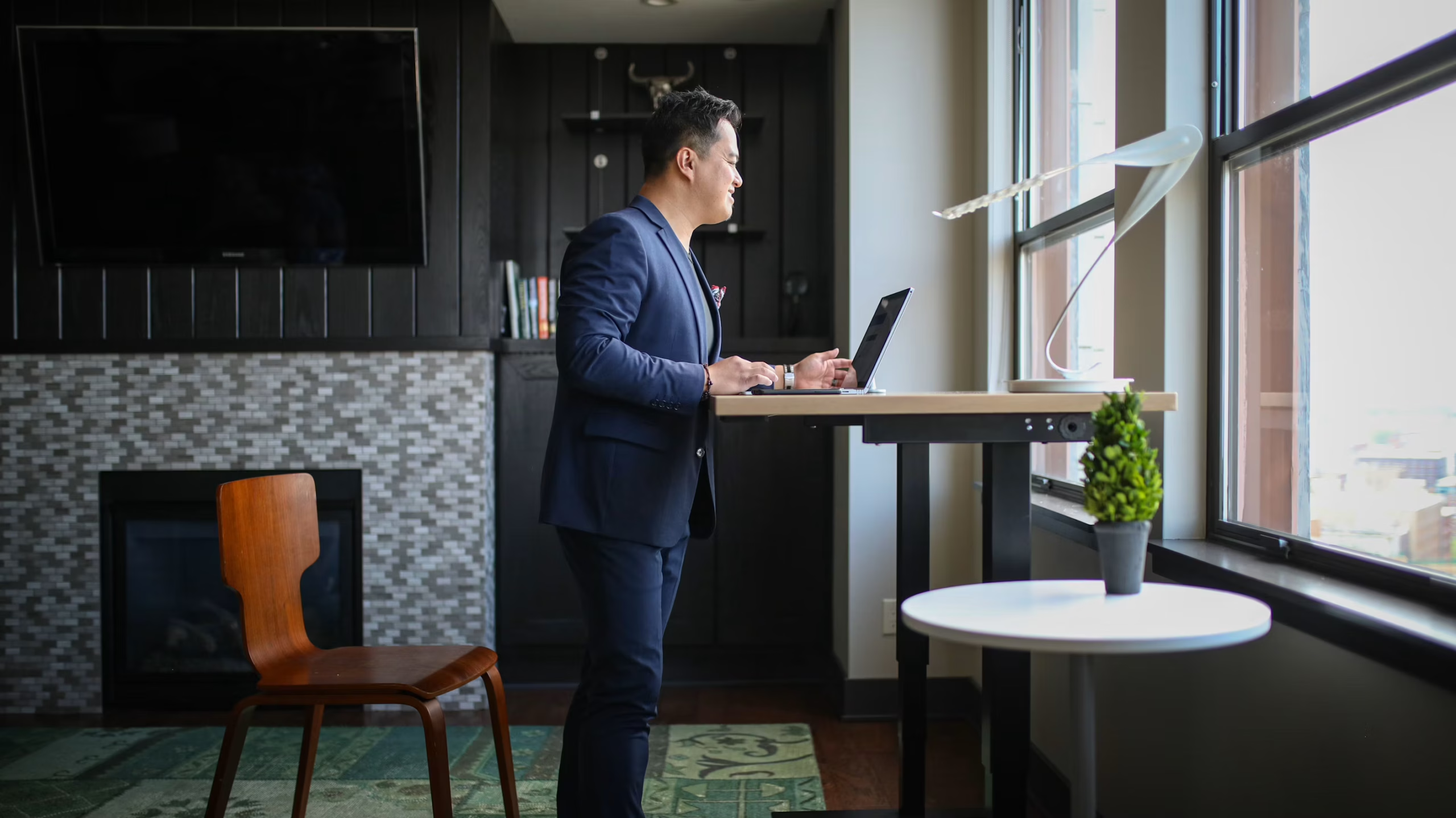
The practical application of this compound is simple. Check your surroundings with the same critical eye you would apply to your wardrobe. What does your workplace communicate about your standards? Is your home environment one that restores and prepares you, or one that drains and distracts you? Are the spaces where you spend the most time designed to support the performance and presentation you are trying to achieve?
The 2026 trend in workplace design favors data-informed action, including smaller pilots, faster feedback loops and intentional ideas that transform every space into a cycle of learning and refinement, according to DLR Group. Apply that principle personally. Make one intentional change to your physical environment each week: better lighting, a tidy desk, a quality chair, a plant. Notice what changes in the way you think and work. Then extend that same deliberation to your personal presentation. The two will reinforce each other in ways that will compound over time.
Success in 2026 is increasingly seen as an integrated condition rather than a single outcome. The man who designs his environment with intention, dresses with that same intention, and carries both standards into every professional and personal context in which he lives, not only looks better or works in a more beautiful space. He is building the architecture of a life in which high performance is the standard rather than the exception.
Featured image: Style Rave Studio/AI-generated visual