


American Drivers See Relief as Crude Oil Prices Plummet
In a welcome development for American drivers, crude oil prices experienced a significant drop in May, marking the largest one-month decrease in six years. Gasoline futures also fell to $3.03 per gallon, a price not seen since before the onset of the Iran war that caused pump prices to soar to four-year highs.
Despite this positive news, energy experts caution that the journey towards affordable gas is more complex and lengthy than a single headline might suggest.
The recent price relief can be attributed to the US-Iran ceasefire and the partial reopening of the Strait of Hormuz, a crucial waterway off Iran’s coast responsible for approximately 20% of the world’s daily oil supply. The war in late February led to a near standstill in vessel traffic through the strait, causing global supply constraints and pushing oil prices above $114 per barrel at their peak. While the average gas price has dropped by 17 cents from its peak earlier in the month, it remains 47% higher than pre-war levels.
Insights on the Future Gas Price Timeline
GasBuddy analyst Patrick De Haan predicts that if the current situation persists, the national average gas price could fall to $3.65–$3.85 per gallon within one to two weeks, with the potential to drop below $4 per gallon. This would provide significant relief to American households that have been facing high fuel costs this spring.
However, there are varying opinions on the matter. While some, like GasBuddy, suggest that oil prices may not dip below $70 per barrel until 2028, others, such as National Economic Council Director Kevin Hassett, believe that energy prices will drastically plummet once tanker traffic resumes fully. The future remains uncertain and opinions diverge.
Current Gas Prices Across States
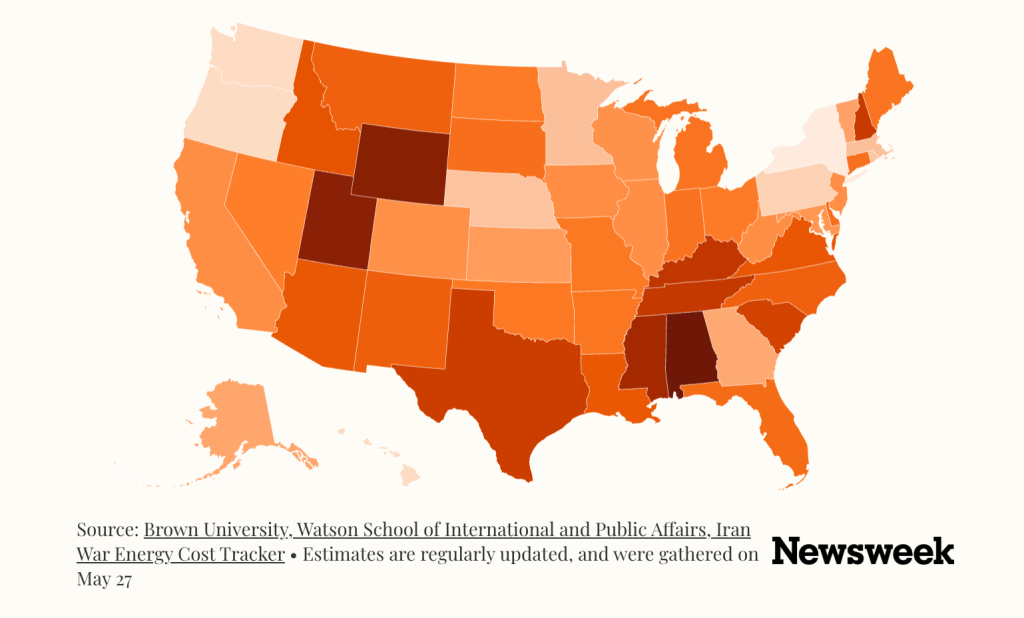
Gas prices vary across states, with California leading as the most expensive at $6.15 per gallon, followed by Washington at $5.77 and Hawaii at $5.64. Conversely, Oklahoma boasts the lowest average price at $3.94, followed by Mississippi at $3.98 and Louisiana at $4.00. The national average, as of late May, hovers around $4.45 per gallon, a significant increase from $3.17 at the same time last year, costing the average driver hundreds of dollars since the conflict began.
The uncertainty surrounding the durability of the ceasefire remains a major concern. Approximately 2,000 ships and 20,000 sailors are still stranded in and around the strait, with Iranian officials threatening to halt safe passage due to Israeli actions in Lebanon. Any re-escalation could quickly erase the recent price reductions at the pump.
Actions for Drivers to Take
NBC News highlighted the uncertainty in the market, with ING market strategist Francesco Pesole questioning whether the Strait of Hormuz will reopen soon or if the ceasefire will lead to a prolonged stalemate. Until this question is resolved, drivers will remain at the mercy of geopolitical developments.
AAA’s TripTik planner offers real-time gas prices along routes, while apps like GasBuddy help drivers locate the most affordable stations within a specific radius. Even a small difference in price per gallon can add up for those driving high-mileage vehicles, potentially saving hundreds of dollars annually. Keep a close eye on prices, as the situation remains fluid and unpredictable.