


Share the article
After decades of empty promises, government after government, is the long-awaited, bordering on mythical Rail Baltica Finally leaving the drawing board.
As confirmed in a European Commission press releasethe largest infrastructure project ever implemented in the Baltic region– and Eastern Europe as a whole – is moving forward, significantly improving connectivity across a previously fragmented 900 kilometer stretch.
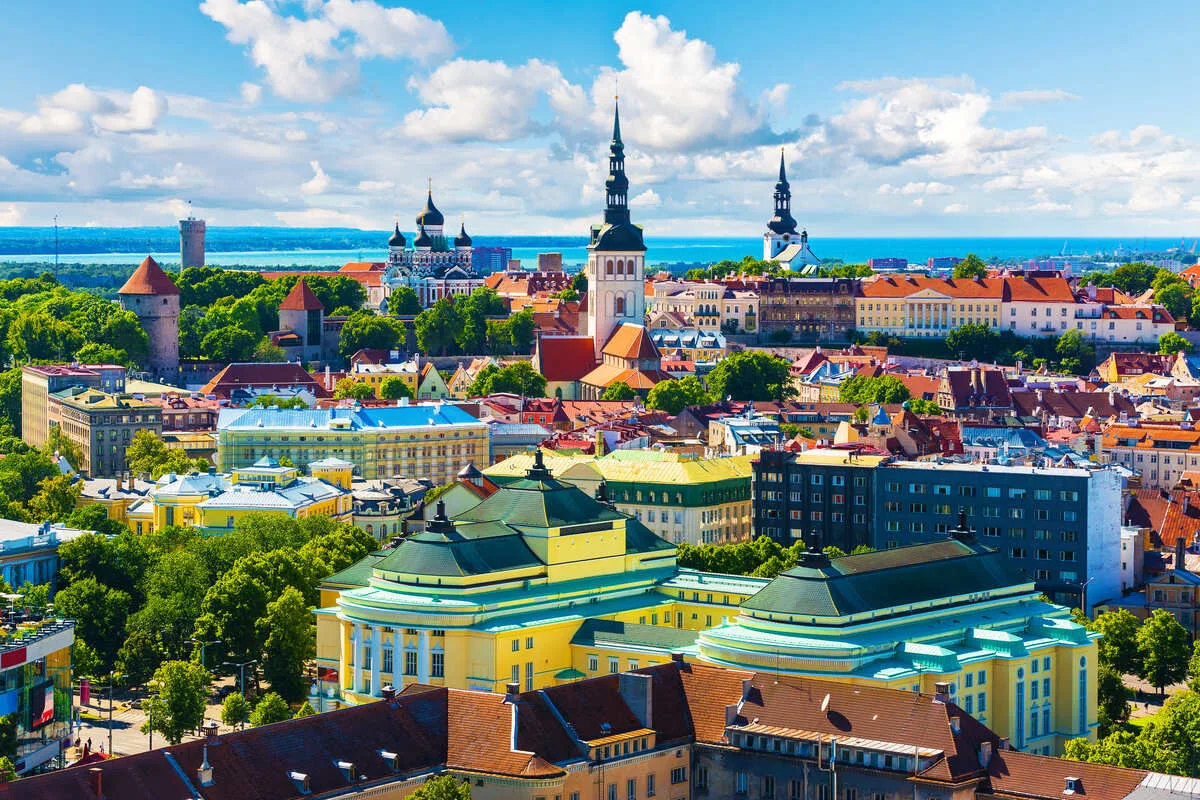
Not to beat around the bush, we’re talking 4 of the most underrated countries in Europe which, despite being close neighbors and linked by a shared history and culture, do not have efficient, direct train connections.
Soon, traveling from Estonia to Latvia, Lithuania to Poland will no longer involve a chaotic bus-to-train-to-bus-to-train shuffle: you can drive straight from Tallinn, on the eastern edge of the Baltics, all the way to Warsaw. without changes.
STAY until the end because we’re about to give you the full rundown of Rail Baltica’s trendiest destinations
The problem with Baltic connectivity

For those of us who have already been to the Baltic states – such as Estonia, Latvia and Lithuania – you may have been astonished to discover that, despite the unimpressive size of these countries and their status as members of the European Union, the rail connections are… him… substandard.
Although new trains to have recently launched from Estonia to Latvia, connecting major urban agglomerations in both countriesThis includes local, painfully slow rail services that aren’t exactly miles better than the established Lux buses.
Listen, I’m not a Lux bush hater myself. As for the European shuttles, they are of the highest standard compared to the standard FlixBussen and BlaBlaCars: Wi-Fi is available throughout the journey, there are plenty of sockets, the seats are nice and soft and each seat is equipped with a touchscreen for entertainment.
With whole film selections.
That said, I’m not going to say that it doesn’t sting a little to think about whether it wouldn’t be smarter to invest in trains instead: just 300 kilometers from Tallinn, the capital of Estonia, to Riga (its counterpart in Latvia), and from the latter it is another 320 kilometers to Vilnius, in Lithuania.
Shockingly enough, buses take a shocking 3.40-4.30 hours to complete the journey. Sometimes it can even take a little longer, especially if random checks take place at the borders, which has become increasingly common within the Schengen area recently.
By comparison, Paris in France and Brussels in Belgium are only 300 kilometers apart, and high-speed trains bridge the short gap in just over an hour.
I also like a nice popcorn moment, but in between – in combination with the boring, rainy, flat landscapes outside the window –I would go on a Eurostar style train anytime.
Enters Rail Baltica


Good, Rail Baltica is the answer to all our post-Soviet prayers.
Not only will it serve all three Baltic capitals, plus After a few stops, the route reaches the southwest of Warsaw, the capital of Poland.
Rail Baltica, previously a dream for many, is already in the construction phase.
This is when we get to the technical part, but I promise I won’t bore you to death: essentially the primary goal is to replace the Baltic states’ outdated infrastructure – probably from the USSR era – with the standard EU track gauge of 1435 mm.


This posed a major barrier to trains being able to move smoothly between these borders, without the need to stop or change carriages.
The Polish route is already quite modern, but will see a speed increase of up to 250 km/h thanks to the implementation of the ERTMS L2 system. For the non-train nerds among us, this simply means standardization and a better signaling system.
That said, the heavy lifting will focus on the Baltic stretch.
When will it be launched?


By the end of 2025, much of the planning will be completed and construction in Poland and the Baltic trio is already in full swing. From now on, Various railway routes are being constructedand new stations appear on the planned route.
Design is largely completed, with the exception of the Elk-Trakisk section (an 80 kilometer line running from Poland to Lithuania). This is expected to be completed in 2027.
In other excellent news, construction of the Warsaw-Białystok section has been completed and workers are now moving to the Białystok-Elk section. This should be ready in 2028.
Polish works are expected completed in 2030next to ‘phase I’ of the Baltic states.
Which stops are confirmed?


Phase I will include the main north-south connection crossing the region, while Phase II will include the addition of full double tracks, as well as connections between Riga and Vilnius. These two cities are a bit remote, with Riga on the coast and Vilnius in the far southeast of Lithuania, close to the Belarusian border.
But don’t worry, these are all NATO states with completely low risk.
In short, half of the mainland design has been completed, with the remaining segments expected to be completed in 2028/2029.
Which stops have been confirmed?
- Warsaw, Poland
- Białystok, Poland
- Kaunas, Lithuania
- Vilnius, Lithuania
- Riga, Latvia
- Parnu, Estonia
- Tallinn, Estonia
Best destinations on the Baltica railway
Warsaw, Poland


Poland’s sprawling, modern capital, with a fascinating contrast between old world charm and 21st century disruption, Warsaw is a must-see once Rail Baltica is operational.
The Old Town, reconstructed after the Second World War, has cobbled streets, remains of red brick walls, a characteristic Barbican and a picturesque main square lined with traditional eateries.
The Palace of Culture and Science, an iconic Stalin-era landmark, has the best skyline views in the entire city, and for those longing for a taste of life in a fast-paced Polish metropolis, Śródmieście is a skyscraper-studded neighborhood with wide boulevards and a big-city attitude that, oddly enough, could easily belong in America.
ANALYZE LIVE SIGNALS…
CONNECTING TO DATABASE…
✅ VOICE RECORDED
⚠️ YOU HAVE ALREADY VOTED
NO INCIDENT REPORTS (SHOWING BASELINE)
Vilnius, Lithuania


Vilnius, the postcard-ready capital of Lithuania, exists in a completely different microcosm than noisy, rapidly developing Warsaw.
The cobblestone streets look frozen in the 15th century, the beautifully painted Baroque churches leave nothing to be desired compared to their mainstream European counterparts, and the striking red tower on a hill is storybook material.
My favorite thing about Vilnius, if you ask, is the self-proclaimed artists’ republic of Užupis:
Filled with colorful murals and relaxed Lithuanian pubs, it has its own fake laws. I’ve seen a ‘national’ Užupis once enforce these rules, but apparently ‘everyone has the right to be happy’, and ‘everyone has the right to love and care for a cat’.
‘The dog also has the right to be a dog.’ Astonishing! Can we get some of that same clear, no-BS, zero-nonsense thinking here in the Wild West?
Riga, Latvia


With an abundance of UNESCO-listed medieval buildings to its name, and a labyrinthine historic center lined with vibrantly colored mansions, Riga is that fairytale European city without the crowds.
The House of the Blackheads dominates the central square and is a total showpiece: red, ornate and medievally beautiful. Nearby Riga Cathedral is the largest medieval church in the Baltics, home to a monumental organ, and let’s not forget the Central Market:
The coolest place to visit in Riga, it’s a giant Soviet-style market hall in a deactivated Zepellin hangar, but some might argue that the absolute bucket list highlight is Albert iela, the capital’s Art Nouveau masterpiece.
Tallinn, Estonia


The most beautiful destination on this railway line – yes, I’m unapologetically biased – Tallinn is a walled medieval settlement on the shores of the Baltic Sea that looks like it was copied and pasted straight from a Disney sketchbook.
Serious.
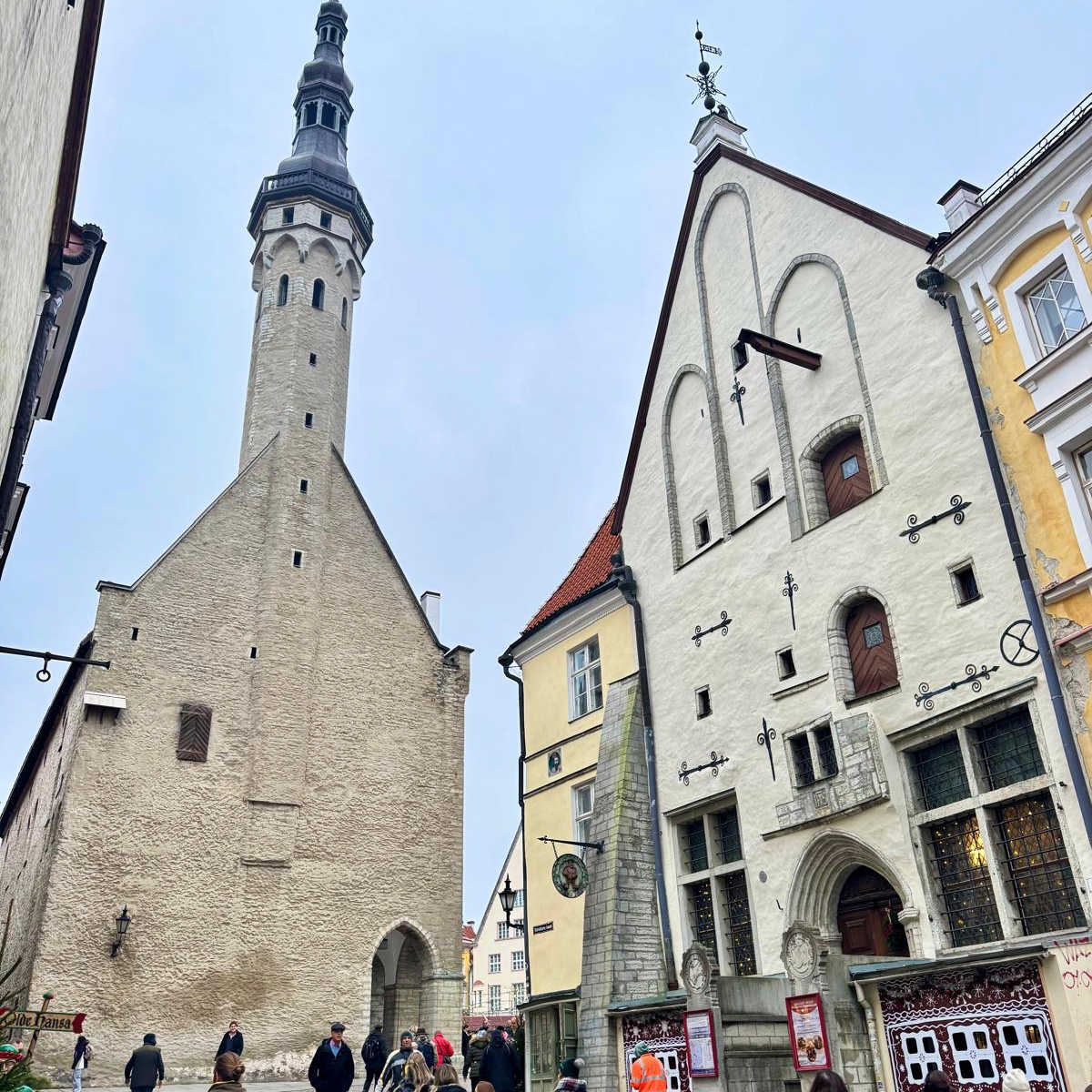
Conical towers connected by ramparts, winding streets paved with cobblestones, medieval-themed pubs serving 15th-century cuisine, and an intact Gothic town hall built as early as 1404. Europe’s oldest, indeed!
For the hippie nightlife and daring feeling that you simply won’t find in an open-air museum, take a tram to Telliskivi, also known as the ‘Creative City’: a mahoosive industrial complex turned indie playgroundit’s littered with thought-provoking murals, cool design studios, concept late-night bars and even co-working spaces.
Digital nomads, this is your signal.

Subscribe to our latest posts
Enter your email address to subscribe to the latest Travel Off Path breaking travel news, delivered straight to your inbox.


