


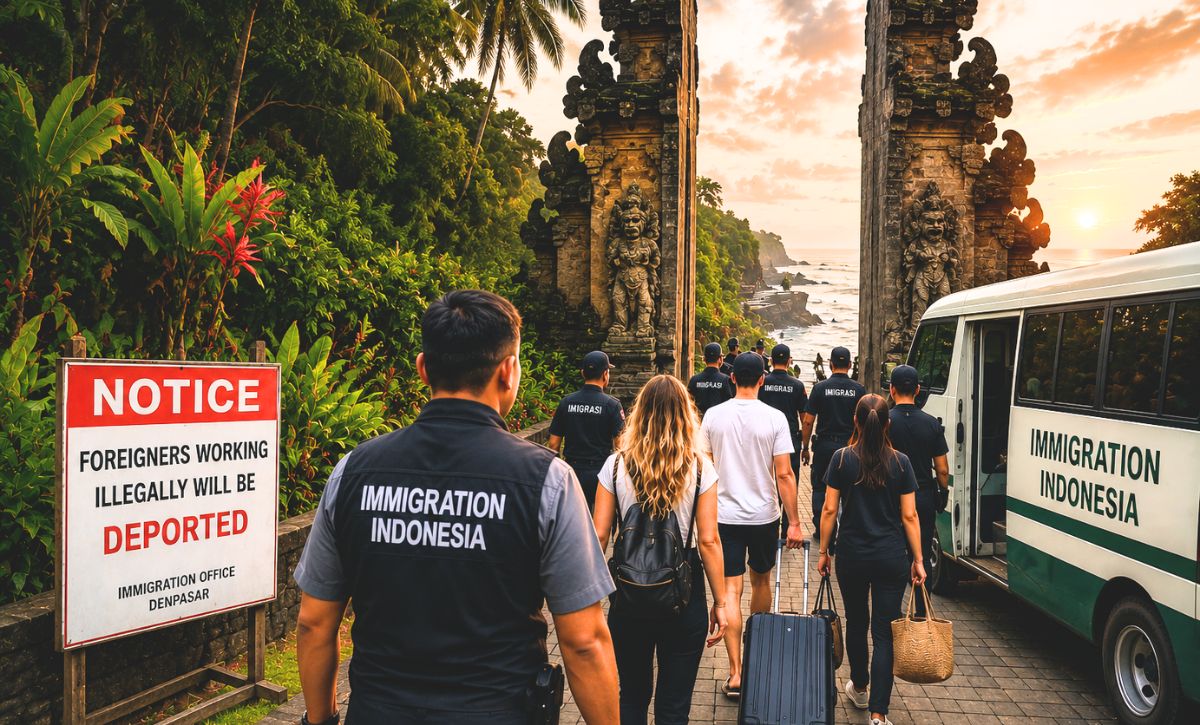
Bali has historically been a popular destination for influencers and digital nomads seeking a relaxed working environment. However, the landscape has drastically changed with the introduction of a specialized immigration unit in April 2026, resulting in the detention of numerous foreigners working on tourist visas. Authorities have made it clear that these enforcement measures will continue unabated.
The Role of the Dharma Dewata Task Force

The “Dharma Dewata” Immigration Patrol Task Force was established at Renon Field in Denpasar on April 15, deploying approximately 100 officers across the island. Within the initial three weeks of operation, 62 foreign nationals were apprehended for various infractions such as unauthorized work, visa overstays, and falsified documentation. The enforcement efforts and social media monitoring are concentrated in popular nomad and creator hubs like Canggu, Ubud, Seminyak, Kerobokan, and Uluwatu.
Immigration Director General Hendarsam Marantoko emphasized the vigilance of authorities, stating that they are “present, monitoring, and prepared to take enforcement action.”
Understanding the Scope of Enforcement
The recent crackdown addresses a longstanding grey area that Bali had tolerated for an extended period. Officials have clarified that activities such as sponsored content, brand partnerships, portfolio photography, and even uncompensated promotional work in exchange for accommodation or meals are now classified as commercial endeavors under Indonesian immigration laws. The exchange of money is no longer the decisive factor; any form of business promotion resulting in benefits for both parties necessitates the appropriate work visa.
Violators face severe consequences, including immediate visa annulment, fines, deportation, and potential bans ranging from several years to a permanent prohibition in serious cases.
Impact on Travelers and Creators

For regular tourists exploring Bali’s cultural and natural attractions, the enforcement measures do not alter the typical visitor experience. The regulations specifically target the intersection of tourism and commercial or promotional activities. Digital nomads and content creators seeking legal operations are encouraged to apply for the E33G Remote Worker Visa instead of relying on standard tourist visas or visa-on-arrival permits.
This enforcement aligns with a broader national initiative, as Indonesia’s Directorate General of Immigration recorded a significant increase in enforcement actions involving foreigners in early 2026. It also reflects Bali’s shift towards a “quality tourism” model that prioritizes visitors contributing to the formal economy. The key takeaway for content creators is clear—ensure the correct visa is in place before engaging in promotional activities for local businesses to avoid potential bans that could restrict access to the island permanently.