


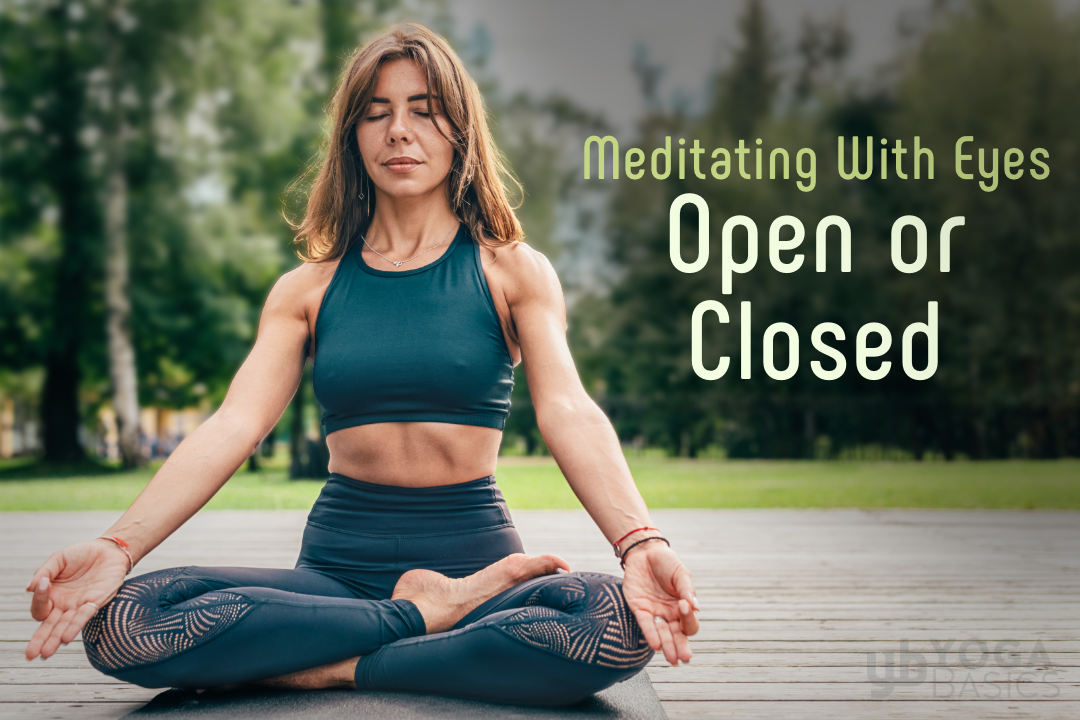
Starting a meditation practice can feel overwhelming with so many aspects to consider: Which technique to choose, how long to meditate, and the best way to breathe. One crucial yet often ignored question is, “Should I meditate with my eyes open or closed?” There is no definitive answer; both approaches come with their own advantages and disadvantages. However, the way you use your eyes significantly influences your meditation experience. Understanding the benefits and drawbacks of each method can guide you in selecting the one that aligns with your personal needs, experiences, and aspirations.
The Significance of Eye Position in Meditation
The direction of your gaze during meditation plays a crucial role in shaping your mental focus, awareness level, and emotional regulation. By closing your eyes, you minimize visual distractions, which can enhance your inner awareness. Conversely, meditating with your eyes open allows you to concentrate on a specific focal point, facilitating dharana, or concentration. Generally, I suggest beginners start with meditation that involves closing their eyes.
The Influence of Drishti
Ancient yogis recognized that where we direct our gaze, our attention naturally follows. They developed a technique known as drishti, which involves focusing on a specific point to maintain a concentrated mind during meditation. While drishti is commonly used in open-eyed practices, it can also be employed as an internal focus point when the eyes are closed. Drishti serves as a fundamental tool, giving your wandering mind a simple and steady task—focusing on one point—to cultivate dharana (concentration).
The Concept of the Spiritual Eye
One internal drishti central to yogic teachings is the spiritual eye, also referred to as the third eye or Ajna chakra, located energetically in the space between the eyebrows. Yogis regard it as a gateway to deeper insight and awareness. By concentrating your attention here, you can shift your focus away from the incessant chatter of the ego mind, elevating your consciousness and enhancing spiritual awareness. Many meditators perceive this focus as an inner light, serving as a powerful tool to access the mind’s inner kingdom.
Vyutthana and Nirodha
Yogic philosophy introduces two concepts that illustrate the movement of awareness in the mind: vyutthana and nirodha. Vyutthana refers to the outward force that diverts the mind from its center toward distractions, a natural and constant occurrence. In contrast, nirodha is the inward force that draws the mind back toward its source and essence, fostering a state of calmness and clarity. This force can emerge during flow states but can also be intentionally cultivated.
During meditation, the mind frequently experiences vyutthana, with thoughts emerging that pull your attention outward. Closing your eyes can help mitigate this outward pull, making it easier to maintain internal focus. In open-eyed meditation, the vyutthana force is typically more pronounced, presenting a greater challenge as one must train the mind to observe distractions without attachment.
Benefits of Meditating with Closed Eyes
- Minimizes external distractions: By shutting your eyes, you can concentrate better as visual distractions and external stimuli are eliminated.
- Enhances internal focus and concentration: Fewer distractions lead to improved focus.
- Facilitates visualization and self-awareness: Meditating with closed eyes allows for better visualization and awareness of bodily sensations.
- Encourages relaxation and tranquility: Blocking out the external world can help reduce stress and induce a peaceful state.
Drawbacks of Meditating with Closed Eyes
- Risk of drowsiness or falling asleep: If you’re fatigued, the absence of visual stimulation may make you feel sleepier.
- Tendency for increased mind wandering: Some individuals may find their thoughts drifting more without a visual anchor.
- Not ideal for everyone: Beginners or those prone to anxiety may feel uncomfortable or disoriented with their eyes closed.
Benefits of Meditating with Open Eyes
- Boosts alertness and present-moment awareness: Keeping your eyes open helps maintain wakefulness and attentiveness.
- Useful for mindfulness in everyday life: Practicing open-eyed meditation can enhance your focus during daily activities where closing your eyes isn’t an option.
- Can diminish the likelihood of falling asleep: Light stimulation keeps the brain alert and energized.
Disadvantages of Meditating with Open Eyes
- Potential for distraction: Visual stimuli from the external environment can divert your attention from your inner focus.
- More challenging to achieve deep internal focus: Visual distractions can compete with your chosen meditation object.
- May require additional practice: You might need more training to prevent distraction and sensory overload.
- Risk of eye strain: Prolonged gazing can tire your eyes.
Determining What Works Best for You
When contemplating whether to meditate with your eyes open or closed, consider the following factors:
- Your environment: A tranquil, secure setting may favor eyes-closed practice, while bustling locations might be better suited for open-eyed techniques.
- Your level of experience: Beginners often find it easier to limit distractions by closing their eyes, while others may prefer open-eyed methods to stay grounded.
- Your meditation intentions: If your objective is deep relaxation, you might prefer closed eyes. Conversely, if you’re aiming for alertness, an open-eyed practice may be more advantageous.
Experiment with both techniques during different meditation sessions. Pay attention to how each one affects you physically, energetically, and mentally. You may find that one method resonates more with you than the other. Additionally, you can combine the two approaches—start with your eyes closed and then open them toward the end, or alternate based on your feelings.
Comparative Overview of Meditation Techniques Based on Eye Position
| Meditation Technique | Eye Position | Description | Benefits | Challenges |
|---|---|---|---|---|
| Guided Meditation | Closed | Listening to a teacher’s voice providing guidance throughout the meditation. | Helps maintain engagement of the mind. | May require an external audio source. |
| Body Scan Meditation | Closed | Focusing on physical sensations in various body parts. | Anchors attention on the present moment. | Can bring up buried emotions, which may be unsettling. |
| Visualization Practices | Closed | Imagining calming scenes, positive images, or energy flow. | Enhances internal awareness and creativity. | Requires imagination and concentration. |
| Breath Awareness | Open or Closed | Focusing on the sensations of inhalation and exhalation. | Calms the mind and promotes relaxation. | Mind may wander without a clear anchor. |
| Blindfold Meditation | Closed | Using a light barrier to reduce light exposure while keeping the eyes open. | Minimizes distractions while preventing drowsiness. | May be uncomfortable and requires an eye mask. |
| Soft, Unfocused Gaze | Open | Relaxing the eyes and gazing gently downward or at a neutral spot without sharp focus. | Maintains alertness with minimal distraction. | Requires practice to avoid excessive focus. |
| Gazing at a Fixed Point (Trataka) | Open | Concentrating on a single point, such as a candle flame. | Builds intense concentration. | Can cause eye strain if done for too long. |
| Mindful Observation | Open | Observing your surroundings without judgment, noting colors, shapes, or movements. | Enhances present-moment awareness. | External distractions can disrupt focus. |
| Zazen (Zen Meditation) | Open | Staring at a blank white wall. | Develops calm alertness and detachment. | Requires discipline and consistent practice. |
| Walking Meditation | Open | Moving slowly while paying attention to each step and breath. | Integrates mindfulness with movement. | Maintaining focus can be challenging in busy areas. |
Concluding Thoughts
Ancient yogis understood that the journey inward is unique for each individual. On one day, closing your eyes may provide a refuge from the chaos of the world, allowing you to delve deep into stillness. On another day, a soft, open gaze may serve as the perfect practice to stay present and focused on your breath.
I encourage my students to approach their meditation journey with a spirit of exploration, curiosity, and self-compassion. Experiment, stay inquisitive, and honor your personal needs. While structure and discipline can be beneficial in training the mind and establishing a routine, profound insights often arise not from rigid adherence to rules, but from listening to the inner teacher that resides within.