


As weather alerts and severe weather warnings cover much of the United States, Montana’s Beartooth Highway is experiencing unexpected snowfall and strong wind gusts of up to 55 mph.
These unusual weather conditions showcase the extreme fluctuations in weather driven by elevation along this famous mountainous route. Even in the middle of summer, travelers can encounter winter-like weather near the summit while lower elevations remain warm and dry, making the Beartooth Highway one of the most meteorologically diverse roads in the country.
The Weather Advisory and the Snowfall
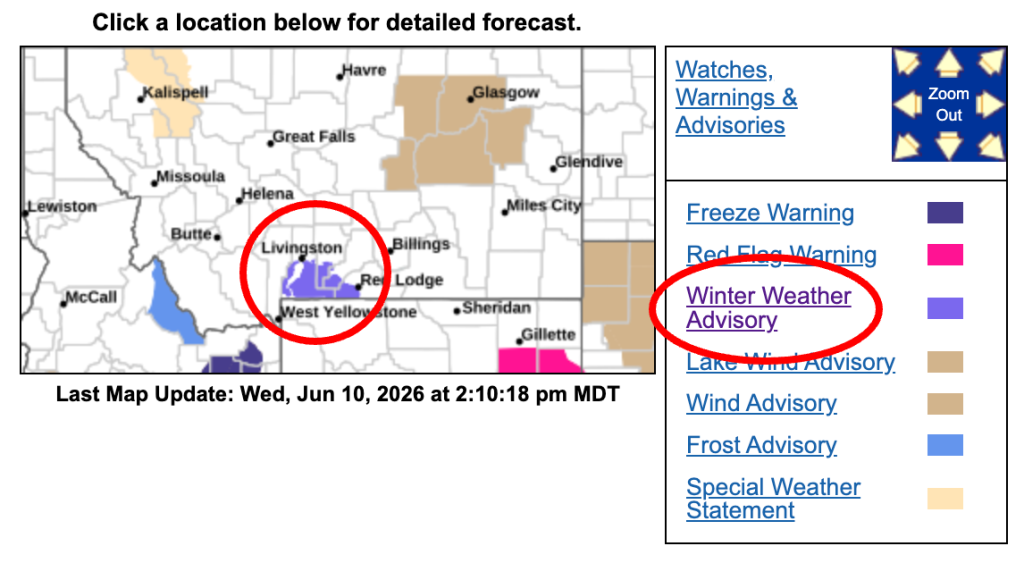
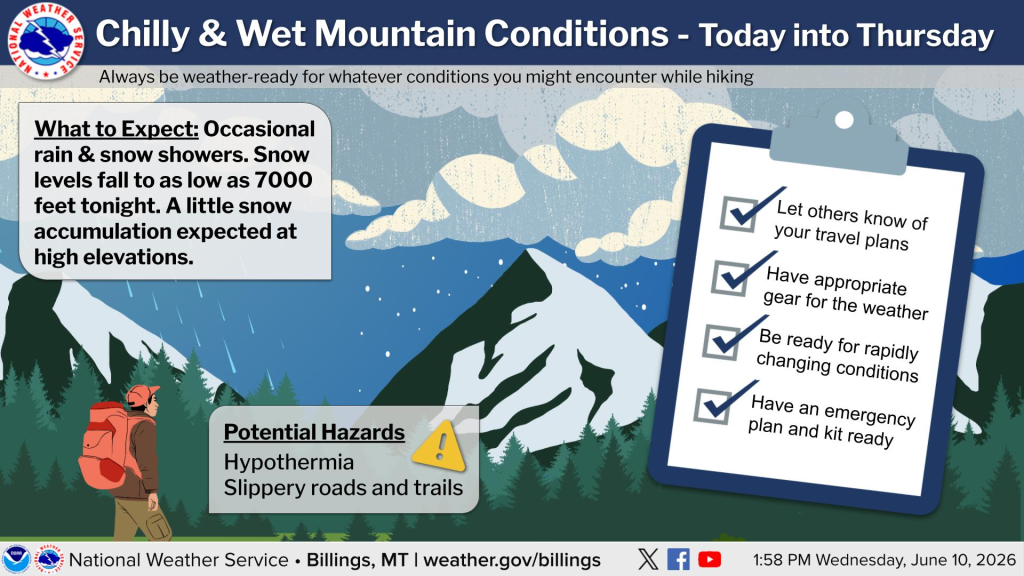
The National Weather Service in Billings has issued a Winter Weather Advisory for the Absaroka/Beartooth Mountains until 9 AM MDT Thursday, warning of up to 2 inches of snow and wind gusts reaching 55 mph along the Beartooth Highway.
Expect slippery road conditions, and “the combination of strong winds and falling snow may result in locally reduced visibility, especially in unsheltered areas.”
This occurrence is not an anomaly. It is not a record-breaking event. It is, in fact, quite anticipated.
The Highway Above the Clouds
The Beartooth Highway, also known as US Route 212, spans 68.7 miles from Red Lodge, Montana to Cooke City near the northeast entrance of Yellowstone. It reaches an elevation of 10,947 feet above sea level, higher than most peaks in the Alps. The summit transcends the treeline, above typical weather systems, and squarely situated where June mimics March.
Renowned CBS journalist Charles Kuralt, who traversed more American roads than arguably anyone in history, hailed it as “the most beautiful drive in America.” This reputation stems from its hairpin turns, glacial lakes, granite plateaus, and breathtaking vistas. It also arises from the road’s complete disregard for conventional seasonal expectations.
Snow typically lingers at higher elevations until early to mid-July. June snowstorms are simply part of the Beartooth allure. Last June, the pass received 12 to 14 inches of snow and shut down entirely for several days.
A Season of Unprecedented Events
The Beartooth Highway only reopened on May 21, 2026 after crews cleared substantial snowdrifts from the summit—less than three weeks ago. At that time, the Montana Department of Transportation explicitly cautioned that “temporary travel restrictions or full road closures can still occur at any time without notice.” The current advisory aligns precisely with the scenarios they outlined.
Implications for Drivers Amidst the Advisory
For those planning to drive the Beartooth today or early Thursday before the advisory concludes at 9 AM MDT: consult the Montana 511 road conditions line prior to departure and pack warm clothing, tire chains or all-weather tires, and extra fuel.
Most of the highway lacks services, and emergency response times at 10,000 feet are not swift.
The advisory does not signify road closure—only that conditions above 7,500 feet resemble winter, with slippery surfaces and potential visibility issues near the summit. Check the Montana DOT road conditions before setting off.
Enhancing the Beartooth Journey
Here lies the paradoxical charm of driving America’s premier alpine highway in June: the chance of snow enhances its allure. The elevation that prompts a Winter Weather Advisory in the heart of summer also creates the glacial pools, enduring snow patches, mountain goats by the roadside, and panoramic views that render the Beartooth distinct from any other paved road in the nation. Prepare for all seasons, monitor conditions, and aim your vehicle uphill. If snowfall occurs, it merely enriches the narrative.

