

Share the article
You know those long lines at European airports that keep popping up on your Instagram feed?
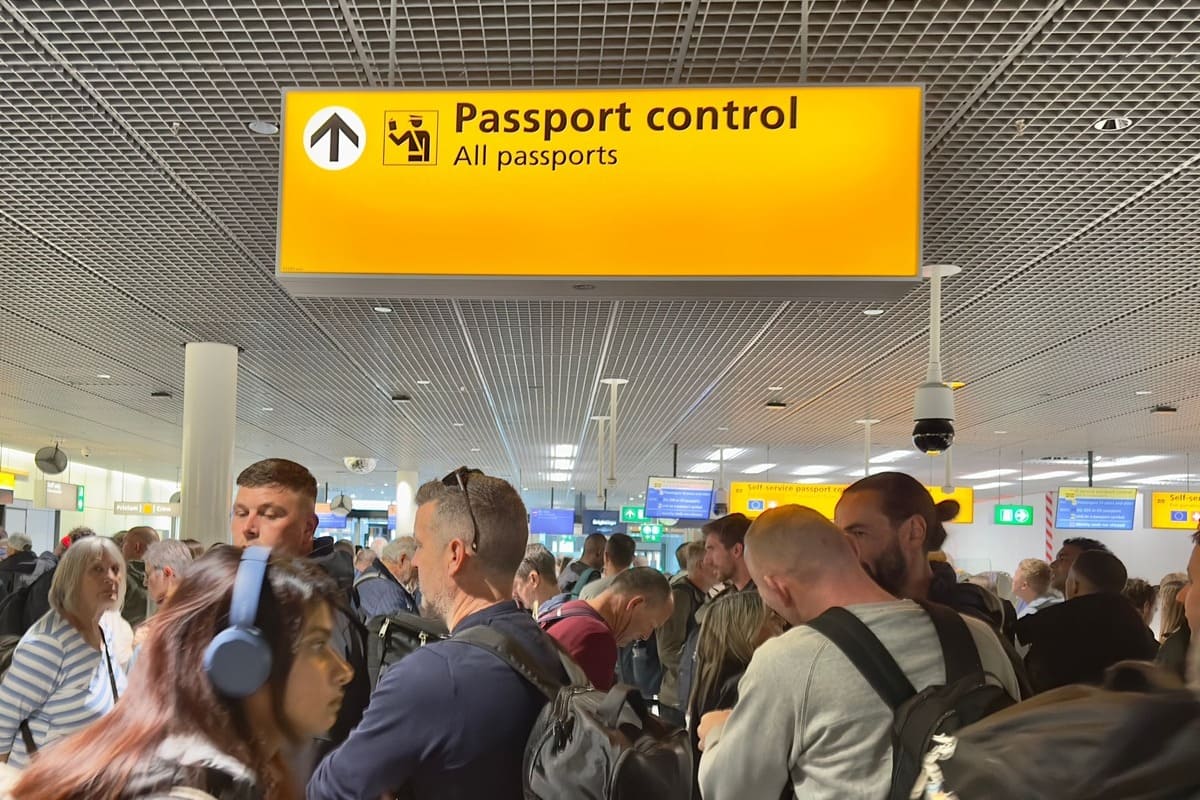
Besides a minor inconvenience for some travelers, this has become a widespread phenomenoneven causing airport officials to beg for help.
Due to the recently launched Entry/Exit system in Europe (usually abbreviated as EES), New arrivals to the EU must have their fingerprints taken and their faces scanned for proceed to the usual passport control.

The problem is that most European airports were not prepared for the logistical nightmare of this new requirement that passengers are now facing waiting times up to 5 hours at some access points.
Lisbon airport is particularly bad at the moment.
Now the European Commission is formally involved asked suspend EES to enable airports and airlines to cope with the rapidly deteriorating situation:
European airports are on the verge of collapse
Airlines and airports across the EU have sent a formal letter to Ursula von der Leyen, President of the European Commission, requesting permission to suspend EES registration ahead of the peak season.

We’re only early July, when summer travel only increases, and airlines and hubs are already becoming overwhelmed in August, with understaffing and longer flight delays observed every year. Add mandatory fingerprinting to the mix, and you get a recipe for disaster.
The European Commission introduced EES to tighten border controls and ensure that travelers adhere to the Schengen area’s travel rules.
Today, Schengen includes more than 30 European countries, and as a U.S. passport holder you are only allowed to stay in the Schengen territory for a maximum of 90 days within a 180-day period.
Before the EES, compliance checks were typically carried out by border officials, with entry and exit stamps manually verified.

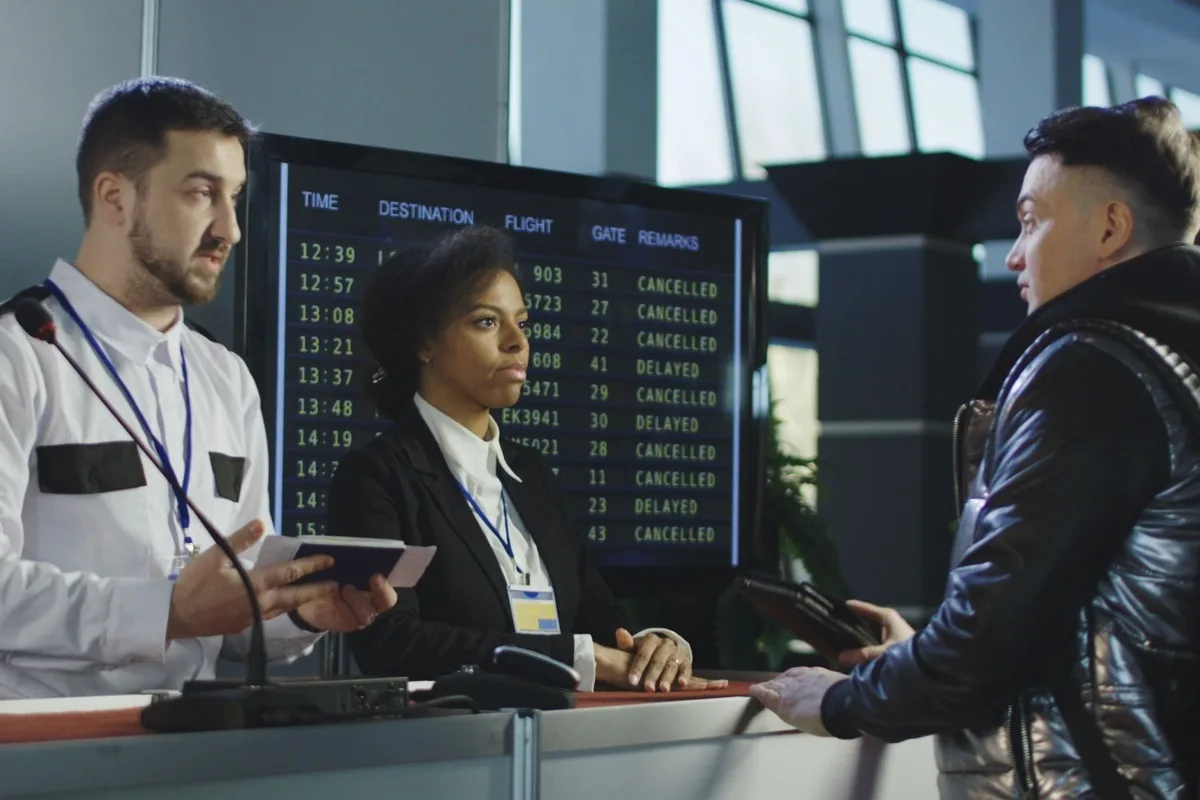
With EES, entry and exit times in the Schengen area are automatically recorded every time a traveler uses a kiosk when landing or departing.
Sounds great on paper, until you have to deal with the reality on the ground:
This is how EES changed travel in Europe… for the worse
Winding lines, EES kiosks that just don’t work, and hours-long wait times are causing non-European travelers, including Americans, to reconsider their travel plans.
In May, French police temporarily suspended extra checks at the port of Dover, which handles ferry services from Britain, to ease the influx of passengers, and last week the head of Rome’s airports threatened to suspend the EES to avoid a “disaster” over the summer.
The entire country of Greece was considering suspending the EES for British travellers, its main non-EU market, to tackle border bottlenecks, before being scolded by Brussels and ordered to reintroduce the EES.

Yes, it’s all a messbut you don’t have to stress and rack your brain trying to figure it all out on your own.
If you’re heading to Europe this summer, use the Entry Requirement Checker for a complete checklist of all the requirements and documentation you’ll need before you fly.
What is the European Commission doing to alleviate the problems?
Not… very… much at the moment.
They’ve been pushing for EES for years, and it’s one of those long-running pet projects that the bureaucrats behind it won’t easily admit defeat to, especially with all the millions of euros spent and the entire overhaul of the continent’s immigration system to accommodate fingerprinting facilities.
The chance that they will come back to this is very small.


The European Commission has relaxed things bit since then, allowing countries to skip some checks at critical hours, but excessive lines continue to form anyway, according to the letter from industry officials.
“This undermines Europe’s reputation“, the group states. “Passengers have been forced to queue outside terminal buildings and on uncovered platforms for extended periods as border control facilities cannot process arrivals quickly enough.”
The flexibility period ends in September, when rules allowing airports to skip certain checks should be limited to ‘clearly defined exceptional circumstances’, but even that is leaving airports panicking and scrambling for options. There won’t be enough time.
Americans should prepare for massive delays


This summer they are expected to handle 40 million more passengers between July and August than in the previous two months, and they claim that EES will find it impossible to operate smoothly until there are enough staff to run the system and the EES kiosks are ‘sufficiently reliable’.
Like we said before, sometimes they’re just… go offline.
The European Commission has not yet responded.
If you’re an American landing in Europe this summer, be prepared for the worst:
- Avoid short flight connections (Please note that EES registration may seriously delay your participation)
- Don’t argue when you leave the plane. Toilet can wait: just run directly to the nearest EES machine before lines start forming like your life depends on it
- Download the Travel to Europe app and pre-register your travel information for easier access (currently only available in Portugal and Sweden)
- Consider traveling to EES-exempt countries for now until the situation is resolved (here are 5 countries where fingerprinting rules do not apply)
- Continue to use the Entry Requirement Checker to stay informed of the ever-changing regulations